
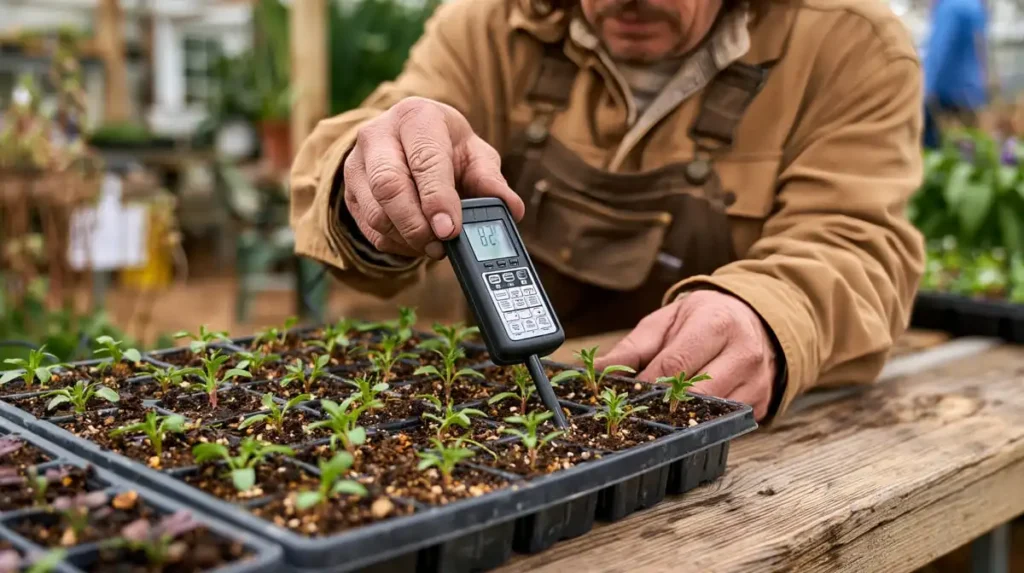
Here’s how to use a soil moisture meter in short: insert the probe into the soil midway between the stem and the edge, making sure that the tip is at half the depth of the pot, wait until the needle or the digital figure stops changing, check a second spot and water if the root-zone reading drops to your plant’s number or lower. For most indoor plants, the number will be 3 or 4 on a scale of 1 to 10. Remove the probe, clean it and store it dry.
The more complicated task is to know when you can rely on the readings. Cheap meters will mistake salts in the soil for water, chunky mixes for dry soil and packed roots for wet soil. Below you’ll find an explanation of what each number represents, a list of common houseplants and their numbers, a guide to calibrating your meter, a look at which type is most accurate and how to test soil moisture without one.
How Does a Soil Moisture Meter Work?
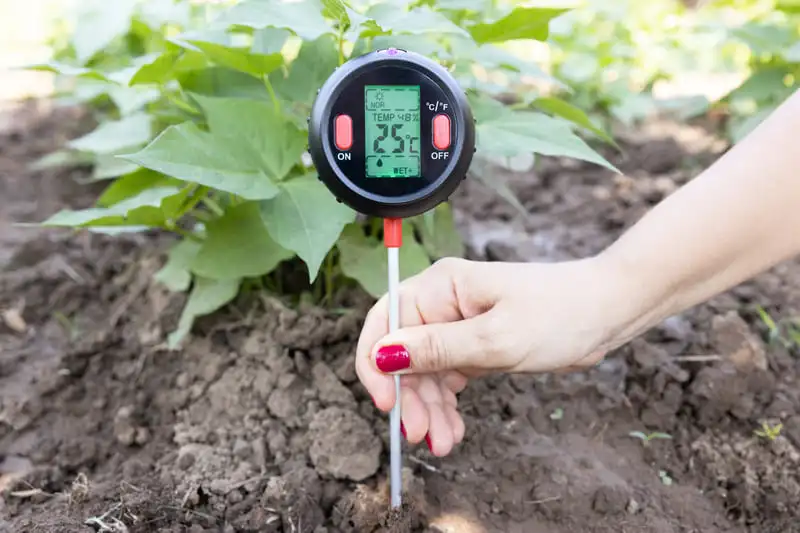
How does a soil moisture meter work, exactly? It never measures water content directly. Instead, it measures something else that varies with water and then turns it into a reading. University of Nebraska-Lincoln explains that soil sensors determine water content indirectly, by taking measurements of some other property of the soil and using a calibration. Home meters are of two types.
How does a soil moisture meter work if it has no battery? Analog probes are resistive in nature: electrical current flows between two metal parts of the probe, and wet soil conducts electricity better than dry soil, so the needle points towards the wet side. The battery-less probes use the electricity generated between two dissimilar metals in them, somewhat similar to a lemon battery. The problem is that these probes count everything that helps conduct electricity as water, such as salts from fertilizers and minerals from hard tap water.
Digital and smart moisture meters are usually capacitive. They emit a very slight electrical field and measure how the soil changes it. Water affects this field much more strongly than soil or air does, so salts don’t affect them much. However, they do need to be calibrated for your particular soil mix, which is why the better ones let you do it.
So how do moisture meters work in a real pot? Both types read only a small zone around the tip, not the whole pot. That’s why where you put the probe matters as much as which meter you buy.
| Meter type | How it reads | Power | Can it stay in the soil? | Typical price |
|---|---|---|---|---|
| Analog probe | Current through the soil | None | No | $10-$13 |
| Long-probe analog | Same, reaches deeper | None | No | $12-$29 |
| 3-in-1 meter (moisture, light, pH) | Current through the soil | None | No | $8-$12 |
| Digital meter with a screen | Capacitive field | AA batteries | Yes | $25-$30 |
| Smart sensor with an app | Capacitive field | AA batteries | Yes | $18-$49 |
Ignore the pH and light dials on 3-in-1 meters. For pH, use a proper soil test like the ones in our guide on how to test garden soil at home.
How to Use a Soil Moisture Meter, Step by Step
Here’s how to use a soil moisture meter so the reading actually means something. The same steps apply whether you’re learning how to use a moisture meter for plants on a windowsill or in a big patio pot.
- Check prior to watering. Checking right after watering yields no new information, and very wet soil will make the needle jump. At least wait until the pot stops dripping.
- Choose the correct spot. Insert the probe midway between the stem and the edge of the pot. Too close to the stem, you will hit tough roots, and too close to the edge, the mix dries faster than in the middle.
- Push the probe directly down, gradually. Do not force it or insert it at an angle, as probes are thin and can break if pushed into hard soil or tough roots. If it stops, withdraw it and try inserting it an inch away.
- Go halfway down the pot. This is where most roots are located. For pots deeper than about 10 inches, use a long probe. In any pot, take a second measurement near the bottom.
- Wait for the result. Analog needles will stabilize in a few seconds to half a minute. Some digital sensors need a minute or more. Read the value once it stops changing.
- Take two or three measurements around the pot, because moisture varies. If they differ by two points or more, use the average measurement and measure again tomorrow.
- Make a decision. Compare the root-zone measurement with your plant’s number in the chart below. If it is higher, wait. If it is equal to or lower, water the plant deeply, until water flows out of the drainage holes.
- Remove the probe, clean and dry it. Do not keep an analog probe in the soil. Also clean it between plants, so that no soil or diseases are transferred from one plant to another.
- Record measurements for two weeks. Note the measurement, the date and how heavy the pot feels when you lift it. After two weeks you will be able to understand the pattern for each plant.
Learning how to use a soil moisture meter this way takes about 30 seconds per pot. The notes are the part most people skip, and they’re what turn a cheap gadget into a useful one.
How to Read a Soil Moisture Meter
Once you know how to use a soil moisture meter, reading it is the part that takes practice. Most analog dials run from 1 to 10 and split into three color zones:
| Reading | Zone | What it means |
|---|---|---|
| 1-3 | Dry | Cacti and succulents are ready for water; tropical plants are overdue |
| 4-7 | Moist | Most houseplants are comfortable; many want water at the low end |
| 8-10 | Wet | Freshly watered; should drop into the moist zone within a few days |
Just one note. Some meter booklets give a “number” for each plant, say 8 for a peace lily. But don’t use those as watering numbers. On most dials, the number 8 means that the soil is almost saturated. Use the trigger numbers in the soil moisture meter chart below instead.
Why Depth Changes the Reading
Depth is important as well. It is typical for the top 2 inches to show 3 while the bottom shows 8 or 9 a few days after watering, because water goes deeper and the surface layer dries out first. Rely on the reading from the middle and lower levels of the root zone. If you still have 9 or 10 a week later, try to figure out the reason. It may be an overly dense soil mix, a pot too large for the root ball, blocked drainage holes or a root-bound plant.
Reading a Percentage Meter
If your meter uses a scale of percentages rather than 1 to 10, there is no standard conversion, so 40 percent does not equal 4. Find your own values instead. Remember the reading a few hours after a thorough watering; this will be your “wet.” Remember the reading again when your pot feels light and the top inch is dry; this will be your “time to water.” Knowing how to calibrate a soil moisture meter that shows percentages makes those numbers much more reliable, and we cover it below.
Soil Moisture Meter Chart for Common Houseplants
Learning how to use a soil moisture meter mostly comes down to knowing your plant’s number. Use this soil moisture meter chart as a starting point for a 1 to 10 dial, measured halfway down the pot. The number is when to water, not where the soil should stay.
| Plant | Water when the dial reads | Notes |
|---|---|---|
| Cacti, echeveria, haworthia | 1 | Let the whole pot dry out |
| Jade, aloe | 1-2 | Water even less in winter |
| Snake plant, ZZ plant, ponytail palm | 1-2 | Rot quickly if kept moist |
| Hoya | 2-3 | Likes a near-dry spell |
| Rosemary, thyme | 2-3 | Mediterranean herbs prefer drier soil |
| Pothos, philodendron, monstera | 3-4 | Chunky aroid mixes read low |
| Dracaena, rubber plant, money tree | 3-4 | Check the bottom of big pots |
| Fiddle-leaf fig, bird of paradise | 3-4 | Usually in deep pots, so use a long probe |
| Spider plant, peace lily | 4 | Peace lilies droop when dry, then recover |
| Basil, mint, parsley | 4-5 | Herbs in small pots dry fast |
| Calathea, maranta, fittonia | 4-5 | Never let them dry out fully |
| Ferns, African violets | 5 | Keep evenly moist |
| Seedlings | 5-6 | Shallow roots, so check daily |
| Orchids in bark | Don’t use a meter | Bark reads dry; use a chopstick or weight |
If you have a mix of easy plants and fussy ones, this plant soil moisture meter chart tells you which pots to check first. Most of our hard-to-kill plants sit in the 1 to 4 range, which is why they forgive a missed check. Any moisture meter for plants chart is a guide, though, not a rule. Light, pot size and season shift every number by a point or so, so let your notes adjust it.
Are Soil Moisture Meters Accurate?
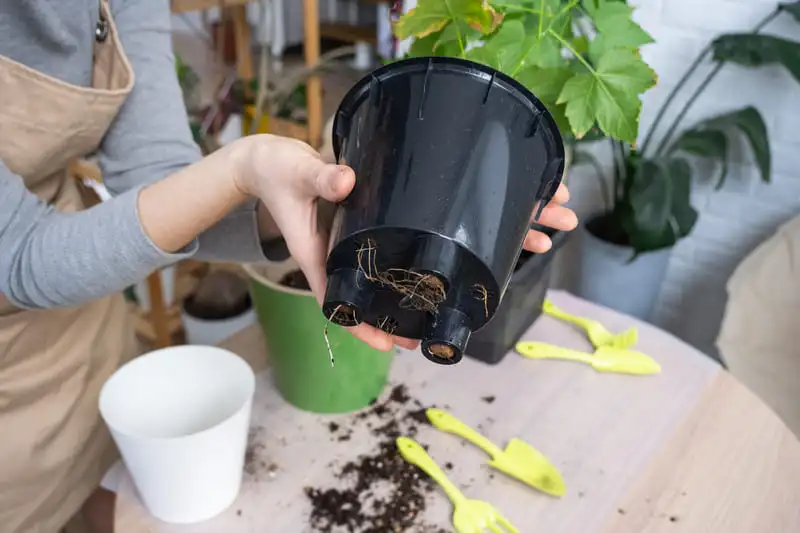
Are soil moisture meters accurate? They’re precise enough to identify dry, moist or wet conditions, but not precise enough to trust a single measurement. The University of Illinois Extension sums it up: a water meter probe may be helpful but isn’t necessarily reliable. Do soil moisture meters work well enough to be worth $10? For most people who are learning how to water, yes, if they understand what causes false readings.
hat Throws Off a Reading
An independent test of one popular analog meter showed that while it had a range from 1 to 10, only around 6.5 of those numbers were actually used. Packed soil registered as wetter than loose soil at the same amount of moisture, the reading differed by up to 2 points from the top to the bottom of a pot and fertilized tap water read about one point wetter than distilled water. None of this means the meter is broken. It just means you need to know these quirks:
| What’s going on | Reading | Fix |
|---|---|---|
| Fertilizer salts or hard tap water | Too wet | Flush the pot with plain water every few months |
| Packed, compacted soil | Too wet | Repot into a looser mix |
| Pot full of roots | Too wet | Check by weight; repot if roots circle the pot |
| Chunky bark, perlite or aroid mix | Too dry | Press the mix around the probe or check by weight |
| LECA or orchid bark | Meaningless | Watch the water level or use a chopstick |
| Probe too shallow | Too dry | Go halfway down the pot |
| Needle stuck on dry | Dry everywhere | Tap the meter against your palm, then retest |
| Corroded or bent probe | Drifts, often dry | Clean it with fine steel wool or replace it |
| Reading right after watering | Jumpy | Wait until the pot has drained |
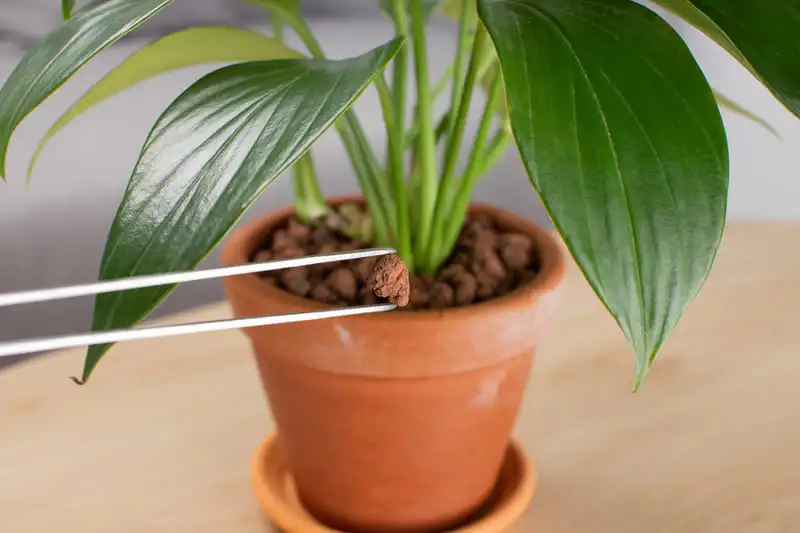
How do moisture meters work in chunky or soilless mixes? Badly. Air gaps break the contact around the probe, so bark-heavy aroid mixes read low and clay pebbles barely register at all. Do moisture meters work in a pot packed with roots? Not well either. Roots hold water, so a root-bound pot can read wetter than the mix really is.
The most hazardous problem is a meter that fails silently. Many cheap meters fail within several months. When one fails, it usually reads dry, so you keep watering a pot that’s already wet. Leaves turning yellow while your meter says the soil is dry should raise a red flag, and our guide on monstera leaves turning yellow explains the symptoms of overwatering. The presence of flies around the pot also indicates the same thing. Here’s how to get rid of flying bugs on indoor plants.
Knowing how to use a soil moisture meter well means checking it against a second method now and then. That’s why it pays to learn how to test soil moisture without a meter as a backup. A meter that agrees with the weight of the pot is an accurate soil moisture meter for your purposes, whatever it cost.
How to Calibrate a Soil Moisture Meter
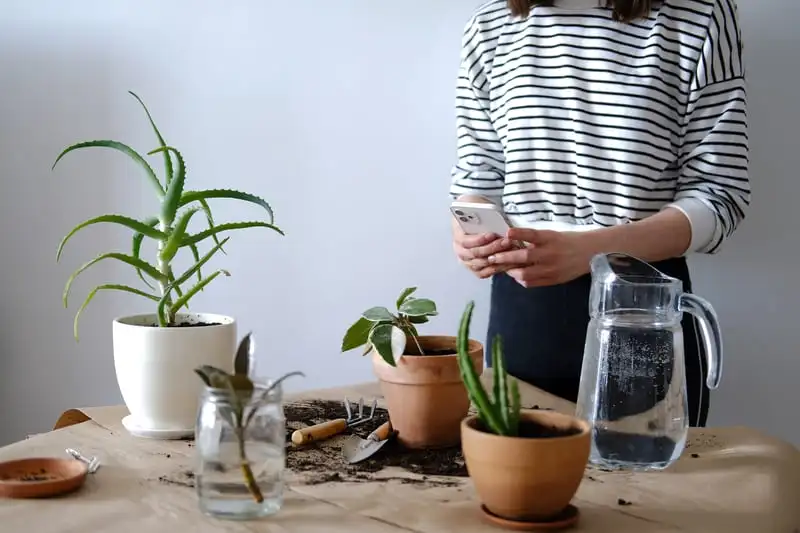
How to calibrate a soil moisture meter depends on the type. According to the University of Arizona Extension, sensors must be calibrated for the soil’s texture, density and salinity. The good news is that there’s an easier option: use the sensor’s reaction before and after watering to judge how accurate its numbers are.
Check an Analog Meter
An analog probe can’t be calibrated, but you can always test it. Never test it in a cup of water, as it will be reading the conductivity of the water, not of the soil. Here is how you should do it:
- Take a pot that you know is completely dry and test it halfway down.
- Water another pot thoroughly, let it drain for an hour and then test it.
- Record both values. Together, they show your meter’s real range in your soil.
The meter should show a low reading in dry soil and a reading between 8 and 10 in wet soil. If it barely moves, tap it a few times and try again. Still reading dry in soaked soil? Replace it. When you’re still learning how to use a soil moisture meter, this 10-minute check is the most useful thing you can do with it.
Calibrate a Digital Sensor
Ecowitt-style capacitive sensors enable you to define a dry point and a wet point, typically listed as “0% AD” and “100% AD” in the app. Each sensor has an individual baseline, so it needs separate calibration:
- Insert the sensor into fully dry potting soil and write down the raw value shown in the app. Enter it as 0%.
- Get that pot thoroughly wet, give it 30 minutes to drain well and write down the new raw value. Enter it as 100%.
- Save the values and check that a newly watered pot gives a high result, while a dry one gives a low value.
It is better to calibrate in your own soil than in air or water, as the sensor will then read your real soil. From then on, the percentage shows “how full this pot is compared with a fully watered one,” which is what you need.
How Often to Recalibrate
Analog meters should be rechecked every month or two due to corrosion. Digital meters should be recalibrated once a year, plus whenever you change potting mix and after repotting. When the readings become erratic without any specific cause, recalibrate first and then suspect the plant.
What Type of Moisture Meter Is Most Accurate?
The most accurate soil moisture meter isn’t a meter at all. It’s a scale. Oregon State University Extension says weighing methods are highly accurate and are the reference used to calibrate soil moisture sensors, and that with training, judging soil by look and feel can land within about 5 to 10%. If you’re wondering how to measure moisture in soil precisely, that’s your answer. Here’s how the options rank for houseplants:
| Method | Typical cost | How accurate |
|---|---|---|
| Weighing the pot | $0 if you own a scale, 10-20 if not | The reference method; very accurate for one pot |
| Calibrated capacitive sensor (e.g. Ecowitt WH51) | 18-49 | Good once calibrated to your mix |
| Finger or chopstick, with practice | Free | Within about 5-10% with training; fingers reach only the top |
| Analog probe (e.g. XLUX T10) | 10-13 | Good for dry vs moist vs wet; drifts with salts |
| Long-probe analog | 12-29 | Same, but reaches the bottom of big pots |
| Professional garden meter (e.g. REOTEMP) | About $50 | Sturdier, built for outdoor soil |
| Cheap 3-in-1 meter | 8-12 | Moisture is usable; pH and light are not |
Prices checked November 2026 at major retailers and brand websites.
Do moisture meters work as well as a scale? No. Among things you push into the soil, a calibrated capacitive sensor is the most accurate soil moisture meter, and a good analog probe is plenty for deciding when to water. If you’re shopping, our roundup of the best soil moisture meter for indoor plants ranks seven options with prices. So, are soil moisture meters accurate enough on their own? Not quite. Pair one with the scale or your fingers and it becomes an accurate soil moisture meter in practice. Whichever you pick, knowing how to use a soil moisture meter well matters more than its price.
How to Test Soil Moisture Without a Meter
Even if you know how to use a soil moisture meter well, knowing how to test soil moisture without a meter is how you check it. Here’s how to test soil moisture with things you already own, and how to check soil moisture in pots too big or too small for a probe.
Finger Test
The University of Maryland Extension recommends sticking a finger about 2 inches into the soil and watering if it is dry that deep. If you cannot stick a finger 2 inches into the soil, the mix may be too heavy or the plant may be root-bound. This technique is fast, but it only reaches the top of the pot.
Chopstick Test
Push an unvarnished wooden chopstick or skewer to the bottom of the pot and leave it there for about one or two minutes. Wet soil on the stick or a dark water line means wait. If the stick comes out dry and clean, water. Want to know how to check soil moisture at the bottom of a big pot without lifting it? This is the easiest way.
Weigh the Pot
This is how to measure moisture in soil the way labs do it, scaled down for a living room. Weigh the pot when the mix is dry and again right after watering it thoroughly, once no more water drips from it. Any weight between those two readings tells you how much water remains. If your pot weighs 4 pounds when it is dry and 6 pounds when it is wet, and currently weighs 4.6 pounds, that means (4.6 – 4) ÷ (6 – 4) = 0.3, or 30% of its water remains. As a general guide, water foliage plants when a quarter to a third of the water remains and succulents when almost none is left. Plants grow, so recalibrate the dry and wet weights every few months. Use a kitchen scale for small pots. For large pots, weigh yourself on a bathroom scale while holding the pot, then subtract your own weight.
Tap and Look
Dry soil mix is lighter in color than moist soil, while a dry plastic pot gives a hollow sound when tapped. Wilting is just an indication, since a plant may wilt from overwatering as well as from a lack of water. Always check the soil before you water a droopy plant.
FAQ
Not if it’s an analog sensor. The metal corrodes in wet soil and gives inaccurate results. Sealed smart sensors and leave-in indicators are designed to stay inside the pot.
How long do you leave a moisture meter in the soil?
Until the measurement stops changing. This can take anywhere from a few seconds to half a minute for an analog meter and up to about a minute for some digital probes. After that, remove the probe and clean it.
What is a bad number on a moisture meter?
It depends on the plant. If you see 1 in a cactus pot, it is okay, but for a fern it means watering is long overdue. If you see 9 or 10 for more than a week without moving, it means the roots are sitting wet. Check the plant soil moisture meter chart above for your plant’s range.
Do meters work in self-watering pots, LECA or bark?
Neither in LECA nor in orchid bark. For self-watering pots, check the middle of the pot and the water reservoir too. Our guide on how do self-watering pots work explains why the top may be dry while the roots are wet.
Can a moisture meter spread disease between plants?
Yes, it may move soil, fungus gnat eggs and rot from plant to plant. Clean the probe between uses by wiping it down, and use rubbing alcohol on it after testing a sick plant.
What are the downsides of soil moisture sensors?
Batteries, drift, recalibration, connection drops and the price per pot. It’s a good idea to use a smart sensor only for plants that are either valuable or difficult to check.
Final Thoughts
A meter won’t water your plants for you, but it takes the guesswork out of the middle of the pot. Now you know how to use a soil moisture meter properly: halfway down, before watering, in two or three spots, then compared with the chart. Do soil moisture meters work? Yes, as long as you check them against a dry pot and a wet pot now and then and watch for salts, roots and stuck needles. Start with the moisture meter for plants chart above, keep notes for a few weeks and adjust it for each plant. That’s really all there is to how to use a moisture meter for plants: a few seconds per pot and a little patience while you learn each plant’s numbers.