
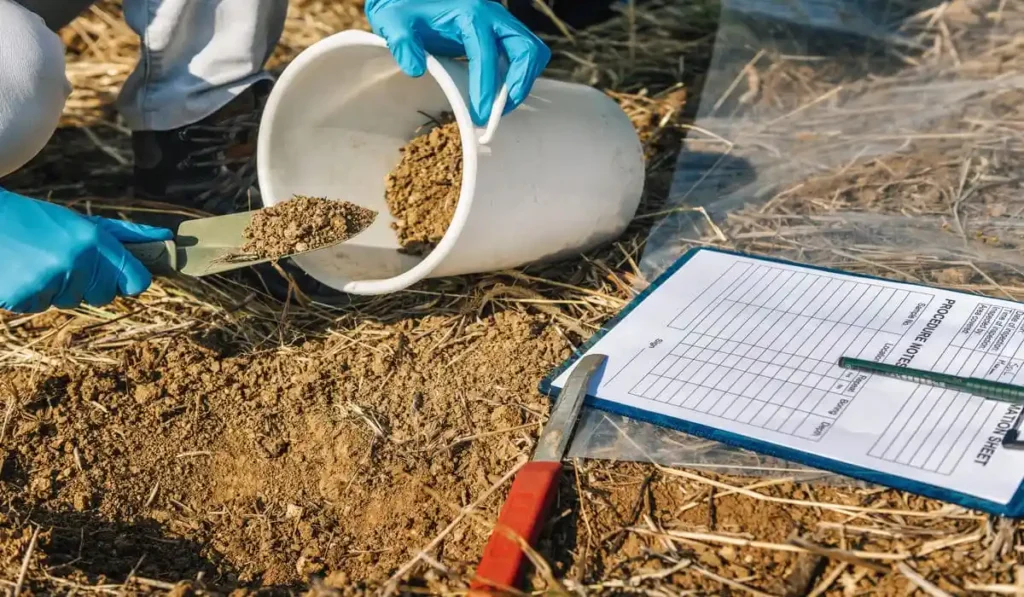
Redesigning your garden? Planning a full makeover? Or maybe you’ve just moved into a new house, and you’d like to redo everything from scratch. Before you plant anything, though, learning how to test garden soil at home should be one of your first steps. While most people go straight to cleaning, seeding and planting a few flowers here and there, there’s usually much more to think about.
Learning how to test garden soil at home is extremely important, as it can tell you what you can or cannot do with your landscape. While it looks like a sophisticated job for engineers, the truth is that anyone can do it at home, without any training or experience whatsoever. Here’s what you need to know to decode the ground beneath your feet.
Why Learn How to Test Garden Soil at Home
You’re wrong if you think that any plant can grow in any soil. Sure, most people tend to focus on plants that grow locally. You wouldn’t plant a small palm tree if you lived in a northern area with snow throughout the year, would you?
Well, your limitations aren’t all about the climate, but also about the soil structure and chemistry.
Checking the garden soil will give you data about nutrient availability. Most tests focus on nutrients like phosphorus, nitrogen and potassium. They also check the pH balance of your soil, which is even more important. When the pH is too high or too low, it will affect how your plants can absorb nutrients.
Then, knowing what kind of soil you have will also allow you to match plants to it. Different plants have different necessities and preferences. For instance, if you’d like to plant some blueberries, you should know that they need highly acidic soil. Once you know your numbers, potting soil vs garden soil explains which one actually fixes an imbalance like that.
Based on the results, you may have to change your plans for the plants or perhaps change the soil by heavily composting it.
Now, unless you’re gardening in the countryside, contaminants from local industries or urban areas can also cause hazardous heavy metals like lead to infest your soil. Other similar toxins can be just as harmful and may seriously affect your plants and the safety of your homegrown food.
Last, but not least, learning how to test garden soil at home will save you money as well. Knowing what nutrients you need, you’ll be able to invest in the right products, rather than in general stuff that might actually make your soil imbalances worse.
Now that you know why it matters, let’s find out how.
How to Test Garden Soil at Home
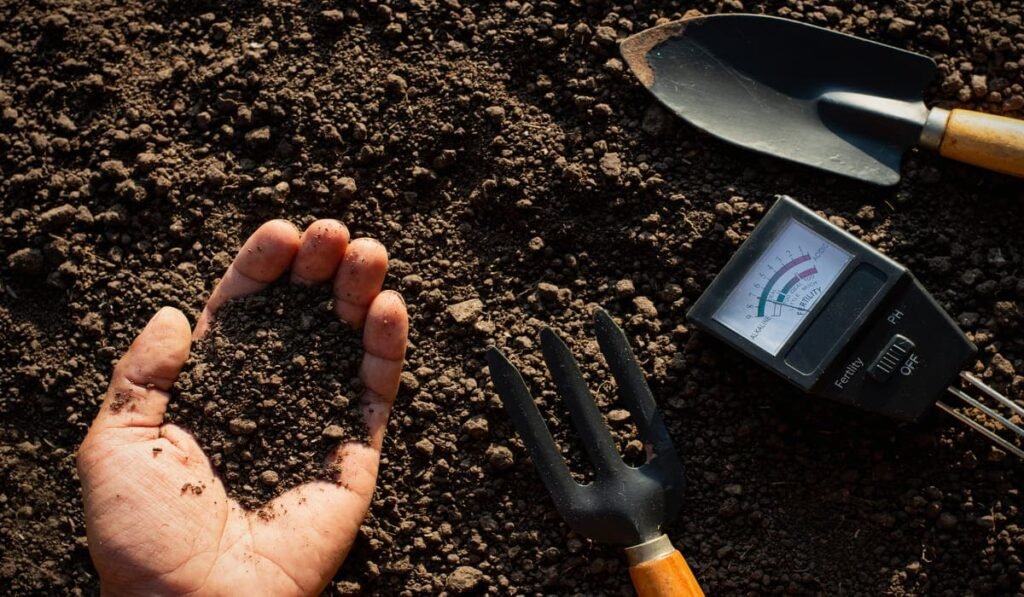
The easy way? Go to a gardening or DIY store and buy a testing kit. Different kits come with different instructions, so make sure to check them carefully before starting. Some kits may require you to send a sample to a lab and wait for the results. Time-consuming, right? Here’s how to do it yourself using everyday household items.
The Ribbon Test
This test will give you more information about the texture of your soil. Soil may have more things in its composition, such as silt, sand or even clay. This test will tell you how well it can drain and hold nutrients during heavy rainstorms.
Moisten some soil until it gets damp and holds together. Form a ball with your hands, then press it out between the thumb and forefinger. You should have a flat surface that looks like a ribbon extending outward.
If the soil is sandy, it will feel like grit. It won’t hold its shape and will crumble immediately. If it’s clayey, it will have a long and sticky ribbon that doesn’t break easily. If it’s loamy, the ribbon will be in between in size, but it breaks easily, indicating a perfect mix for most garden plants.
The Mason Jar Test
This test is different and tells you more about the exact percentage composition of your soil. Get a straight mason jar and fill 30% of it with soil. Add water all the way to the top, then add a spoon of dish soap to help separate the particles. Shake like there’s no tomorrow for two or three minutes, then let it sit on a flat surface to settle into distinct layers.
If it settles to the bottom in less than a minute, it’s sandy. If it settles in a few hours, it’s based on silt. Clay will take more than 24 hours to settle on top. In some days, clay may take up to a few days to fully clear out the water.
The Pantry Test
Finally, the pantry test allows you to check the pH of your soil, which is one of the most important things to know before planting anything.
Your soil could be alkaline or sweet, but also acidic or sour. Most plants and veggies require the pH to be between 5.5 and 7, according to University of Florida’s soil pH research. If it bubbles or fizzes, the soil is alkaline.
- Alkaline test: Get two tablespoons of soil in a small bowl and add half a cup of white vinegar. If it bubbles or fizzes, the soil is alkaline.
- Acidic test: Do the same with distilled water until the soil becomes muddy. Add half a cup of baking soda. If it bubbles, it’s highly acidic.
Run all three tests once, write the results down somewhere you’ll actually find them again, and you’re set for years. Soil composition doesn’t shift overnight.