
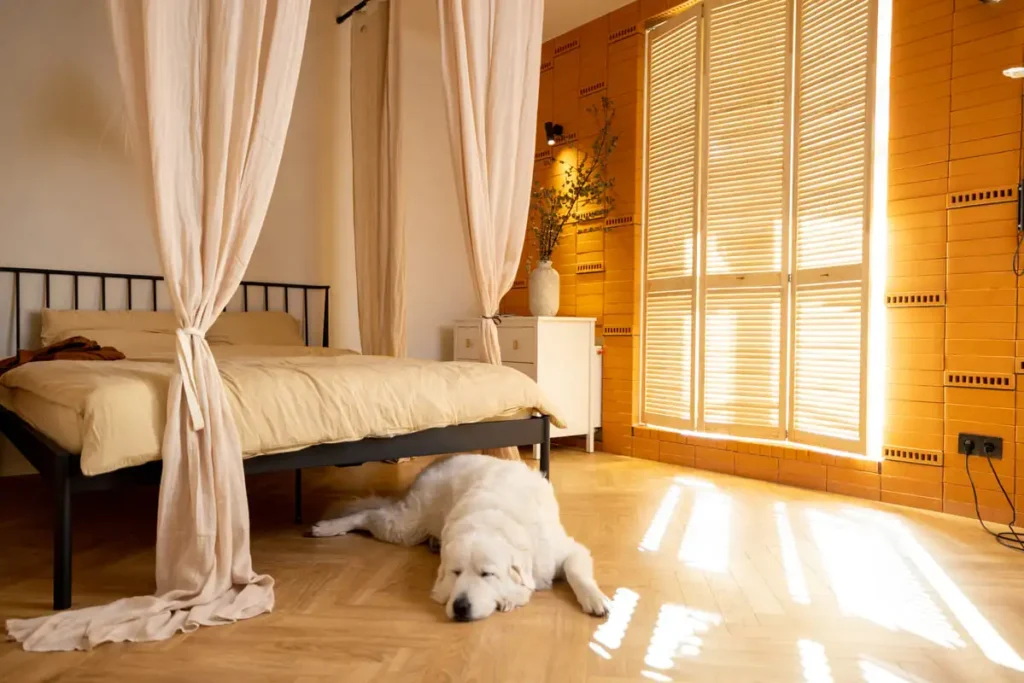
The best dog room ideas start with the space you already have. Any area that is designated for your dog is called the dog’s room. Such a room could include a place to sleep, fresh water, a spot for the leash, and some privacy. The room may range from an entire spare room to only a portion of the laundry room. Here are 20 examples ranging from a full room to a closet, with the sizes and safety precautions that other lists leave out.
Most indoor dog room ideas come down to the same few needs, so those come first. Short on space? Skip to the small-spot ideas. If your dog won’t go near the new room, the section after the list covers that.
What Every Dog Room Needs
Check the space against this list before you buy anything. It works for a spare bedroom, a closet or a corner, and every one of the indoor dog room ideas below builds on it.
- A bed sized appropriately for the dog. Measure your dog from nose to tail while it’s lying fully extended, and add a little extra space. Dogs who sleep curled up may go one size smaller, while sprawling dogs cannot.
- Clean, fresh water. An unbreakable dish that’s difficult to knock over, placed on a mat that catches spills.
- A grippy floor. Hard floors such as vinyl plank, tile and sealed concrete wipe clean but are slippery. Place a washable rug or runner where the dog walks, turns around, and lies down.
- A consistent temperature. Position the bed away from drafts, radiators, and windows that get full sun. Small inside rooms hold their temperature better. One dog forum member keeps their dog in a converted dressing room because of this: it stays warmer in winter and cooler in summer.
- High storage areas. Put medications, treats, and cleaning agents on a shelf or in a latched cabinet. Hang collars and leashes from hooks near the door.
- A gate rather than a closed door. A gate allows the dog to see and hear everything going on in the house, so it doesn’t feel isolated.
- Quiet. Pick a spot away from the front door and the TV.
Dog Room Ideas for a Spare Room
A spare bedroom is the easy version. You get a door, a window and enough floor for a bed, a crate and storage. These dog room ideas use the whole room.
1. A Full Dog Room in a Spare Bedroom
It’s basically like having a mudroom but with a bed included. If possible, replace the carpet with a vinyl plank or tile floor, then add an easily cleanable rug for traction. Include a gate at the door so your dog can still see and hear the rest of the household. Build your storage along one side of the room: a low storage area for the dog’s food and grooming tools, hooks for leashes and coats, and a basket for toys.
Of all the dog room ideas here, this one takes the most work. It’s also the one that keeps dog stuff out of every other room in the house.
2. A Dog Bedroom With a Real Bed Frame
Dog bedroom ideas borrow from human bedrooms: a framed dog bed, a nightstand, a lamp and a rug. A framed bed will keep the cushion off the cold floor and allow your dog to rest its back against the frame. The bed should be big enough to accommodate your pet fully extended, with some space to spare. For large dogs, a crib or twin mattress on a low frame, with a removable cover, will work fine.
Use the nightstand drawer for the things you grab at 10 p.m.: the leash, poop bags and any meds. Most dog bedroom ideas you’ll see online are styled for photos, with white bedding and not a hair in sight. A mid-tone fabric that hides fur is the better pick.
3. Dog Room Ideas for Multiple Dogs
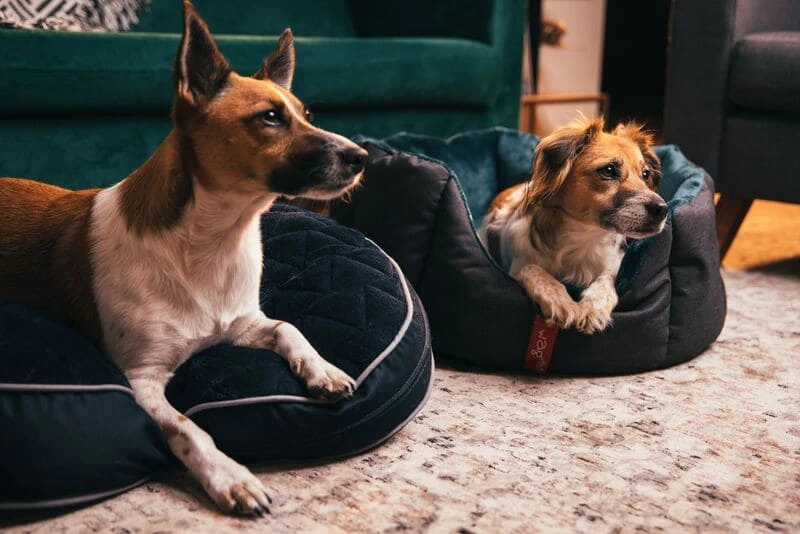
If you have more than one dog, every dog should have its own belongings. This means one bed for each dog plus one extra, since dogs swap beds and someone always wants to sleep on the one that is occupied. Feeding should be done separately, with each dog on a different side of the room or in its own crate.
Most dog room ideas for multiple dogs fall down on floor space. Two beds wedged side by side force the dogs together when one of them wants a break. In a spare bedroom, put the beds on different walls and keep the middle of the floor clear so either dog can walk away.
4. A Dog Suite With Built-Ins
This is the one you see in newly built show homes: a built-in crate under the counter, an elevated wash station, washable wallpaper, and a cabinet for everything. An indoor luxury dog room is wonderful when you happen to be redoing your house. If not, go for the one built-in your dog will actually use. In most cases, that’s somewhere your dog can get washed (see idea 13).
Remember it’s for your dog, not your photos. A luxurious suite of rooms with slippery marble floors and a bed under a drafty window is not a good dog room.
5. A Puppy or Pet Room
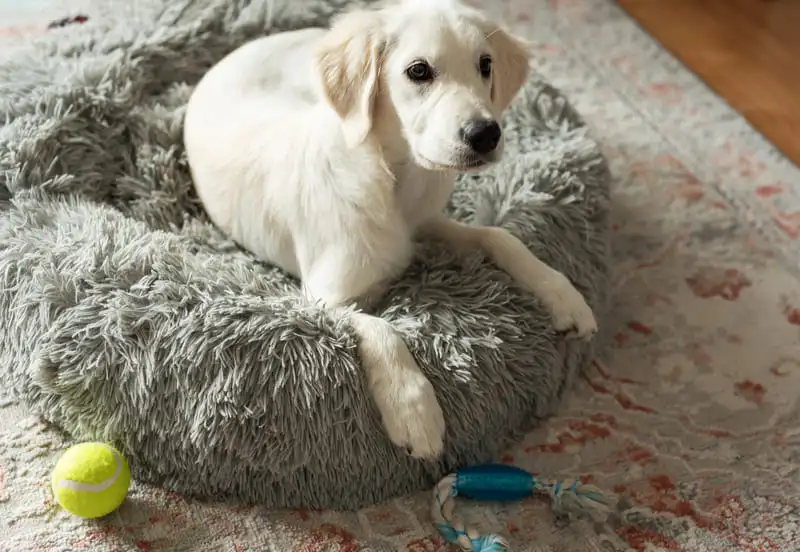
Puppies need a room that’s easy to clean and hard to wreck. Most pet room ideas for a puppy start with a playpen, which keeps the puppy in a small area with a bed at one end and a potty pad or tray at the other. The floor needs to be water-resistant. Keep cords, shoes and anything chewable off the floor, and put a lid on the trash can.
Place the room close to the door you use for potty trips so the run is quick. We have a guide on how to create a dog potty area outdoors.
The same pet room ideas work in a house with a cat and a dog. The one rule is to keep the litter box away from the dog’s food and out of the dog’s reach. A gate with a small cat door, or a litter box up on a sturdy shelf, does the job. Once the puppy grows up, most pet room ideas turn into a regular dog room: lose the playpen, keep the floor.
Small Dog Room Ideas for Closets, Corners and Nooks
No spare room? Most dogs don’t need one. These small dog room ideas fit in a closet, under the stairs or in the corner of a room you already use.
6. A Closet Turned Dog Room
The typical depth of a reach-in closet is 24 inches, which should be adequate space for either a small or medium dog’s bed. For large dogs, it needs to be a walk-in.
Remove the door from the closet, or replace it with a half-door or a pressure-mounted gate that allows some ventilation and visibility. Install a hook rail at adult height and a storage shelf above the bed for dog food and supplies. Paint the interior of the closet in a light color so it doesn’t look like a cupboard. If you rent, all of these items can be removed in one afternoon.
7. A Den Under the Stairs
The area under the staircase is the traditional place. This is because it’s out of the way, yet right there in the middle of things. The majority of the project will involve installing a door and placing a bed. But before you enclose the space, make sure you check your local building regulations. Many require the walls and underside of an enclosed space under the stairs to be finished with half-inch drywall. Our dog house under the stairs guide has everything you need to know on this subject.
8. A Corner of the Living Room
Dogs are always eager to join you; hence, many dogs love picking a corner of the living room to sleep in. One dog owner described their setup on a dog forum: “The crate is their little home and I put it where I was most of the day so they could go in and out at will.” Having a bed, water bowl, and basket of toys in an unused corner equals a dog room. Our dog corner ideas go deeper on making that corner work.
9. Crate Furniture
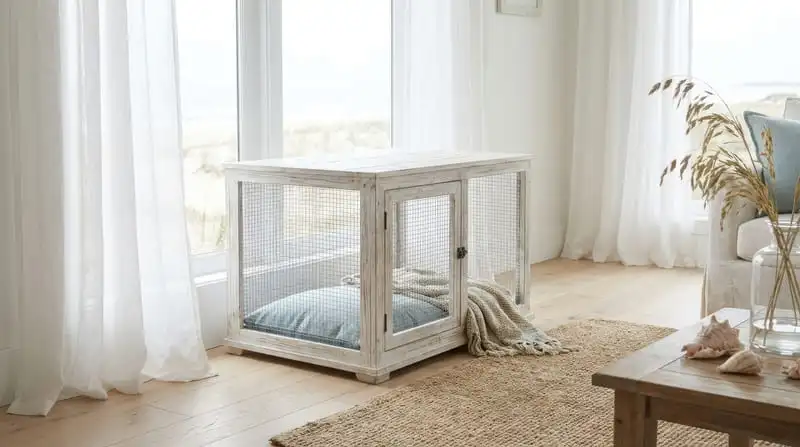
The crate furniture you buy or build will act both as a table and as the dog’s room. The dimensions should be determined based on the size of the dog and not based on the room’s dimensions. Your dog must be able to stand up, turn around and lie down stretched out inside the crate without difficulty. For the length, measure from the nose to the base of the tail and add a few inches. For the height, measure from the ground to the top of the dog’s head.
One of the easiest diy dog room ideas is turning an old sideboard into a crate. Take the doors off, fit slats or a gate panel across the front, and drill a few holes in the back for air. For two dogs, look for a double-wide crate with a removable divider. It’s one of the few dog room ideas for multiple dogs that fits in a living room.
10. A Window Nook
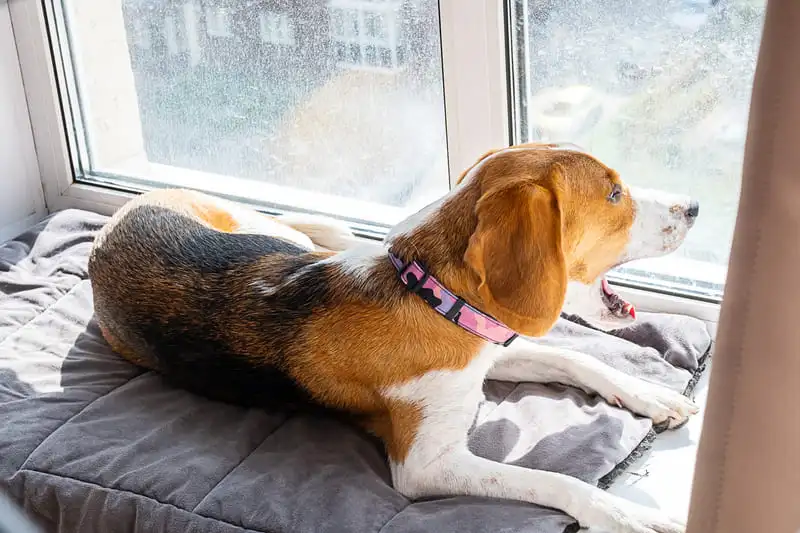
Many dogs enjoy looking out the window. A window seat with a cushion or a dog bed near a low window is perfect for them. Should your dog bark at each passer-by, frosted film on the lower part of the glass will be helpful. The dog gets the sunlight, but not the view that excites it. The bed should not be placed under direct afternoon sunlight, and blind cords should be tied up out of reach.
11. A Corner of Your Bedroom
If you like having your dog close at night, a bed on the floor of your own room is the cheapest of all the dog bedroom ideas here. It’s been studied, too. A 2017 Mayo Clinic study tracked 40 healthy adults and their dogs for seven nights. Sharing the room with a dog didn’t spoil most people’s sleep. Sharing the bed did.
One rescue owner on a dog forum said all their dogs have slept in their own bed on the bedroom floor, and it never made them want the human bed.
Rooms That Already Have a Job
You can carve out a dog room in house spaces that already have another job. Laundry rooms, mudrooms and kitchens come with hard floors, storage and often a door to the yard, which is most of what a dog needs.
12. The Laundry Room
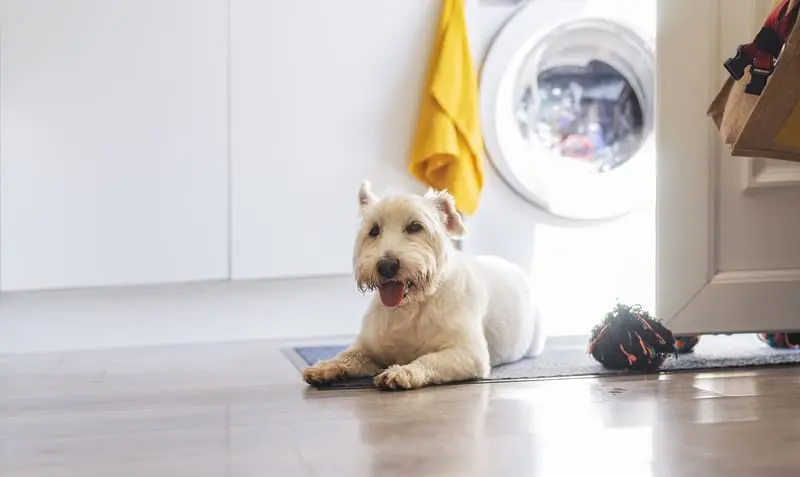
The laundry room shows up in almost every list of dog room ideas. It has a tile or vinyl floor, a sink and usually a door to the garage or yard. Place the bed on the opposite side of the room away from the appliances, as the spin cycle and heat emitted by the dryer may alarm a timid dog. The detergent pods, bleach, and dryer sheets should be stored either high up or in cabinets that cannot be accessed easily. Make sure that the dryer vent is out of the way of the dog.
13. The Mudroom
A mudroom is a dog room in the making. Your dog waits in the room while you wipe its paws, so all the dirt stays at the door. A hook for the leashes, a basket full of towels, an area for cleaning off muddy boots and a water bowl should do it. With a little more space and some plumbing, a raised tub or shower area turns it into a good rinse station. Our dog wash station ideas go into the details.
14. A Kitchen Feeding Nook
Provide a place that is only your dog’s: mats, two bowls, and a food storage unit, preferably located at the end of the run of cabinets so that people do not get tripped up by them. Drawers with built-in bowls are an added feature. The FDA says to wash food dishes and scoops with soap and hot water after each use, so a spot near the sink is the most convenient. We have other dog feeding station ideas as well.
15. A Home Office Corner
If you work from home, your dog has probably chosen a comfortable place near your computer desk. Give it a bed that is visible from your seat, as well as a water bowl and some chews to keep it entertained during lengthy phone conversations. Arrange your charger cords behind your computer desk, since puppies love chewing them.
16. The Basement
A finished basement gives you room that a lot of homes don’t have upstairs. Setting up a dog room in house basements comes down to damp and cold. Run a dehumidifier if the air smells musty, and put the bed on a raised frame or a thick mat instead of bare concrete. Make sure the room stays comfortable without a space heater running while nobody’s home.
Think about the stairs, too. Steep, open-backed basement stairs are hard for puppies, seniors and short-legged dogs. In a Finnish study of 13,715 pet dogs, 23.5% were fearful of certain surfaces or heights, so a dog that refuses the basement may simply hate the stairs.
17. The Garage
Of all the dog room ideas here, the garage needs the most safety work. Carbon monoxide is the biggest danger. According to the CDC, “Never run your car or truck inside a garage that is attached to a house, even with the garage door open.” It further adds that CO “can build up indoors and poison people and animals who breathe it.” Don’t ever warm up your car while your pet is in the garage, and install a battery-powered CO detector.
Also, garages tend to get very hot and very cold depending on the season, so get some insulation for the room, and make sure to have proper heating and air conditioning installed before putting the bed inside. Store all the antifreeze, pesticides, and fertilizers somewhere your dog can’t reach. Antifreeze tastes sweet to dogs and is very poisonous. If you plan on painting walls and/or floors, check our garage paint ideas, and let the paint cure and the space air out before your dog moves in.
DIY Dog Room Ideas and Decor
The last three dog room ideas are about finishing the room, whatever its size. They’re cheap, and most are weekend jobs.
18. Washable Walls and Low-VOC Paint
Dogs scratch, lean on and shake mud onto walls at waist level. Satin or semi-gloss paints are preferable because they wipe cleaner than flat paints. For the lower half of the wall, beadboard, wall panels or washable wallpaper resist nose prints and muddy shakes better than paint.
Choose low- or no-VOC paints and ventilate the room prior to introducing your dog into it. The EPA points out that “Paints, varnishes and wax all contain organic solvents” and that “levels of several organics average 2 to 5 times higher indoors than outdoors.” The EPA’s recommendation is straightforward: “Increase ventilation when using products that emit VOCs.” Painting is one of the cheapest diy dog room ideas, and your dog’s nose sits a lot closer to that fresh lower wall than yours does.
19. Dog Room Decor in Colors Dogs Can See
Dogs have only two types of color cones, as opposed to our three. This means that dogs mostly see blues and yellows. They do not distinguish between reds and greens but rather see them as brown or gray. This does not mean that you should paint the walls blue. It means that finding a red ball against green grass is difficult, while finding a blue ball against a beige floor is easy.
Good dog room decor is mostly for you, so hang art and photos at human eye level, where a wagging tail won’t knock them down. A toy basket your dog can reach, a hook rail with a name plate and a rug that hides fur do more than any wall sign. If you want plants in the room, check each one first, since plenty of common houseplants are toxic to dogs. Our pet-safe plant finder lets you look them up. Keep dog room decor washable and chew-proof. Cushions with zip-off covers beat fringe, tassels and anything with small parts.
20. A Calm Corner for Storms and Fireworks
Fear of noise is one of the biggest phobias in dogs. In a study involving 13,715 dogs, 32% showed a high level of fear of one or more noises, and the most common one was fireworks, feared by 26% of all the dogs in the study.
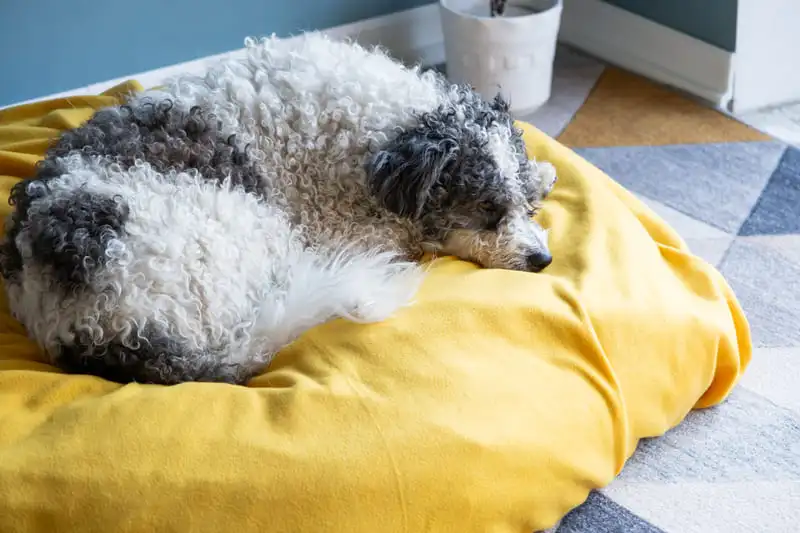
A quiet corner offers a scared dog a safe haven. Choose a place next to an inside wall without any windows, preferably in a small room. You can create a sanctuary by covering a crate with a blanket on three sides, or by putting a deep bolster bed in a closet with the door open so that your dog enters on its own. A fan or white noise machine will help drown out the sound of booms. Set it up several weeks before fireworks season, not on the night when your dog is already scared. If your dog’s fear is severe, talk to your vet. A quiet room helps, but it isn’t a treatment.
How to Get Your Dog to Use Its Room
None of these dog room ideas work if your dog won’t go in. Plenty of dogs ignore a new room at first, especially one at the far end of the house. These steps help:
- Keep the door open and stay close by. Sit inside the room with a book. Feed your dog in the room. Throw some treats on the bed for your dog to find.
- Put the room close to the family. If your dog always drags its bed to the living room, then that’s the right room.
- Practice short separations. As one owner on a dog forum put it, “Separation anxiety isn’t caused by being with a dog too much but by leaving them when they’re not comfortable being left.” Start off with a short separation time and gradually increase the duration. One owner said that leaving their puppy alone from an early age, with frozen food toys, made their dogs look forward to it.
- Don’t ever use the room as punishment. If the room is where your dog goes when it’s in trouble, it will shun the room.
- Recognize true suffering. Barking, scratching at doors, drooling, or chewing up whatever is near when you are gone are symptoms of separation issues. In the Finnish study, separation problems occurred in about 5% of dogs, or one out of twenty. If you see these signs, consult your veterinarian or a professional animal behaviorist.
Dog Room Ideas FAQs
Pet dogs thrive when kept inside but allowed to go out daily. Dogs are sociable animals and always want to be around the family; keeping them inside ensures that they are protected from heat, cold and rain. Being outside is important for exercise, sniffing, and going to the bathroom. Our outdoor dog area ideas cover how to set up the yard side.
What Color Calms Dogs’ Anxiety
Nothing proves that any color can relax your dog. The eyes of a dog perceive blues and yellows more clearly, so using these shades for painting seems to be a wise choice. In this color range, it will also be easier for your dog to find its toys and beds. Relaxation can come only with silence, stability, and the presence of a safe haven.
Is 10 Hours Too Long for a Dog to Be Home Alone?
For most adult dogs, yes, if there are no breaks in between. Ten hours is a lengthy time to hold it, and puppies and senior dogs need to relieve themselves much more frequently. A comfy dog room helps make the time bearable, but it doesn’t replace the midday break. If there is no one at home, a neighbor or a dog walker can handle that break. Our dog chore chart has a midday slot for exactly this.
Should My Dog Sleep in My Room?
This decision is totally up to you, and both options are valid. This was put quite nicely by one dog owner in an online dog community: “It’s perfectly fine to have a dog in your room if that’s what you want.” The 2017 study done by the Mayo Clinic showed that the presence of a dog in a bedroom did not affect the quality of sleep of most people; however, a dog in the bed was a different matter altogether.
Does a Dog Need Its Own Room?
No. A dog needs its own spot: a bed, fresh water and somewhere quiet it can choose to go. A full room is a bonus, which is why so many of the dog room ideas above are corners, closets and nooks. Most indoor dog room ideas are really about making that one spot comfortable and easy to clean.
What Should a Dog Room Have?
At a minimum: a bed sized to your dog, fresh water, a floor with grip, a steady temperature, storage up high for food and meds, and a gate instead of a closed door. The list is the same for a spare bedroom or a dog room in house corners and closets. Add toys, a lamp and a washable rug once the basics are in.
How Do I Make a Dog Room in a Small House?
Use the space you’re not using: a closet, the triangle under the stairs, a corner of the living room or a window nook. Pick furniture that does two jobs, like a crate that’s also an end table. The small dog room ideas in ideas 6 to 11 are all built for this, and none of them needs a spare room.