
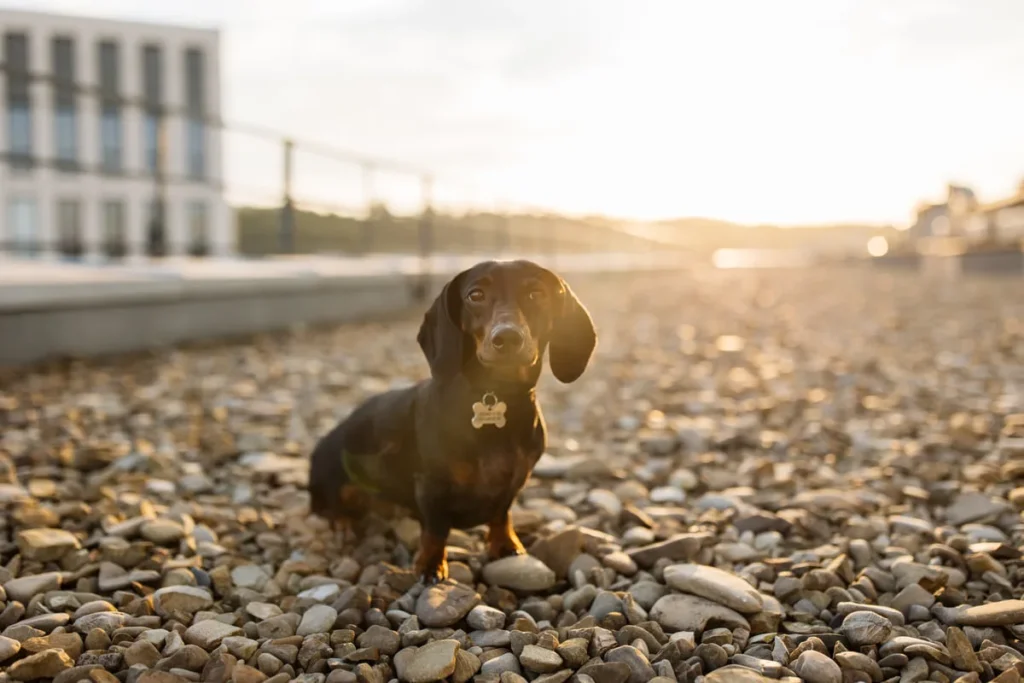
The best dog potty area is a patch of rounded pea gravel, 2 to 3 inches deep over a compacted stone base, with an edge around it and a gentle slope away from the house. Urine drains straight through, and it costs a few dollars per square foot. Below: what to use, how big to go, how to build it, how to stop the smell, and a few backyard dog potty area ideas for awkward yards.
Where to Put Your Dog Potty Area
Pick the spot before you buy anything. A good dog potty area sits downhill from the house and from any vegetable beds, so runoff flows away from both.
It should be near the back door. Your dog is far more likely to use an area near the back door in the early hours of the morning when it is raining outside. Having a water hose nearby makes cleaning easy, and sunlight helps dry the area out. Do not choose a corner where people sit or children play.
Best Materials for a Dog Potty Area, Compared
Pea gravel is the best material for outdoor dog potty area surfaces in most yards. It’s cheap, and poop lifts off it cleanly with a scoop. Mulch and pet turf work too, with trade-offs.
| Material | Installed cost | Depth | Upkeep | Watch out for |
|---|---|---|---|---|
| Pea gravel, 3/8 to 1/2 in, rounded | $0.86 to $3.78 per sq ft | 2 to 3 in over a 3 to 4 in base | Scoop daily, rinse often, top up every few years | Dogs that mouth stones; pebbles tracked onto decks |
| Wood mulch, undyed | About $0.44 to $0.54 per sq ft | At least 2 in | Replace every 6 to 12 months | Holds smell; never use cocoa mulch |
| Pet-rated artificial turf | $4 to $12 per sq ft | Over a compacted gravel base | Rinse often, enzyme cleaner for odor | Gets very hot in direct sun |
| Natural grass | Nothing, if it’s already there | Not needed | Mow high, water deeply | Urine burns brown patches |
Costs: Lawn Love (gravel and mulch), LatestCost (turf). For a 6 x 6 ft spot, that’s roughly $31 to $136 for pea gravel, under $20 for mulch and $144 to $432 for turf. Prices vary by region.
Pea gravel. Choose rounded stones about 3/8 to 1/2 inch across, since crushed stone has sharp edges that are rough on paws. A pea gravel dog potty area hoses clean in seconds. The catch: some dogs like to mouth small stones, and pebbles wander onto the patio unless the area has an edge.
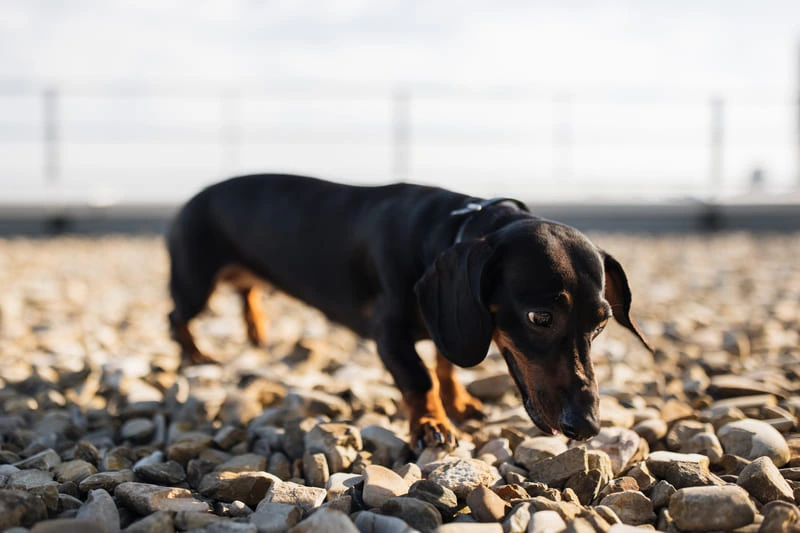
Wood mulch. It is the most inexpensive surface to lay, as well as being soft to walk on. However, it absorbs urine quickly, so it starts to smell sooner than the other materials. Use plain, undyed wood only. Never use cocoa mulch, because it contains theobromine and caffeine, which are toxic to dogs, according to Poison Control.
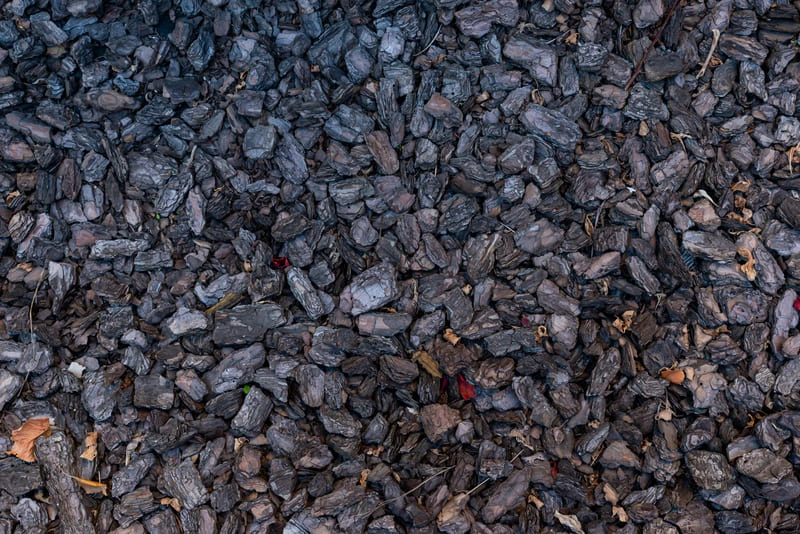
Pet-rated turf. Good for small yards and patios. Use pet-rated turf with a perforated backing, and install it over a gravel layer so urine can drain. It should not be in full sun during the afternoon. A UNLV study recorded artificial turf temperatures as high as 169°F, which is 69 degrees hotter than watered grass.
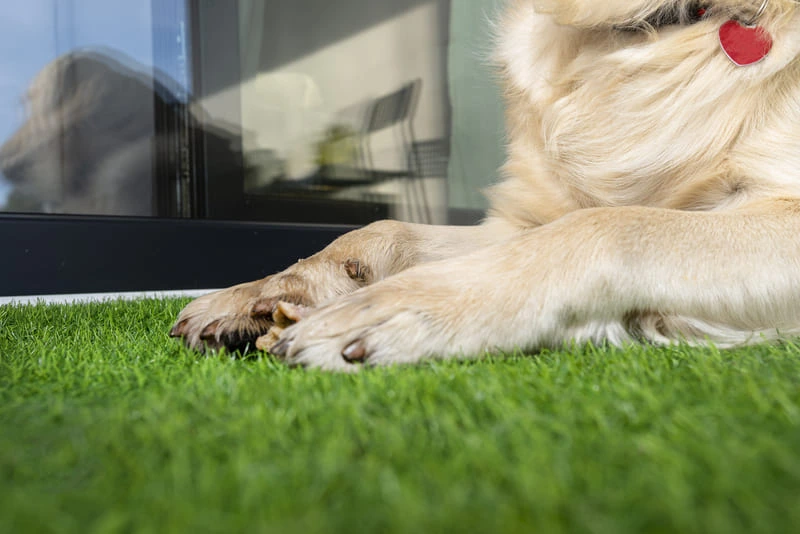
Grass. If your grass is holding up, leave it alone. According to an extension expert, urine-damaged grass should be mowed to a height of 2 to 3 inches and watered deeply. If the brown spots continue, replace the grass in that area with gravel or wood chips.
How Big Should a Dog Potty Area Be?
Make it big enough for your dog to sniff around and step past old spots. Dogs don’t like walking where they’ve already gone, so a dog potty area that’s too small stops getting used. As a rule of thumb:
- Small dogs, under 25 lb: about 4 x 4 ft
- Medium dogs, 25 to 60 lb: 6 x 6 to 8 x 8 ft
- Large dogs, over 60 lb: 8 x 8 ft or more
Add about half again for each extra dog. Mark the shape with string and live with it for a day before you dig.
How to Build an Outdoor Dog Potty Area
You can build an outdoor dog potty area in a weekend with a shovel, a rake and a hand tamper.
- Mark the outline. Use either string or marking paint, and check the slope using a level on a long board.
- Dig out the area 5 to 7 inches deep. Make sure the bottom keeps a gentle slope away from the house.
- Create the border. Add pavers, timbers or steel edging 1 to 2 inches higher than the surrounding soil to hold the stones in.
- Lay the base. Add 3 to 4 inches of crushed stone or road base material in thin layers, and tamp each layer firmly.
- Add landscape fabric. This prevents weeds and keeps the gravel from sinking into the base material. Use a permeable fabric, not plastic sheeting.
- Cover it with pea gravel. Lay 2 to 3 inches of pea gravel over the fabric layer.
For a pea gravel dog potty area, one ton of gravel covers about 100 square feet at 2 inches deep. A 6 x 6 ft spot needs about half a ton at 3 inches.
Drainage for a Dog Potty Area
Good drainage for dog potty area builds comes down to slope, base and soil.
For the bed to drain well, it needs a slight slope that lets water run off the bed, not toward your walls. The compacted stone base is what carries urine away. Without the base layer, urine soaks into the soil just below the gravel and stays there.
Clay soils take time to drain. Carry out a test by digging a hole, filling it with water and checking it a few hours later. If it’s still full, you’ll need better drainage for dog potty area spots on clay: dig the base a few inches deeper, or move to higher ground.
Backyard Dog Potty Area Ideas
Not every yard has a flat, sunny corner. These backyard dog potty area ideas fit different spaces:
- Gravel corner with paver border. A patch of pea gravel in a back corner with a paver border where you can stand while you scoop.
- Side-yard strip. A gravel strip 3 to 4 ft wide creates space for your small dog in the tight passage next to the house.
- Turf pad near the patio. A 4 x 6 ft pet turf pad laid on a gravel base close to the back door is a good fit for small dogs and quick trips out in winter.
- Mulch bed behind shrubs. Out of sight and cushioned underfoot. Check whether a plant is safe for dogs using our Plant Finder Tool before putting it in the ground.
- Paver walkway. Pavers from the back door to the area keep your dog’s paws clean on the way back inside.
Setting Up an Outdoor Dog Potty Area for Winter
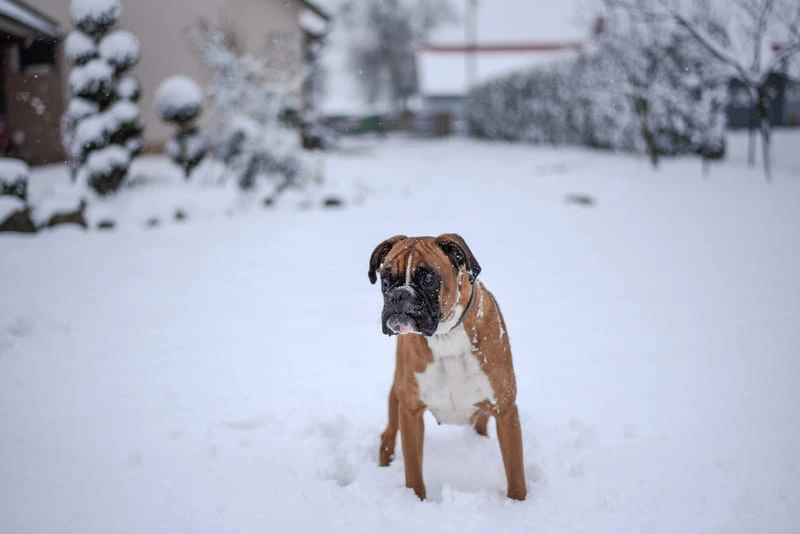
Snow buries the spot your dog knows, and plenty of dogs won’t wade through it. Setting up an outdoor dog potty area for winter is mostly about access. Vetstreet suggests clearing a patch down to the ground near the spot your dog usually uses. This should be done after every snowfall.
A small roof or the eaves of a shed will keep part of the area dry. In case of an ice storm, have a grass pad ready on your covered porch. Short-legged dogs go out more happily wearing a coat.
How to Keep It Clean and Smell-Free
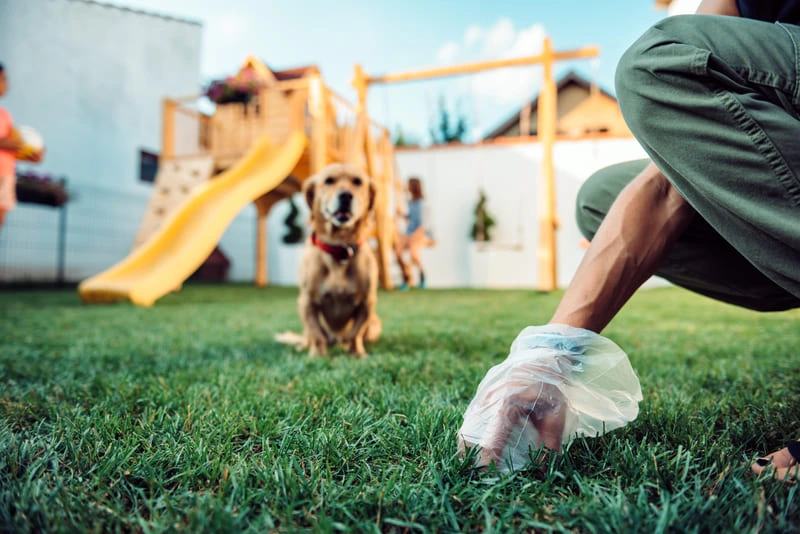
A well-built dog potty area shouldn’t smell much. Scoop poop every day and hose the surface a few times a week, more often in hot weather. Soak problem spots with an enzyme cleaner and let them dry. They break urine down instead of masking it, which is why dog owners on Reddit recommend them for urine smell. Top up pea gravel every few years and replace mulch every 6 to 12 months.
If an outdoor dog potty area still smells after a week of this, check the drainage before you blame the cleaning.
How to Train Your Dog to Use the Spot
Dogs will keep going back to the spot they are used to, so you can expect about two weeks of retraining. Walk your dog to the new dog potty area on a leash first thing in the morning, after meals and before bed. Stay quiet while they sniff around. As they finish, say the word “potty,” then praise them and give a reward. Once your dog links the word with going, say it as they start.
Do not go back into the house the moment they finish. According to the AKC, you should give them some time to sniff around or play before you head inside, so that going doesn’t mean the end of fun time. Also, put a towel near the back door. The leash station in our dog corner ideas can double as a place to wipe their paws.
Dog Potty Area FAQs
For most yards, rounded pea gravel is the best material for outdoor dog potty area use. It drains well, scoops easily and costs about $0.86 to $3.78 per square foot installed. Pet-rated turf suits small yards and patios, but it costs more and gets hot in summer.
Is pea gravel good for a dog potty area?
Yes. Pick rounded stones 3/8 to 1/2 inch across and lay them 2 to 3 inches deep over a compacted base. Watch dogs that chew rocks, and edge the dog potty area so pebbles don’t spread onto paths.
How do I stop the smell?
Scoop the area every day, hose it several times a week and clean the worst spots with an enzyme-based cleaner. If the smell persists, the base is probably not draining well.
Can I make a dog potty area on concrete?
Yes. Lay pet-rated turf on a drainage mat so urine runs through and off the slab. Choose a spot where water already drains away from the house, and rinse the dog potty area often.
What should I do when it snows?
Shovel a patch close to the door so your dog can still sniff the ground, and keep the path clear. A covered corner makes an outdoor dog potty area for winter much easier to keep open. For ice storms, have an indoor backup such as a grass pad.