
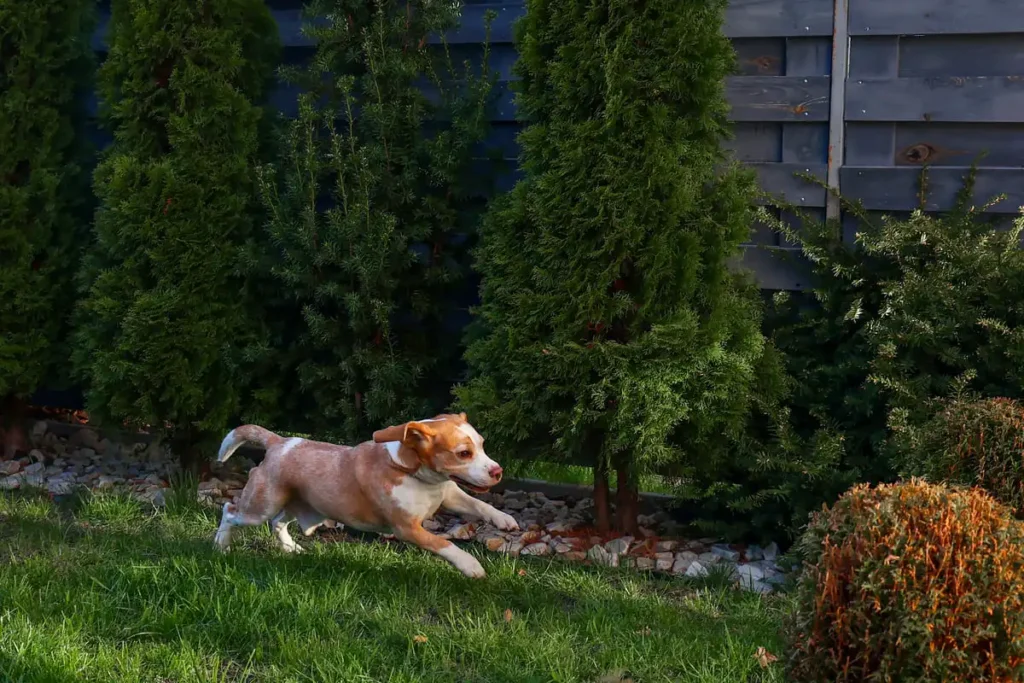
The best outdoor dog area ideas start with how your dog already uses the yard. Keep the running paths open, put the potty spot away from the back door, pick a ground cover that suits your climate and your dog’s paws, and add shade, water and one job to do, like digging or sniffing. Below you’ll find how to plan the space, how big to make it, which surfaces survive dogs (with real heat and urine numbers), how to fence off a section, and play ideas that don’t need much gear.
Watch How Your Dog Uses the Yard First
Spend a week watching before you buy turf or gravel. Dogs wear their own paths. They run the fence line when someone walks past, tear around in loops, and hit the same patch of grass every time they come down the deck steps. The outdoor dog area ideas that last work with those habits instead of fighting them.
One small-dog owner in an online landscaping discussion put it simply: “Respect the paths through the yard otherwise they will decide to practice parkour.” An owner with six dogs suggests you “identify a problem area (like a ‘landing zone’ off the deck steps) and then solve that with the right surface, speed reduction obstruction, etc.”
Sketch your yard and mark three things:
- The running route. Is it a loop, a straight sprint or a fence-line patrol?
- The landing zone. The spot right off the steps or door takes the most wear, so it needs the toughest surface.
- The potty spots. Where your dog goes now is where your dog will keep going, unless you offer a better spot.
In the same discussion, a cane corso owner put the garden beds and fire pit in the center-right of the yard instead of against the fence. That left a big oval for running and cut the area they had to maintain by about a third. A German shepherd owner planted hedges “not right up against the boundary walls, so the dogs can travel behind the hedges.” That way the dogs still get their run along the boundary.
How to Make a Dog Area in Your Backyard
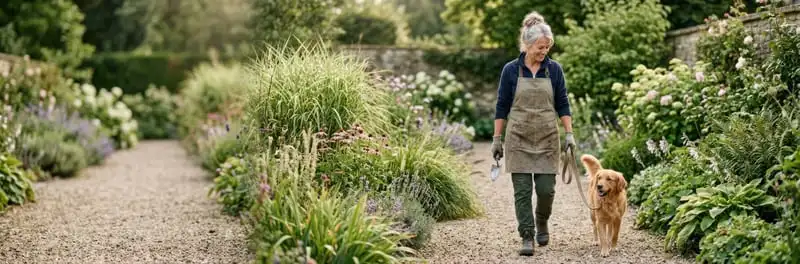
Here’s how to make a dog area in your backyard in seven steps. They work for a whole yard or one corner, and they’re the base for every one of the outdoor dog area ideas in this guide.
- Pick the spot. Keep the potty corner away from doors and windows, and keep play features away from wooded edges, where ticks live. Leave your dog’s favorite running route open.
- Mark it out. Use stakes and string, then let your dog use the space for a few days. One commenter made the point that there’s no sense redoing the area until you know which surface your dog will actually pee on.
- Fix the drainage. Fill low spots so puddles don’t sit. Heavy clay soil needs a sand or gravel base before anything goes on top.
- Choose the ground cover. The table below compares the five main options. Many owners mix two: a hard-wearing surface near the door and grass or mulch further out.
- Fence or border it. A short decorative fence is enough to make a separate dog area in backyard corners and keep dogs out of the beds. A jumper or a digger needs a proper run.
- Add shade and water. A tree, a shade sail or a dog house, with a water bowl in the shade.
- Give your dog a job. A digging pit, a sniffing bed or a few low obstacles turn an outdoor dog play area into somewhere your dog actually wants to be.
How Big Should an Outdoor Dog Play Area Be?
There’s no single right size, but there is a legal minimum, and it’s tiny. Federal rules for commercial dog breeders and dealers size an enclosure with a formula: the dog’s length in inches (nose to base of tail) plus 6, multiplied by itself, gives the floor space in square inches. Divide by 144 for square feet. A dog that’s 30 inches long gets just 9 square feet. That’s room to stand and turn around, not an outdoor dog play area.
Here’s what owners say works in real yards:
| Use | Size that worked |
|---|---|
| Potty patch | About 6 by 5 feet, in use for about five years |
| Potty patch for a dog that pees and poops in different spots | Big enough for separate zones, says a 20-year pea gravel owner |
| Running space | A continuous loop, plus at least one stretch at the yard’s full width |
| Narrowest grass strip | About 36 inches, between the patio and the garden beds in one cane corso yard |
For a sprinter, a long stretch or a loop matters more than total square footage. The cane corso owner’s goal was a circle the dog could run without stopping, with a few spots wide enough to really open up.
The Best Ground Cover for a Dog Area
Every surface has a catch. Here’s how the five main options compare for most outdoor dog area ideas, based on what owners said after living with them and what the research shows.
| Surface | Good for | Watch out for |
|---|---|---|
| Tough grass | Running, cool paws, larger yards | Urine spots, mud in heavy traffic |
| Clover | Small dogs and light use | Crushes under heavy running, slippery when wet |
| Wood chip mulch | Paths, potty corners, under trees | Needs topping up; never use cocoa bean mulch |
| Pea gravel | Drainage, potty patches, rinsing | Spreads, sticks to poop, can lodge in paw pads |
| Artificial turf | Mud-free ground in shade | Heat in full sun, smell without rinsing |
Grass That Survives Dogs
Dog urine kills grass mainly because of lactic acid, not just nitrogen, according to NC State Extension. The worst damage shows up as dead, straw-colored spots about 3 to 6 inches across with a dark green ring. Some grasses handle it better than others:
- Warm-season grasses: bermudagrass and zoysiagrass tolerate urine better than cool-season grasses, and NC State calls bermudagrass the most traffic-tolerant turfgrass used in North Carolina. One commenter said of bermuda, “The more you abuse it the more it grows.” It does poorly in shade, though.
- Cool-season grasses: tall fescue is the most tolerant, followed by creeping red fescue and perennial ryegrass. Kentucky bluegrass is the least tolerant.
Rinsing a spot with water within a few hours keeps the grass alive. NC State calls training your dog to use a mulched area or the edge of the lawn “the best way to stop urine damage.” For winter mud, the small-dog owner found that “a thin layer of dry leaves completely prevents mud so long as the dog doesn’t need to pivot on the spot.” Their advice for muddy ground: cover it with several inches of mulch, and fill low spots so puddles don’t last.

Clover
One commenter wrote, “my friend has a small dog and a clover lawn has held up fine.” That matches what extension experts say: clover is fine for light use. The University of Maine Cooperative Extension notes that clover “will crush more easily than turfgrass under prolonged impact” and can be “quite slippery when wet.” It also found no strong evidence that clover resists yellowing from urine. Microclover doesn’t handle high heat, drought or shade, and may need reseeding, according to University of Illinois Extension. Keep your dog off new clover until it’s established.
Wood Chip Mulch
Wood chips are cheap, soft on paws and easy to rake back into place. One owner with two dogs recommends wood chip mulch “because it keeps their paws clean and is easy to clean up,” and adds, “I definitely recommend plants as their roots help soak up some dog pee!” Expect to top it up as it breaks down, and pick up poop daily, because mulch can get smelly.
Never use cocoa bean mulch. Cocoa hulls contain the same compounds that make chocolate toxic to dogs. A University of Illinois calculation found that about 2.25 ounces could cause mild signs in a 65-pound dog, and 12 ounces could be potentially lethal. Smaller dogs need less.
Pea Gravel
Pea gravel drains fast and rinses clean. “Nah, the gravel is cheap to refill. The drainage is worth it,” one commenter replied. Someone who has kept a pea gravel patch for 20 years digs it about 6 inches deep, lines it with good landscape fabric, and picks up poop at least every other day.
The downsides are real. “Gravel migrates everywhere. And it is incredibly heavy and difficult to move,” another person warned. Poop picks up the stones too. “If you’re putting down pea gravel your dog will be making a Pay Day candy bar,” someone else joked. Edge the gravel with brick or timber, and check your dog’s paws. One owner who has kept a potty spot for decades, first with turf and then with pea gravel, said the gravel “was the best” but to make sure “it doesn’t get caught in their pads.”
Artificial Turf
Turf stops mud, but it gets hot. Green artificial turf reached 169°F in a University of Nevada, Las Vegas study, about 69°F hotter than irrigated grass. More recent University of Florida research measured artificial turf at up to 174°F on the hottest days, while natural turf stayed closer to 102°F. The top comment in one potty-area discussion was short: “turf gets insanely hot!”
Turf also holds smell. As one commenter put it, “The pee will kill the grass if you don’t rinse it. The pee will stink on the plastic if you don’t rinse it.” If you want turf, lay it in shade, test a small piece first if the spot gets full sun, and hose it down often. One owner laid turf over their pea gravel to stop the stones spilling out and said it was “significantly better.”
Separate Dog Area in Backyard: Fences, Gates and Hedges
Most people who want a separate dog area in backyard spaces are protecting something: a vegetable bed, a patio, a play area for kids. You don’t need chain link for that.
- Decorative fencing. The six-dog owner uses decorative fencing to keep the dogs out of beds, and a “double fencing strategy” to keep them on one side of the backyard or the other.
- Gated paths. The German shepherd owner added fencing with gates on the garden paths, which they plan to cover with climbers, so dogs can be separated when needed “without being an eyesore.”
- Plant cages. “Plant big stuff and put cages around them so they don’t get trampled or dog watered to death,” the small-dog owner advised.
- Hedges set back from the fence. Leave a strip behind them so your dog can still patrol the boundary.
- A proper run. For dogs that jump or dig, use a fence your dog can’t clear, and bury wire mesh along the base.
Backyard Dog Play Area Ideas
These backyard dog play area ideas cost little and give your dog something to do besides patrolling the fence.
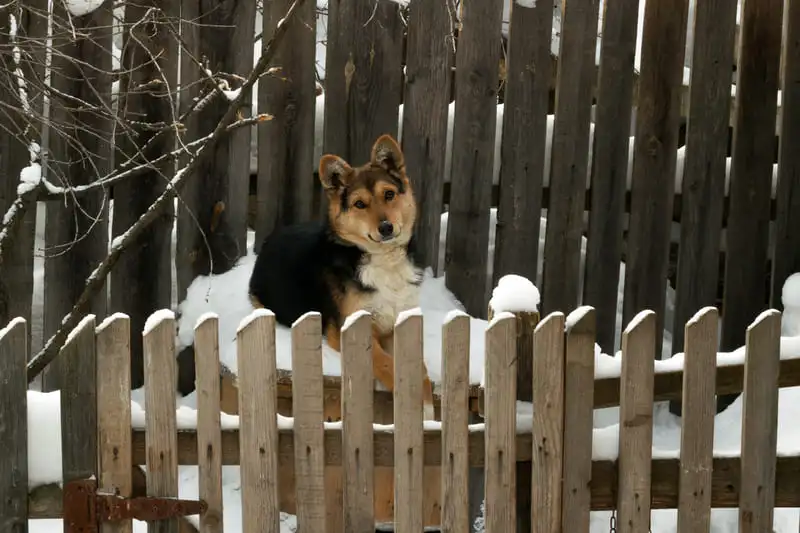
- A digging pit. A framed sandbox or a corner of loose soil where digging is allowed. Bury a toy a few inches down to get your dog started, and cover the pit when it’s not in use so neighborhood cats don’t treat it as a litter box.
- A sniffing bed. “Dogs like sniffing around and inspecting various surfaces, which will entice them to not always potty in the same spot,” one commenter wrote. Plant sturdy shrubs and grasses, and check each one in our pet-safe plant finder first. Sago palm, oleander, azalea and foxglove are all toxic to dogs.
- Find-it games. Scatter a handful of kibble across the grass and let your dog hunt for it.
- Water play. A kiddie pool or a sprinkler on hot days. Empty the pool after play. The CDC advises emptying and scrubbing anything that holds water, including pools and toys, once a week to stop mosquitoes breeding. That matters for dogs, because heartworm spreads through mosquito bites, and the FDA says it “has been reported in dogs in all 50 states.”
- Low obstacles. A plank on two bricks, a tunnel, a sturdy box to climb. Keep jumps low for puppies, seniors and long-backed breeds.
- A shady rest spot. A dog house, a raised cot or a tree with a bed under it, close enough to the water bowl.
Backyard Dog Area Ideas for Small Yards and Townhomes
In a small space, the potty spot and the play spot are often the same few square feet. These backyard dog area ideas come from owners working with patios and side yards.
- Split the surface. One commenter suggested putting “the gravel closest to the concrete and the grass further from you in hopes your pup would walk through the gravel to the grass to give you a bit of a pee buffer.”
- Move the potty patch away from the door. An owner who has kept a 6 by 5 foot potty patch for about five years said “it’s going to have a smell regardless,” and recommends placing it further from the door if you can. Our dog potty area guide covers ground cover and drainage for that spot in detail.
- Add a flush. The same owner set up a raised rain barrel beside the patch to rinse it.
- Give leg-lifters a target. “Highly recommend fake trees or shrubs if you have a dog that lifts a leg,” they added.
- Add shade and a paw stop. Another commenter suggested “A nice dog house for some shade and a rug that will help clean the paws on the patio edge.” For muddier dogs, an outdoor rinse spot helps; see our dog wash station ideas.
No room for a rest spot outside? Set one up indoors by the back door with our dog corner ideas.
Keep the Dog Area Clean and Safe
A dog area concentrates everything: waste, urine, standing water and whatever bugs live at the edge of the yard. Even the best outdoor dog area ideas need a cleaning routine.
- Pick up poop daily. Pet waste averages 23 million fecal coliform bacteria per gram, according to a clean water brochure in the EPA’s toolbox.
- Rinse urine. Hose grass within a few hours. Rinse gravel and turf often, and wash them with a kennel cleaner, as one owner does every week.
- Make a tick barrier. The CDC recommends a 3-foot-wide strip of wood chips or gravel between lawns and wooded areas, mowing often, and keeping play equipment, decks and patios away from yard edges and trees. Check your dog for ticks after time outside.
- Test hot surfaces. Press the back of your hand on the ground for seven seconds. If you can’t hold it there, it’s too hot for paws.
Frequently Asked Questions
A digging pit, a kiddie pool or sprinkler, a sniffing bed of sturdy pet-safe plants, a few low obstacles like a plank or a tunnel, and toys that live outside, like a ball or a tug rope. Rotate the toys every week or so to keep them interesting. Shade and fresh water come first in all outdoor dog area ideas, though.
What Is the 7-7-7 Rule for Dogs?
The phrase gets used loosely online. The version you’ll see from breeders and shelters is the puppy socialization “Rule of Sevens.” By 7 weeks old, a puppy should have walked on at least 7 different surfaces (grass, gravel, concrete), been in 7 different places (the backyard counts), faced 7 small challenges (climbing on a box, going through a tunnel, climbing steps), played with 7 kinds of toys, and been handled by 7 different people, among other sevens. A yard with mixed surfaces and a couple of low obstacles covers several of those boxes. It’s different from the 7-second test for hot ground above.
What Are Some Ideas for Outdoor Play Activities for Dogs?
Fetch and flirt-pole chasing for sprinters, find-it games with scattered kibble or hidden toys for sniffers, tug, a digging pit with buried toys, sprinkler play on hot days, a short obstacle course, and quick training games like sit, wait and recall between rounds. In summer, keep sessions short and stick to the cool parts of the day.
How Do I Make a Backyard Dog Playground?
Start with a fenced area and a dog-safe surface, then add shade and water. Add one feature for each thing your dog loves: a sandbox for diggers, a tunnel or plank for climbers, a sniffing bed for scent hounds, a pool for water lovers. Most backyard dog play area ideas need nothing more than scrap wood and sand. Keep obstacles low, sand rough edges smooth, and check for loose screws. The steps on how to make a dog area in your backyard above cover the rest.
What Is the Best Ground Cover for a Dog Area?
It depends on how your dog uses the space. Tough grass like bermuda, zoysia or tall fescue is best for running. Wood chip mulch and pea gravel work for paths and potty corners. Use artificial turf only in shade. Most of the outdoor dog area ideas that hold up mix two surfaces, and the right one for your yard is the one your dog actually uses.
Do I Need to Fence the Whole Yard?
No. Many backyard dog area ideas fence only a section, or use low decorative fencing and plant cages to protect beds. A fenced corner is one of the simplest outdoor dog area ideas if you have kids, a vegetable garden or a dog that digs. Your boundary fence still needs to be one your dog can’t clear or dig under.