
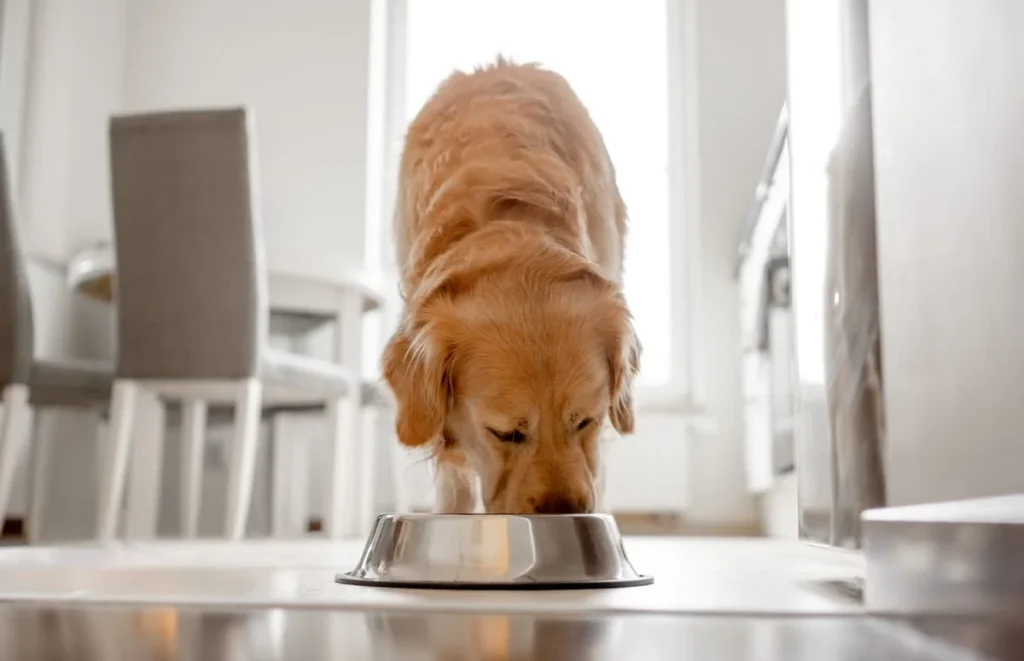
The best dog feeding station ideas keep the bowls out of the walkway, sit on a surface water can’t ruin, and keep the food within arm’s reach. Make sure you have these two covered when planning the build: the right surface that can withstand water, as dogs splash a lot more than one might expect, and the correct height, since raised bowls are connected with bloat in big, deep-chested breeds. Here are 10 designs you can use in your kitchen, kitchen island, cabinets and laundry room.
Before You Build One In, Answer These Four Questions
A built in dog feeding station is permanent. Your dog’s behaviors aren’t. In one discussion on remodeling the kitchen, the top-voted answer came from a cabinet installer: “Don’t do it… They have ALL wound up being dirty/stained/water damaged.” Others have kept their stations for years without issues. The key is the planning. Answer these four questions before you pick from the dog feeding station ideas below.
- Does your dog splash water? “Your dogs would have to be the neatest eaters for this to work,” was the response from one pet owner. “We have a bulldog and could never.”
- Do you own a large, deep-chested breed? Leave the bowls on the ground, as explained in the bowl-height section below.
- Do two dogs need separate feeding areas? One pet owner with one dog that eats quickly and another that eats slowly said that a built-in “would be horrible for us.”
- Will your dog eat from this area? Your dog likes to eat in a quiet environment. Put a dog feeding station in kitchen corners away from the cooking path, or find a quiet spot elsewhere. One owner calls theirs “one of the only regrets I have about my kitchen reno,” because the dog won’t use it.
10 Dog Feeding Station Ideas
These dog feeding station ideas start with full built-ins and end with setups you can take with you when you move. No cabinets to work with? Our dog corner ideas cover freestanding options.
1. A Kitchen Island With a Tiled Niche
One popular woodworking build is a peninsula design measuring 2 feet wide and 8 feet long, with an alcove for the dog’s bowls, a pull-out drawer for storing food and an acacia butcher block counter surface. The builder tiled the whole niche because “my guys are NOT clean eaters,” and also installed a motion-sensor USB-C light from a 3-pack that cost $30. A kitchen island with dog feeding station space works best this way: tile on every surface the bowls touch, and the food drawer right beside it.
2. A Counter Overhang With the Bowls on the Floor
A number of people proposed a much simpler design where the countertop overhangs beyond the last cabinet, with the bowls sitting on the floor underneath. “The overhang will help prevent you from accidentally stepping in the water,” said one person. Skip the side paneling and use corbels to support the overhang instead, so the splash goes onto the floor rather than into the cabinet.
3. An Open Cabinet Niche With a Mat on the Floor
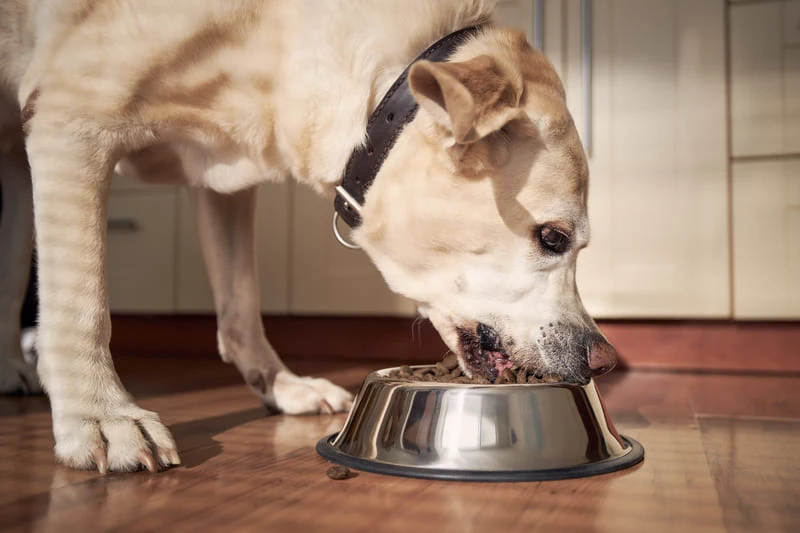
Keep one base cabinet open below and place the bowls directly on the floor inside it. As one of the commenters suggested: “leave that cut out niche without the shelf and either put the bowls on a mat on the floor in that niche, or find a little feeding stand that would fit there.” It turns a dog feeding station cabinet into a cubby with no shelf to swell. Add a silicone mat with raised edges, which another owner suggested, and the floor stays dry too. It’s a tidy dog bowl station for small and medium dogs.
4. A Sealed Shelf at the End of a Cabinet Run
If you desire your bowls to sit on a shelf, then construct one that can handle water. One owner constructed their shelf using solid wood and boxes made of plywood, and coated the front frame and shelf with “6 coats of poly.” Around the perimeter, “a bead of clear caulk” was applied. So far, “it’s holding up just fine,” and they clean under their food bowl after every feeding. Skip MDF and particleboard for any dog feeding station cabinet. As one commenter put it, that’s “a quick way to get water damage that will expand the MDF cabinet.”
5. Bowls Set Into a Countertop Remnant
Stone doesn’t mind water. “5 years without issue,” says one owner who tiled the back of their niche and used the same countertop for the bowls. Another owner used leftover countertop slabs for their three beagles and had “no issues whatsoever with cleanliness.” Ask your fabricator to give you a scrap from your countertops. But line the sides too. “Even when we put granite slabs inside, water and food still ruins the inside of the cabinet,” says one of the installers. Done properly, a built in dog feeding station with a stone base is the most durable version here.
6. A Floor-Level Drawer With Food Storage Above
One owner’s cabinet maker constructed a stack of drawers, with the bottom one at floor level for the bowls and the second and third for food and snacks. It’s a neat way to fit a dog feeding station in kitchen cabinets. Warnings from the threads: the woodworking builder did not use pull-out bowl drawers because “it seemed like you were just asking to get bugs/mice,” and the drawer owner keeps the water in a separate bowl on the floor. Keep the water bowl out of this drawer.
7. A Pot Filler Over the Water Bowl
Some owners add a small pot filler to a kitchen island with dog feeding station niche, so they can top up the water without carrying the bowl. Problem is, “you know those water bowls are never getting cleaned, just constantly topped up,” said one commenter. Some veterinarians go further and discourage self-filling bowls, stating that it’s impossible to know how much water the dog consumes. A dog normally drinks about one ounce of water for each pound of its body weight daily. If you add a filler, still empty and wash the bowl every day.
8. A Feeding Nook on the Laundry Room or Mudroom Tile
Feeding the dog on a tiled floor is the common response from the installers. “Have been moving cat and dog feeders into an open cabinet in laundry rooms. Open the door and feed on tile flooring,” one responded. Another suggests feeding dogs in a zero-entry dog wash station, which is easy to rinse and mop. Of all the dog feeding area ideas here, this is the hardest one to damage.
9. A Freestanding Stand With a Food Drawer
A diy dog feeding station doesn’t have to be built into anything. One first-time woodworker built a stand with a drawer underneath for food, sized for a 100-pound Bernedoodle. It moves when you move. A dog feeding station with storage like this keeps the kibble and scoop in one place. Read the bowl-height section first, though. In the same thread, one large-breed owner said they’d get rid of their raised stand after reading about bloat.
10. Separate Spots for Two Dogs
Often, two dogs will have contrasting speeds when eating. “One eats very slow and the other eats very fast and if they were next to each other eating it would be problematic,” one owner mentioned. Another owner feeds their four dogs in different rooms because “they steal each others food.” A multiple dog feeding station can be two niches a few feet apart, or two mats in different rooms. Plan dog feeding area ideas around the dogs you have, and remember that a built-in can’t grow if you add another pet.

How High Should the Bowls Be?
For most dogs, the floor works well. For large and giant deep-chested dogs, it is the safer option. This is according to a study published in the Journal of the American Veterinary Medical Association. The study looked at 1,637 large and giant breed dogs. It attributed about 20% of the bloat cases among large breeds, and 52% among giant breeds, to raised food bowls. The Cornell University vet school has put it bluntly: “Avoid raised food bowls.” Bloat is deadly without treatment.
Raised bowls do help some dogs. Vets say an elevated dog feeding station may suit dogs with arthritis in the neck or front legs, or dogs recovering from neck surgery. Ask your vet first.
If your vet agrees, vet-reviewed guidance says to measure from the floor to the top of the shoulders and subtract about 4 to 6 inches:
| Dog size | Bowl rim height |
|---|---|
| Toy and small | 2 to 6 in |
| Medium | 7 to 12 in |
| Large | 13 to 18 in |
| Giant | 19 to 27 in, only if your vet clears it |
Whichever of these dog feeding station ideas you build, set the height for your dog, not for your cabinets. A kitchen island with dog feeding station niche can still keep its bowls at floor level.
How to Keep Water From Ruining the Cabinet
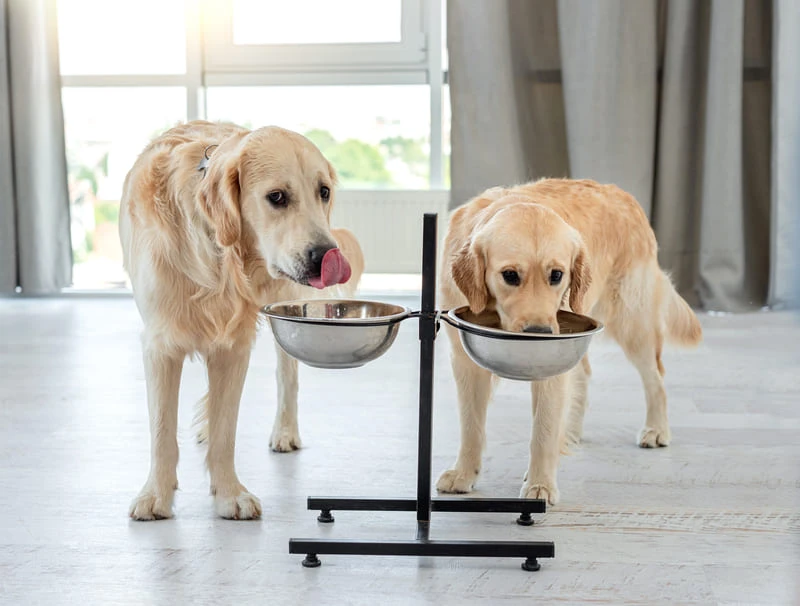
Most dog feeding station ideas online skip this part. Messy drinking is how dogs were designed. According to researchers from Virginia Tech, dogs pull their tongues back out of the water with an acceleration of up to four times the force of gravity. Dogs also dip much more of their tongues into the water than cats do. So you know what? Prepare for a splashing mess!
| Material | How it holds up |
|---|---|
| MDF or particleboard (most flat-pack cabinets) | Swells when wet. Keep it away from the bowls |
| Wood veneer shelf | Only with a vinyl or silicone mat on top, cleaned weekly |
| Solid wood or plywood | Works with several coats of polyurethane and a caulked edge |
| Porcelain tile | Holds up well. Large tiles mean fewer grout lines to scrub |
| Stone countertop remnant | The most durable surface for the bowls |
| Stainless steel liner | Wipes clean and won’t swell |
Run the tile over the toe kick too. One commenter expected “dog nails and drool to tear that up pretty quickly” where it wasn’t covered. Whether you hire a pro for a dog feeding station cabinet or build a diy dog feeding station, the rule is the same: no raw wood edges and no open shelf-pin holes near the water.
Cleaning and Food Storage
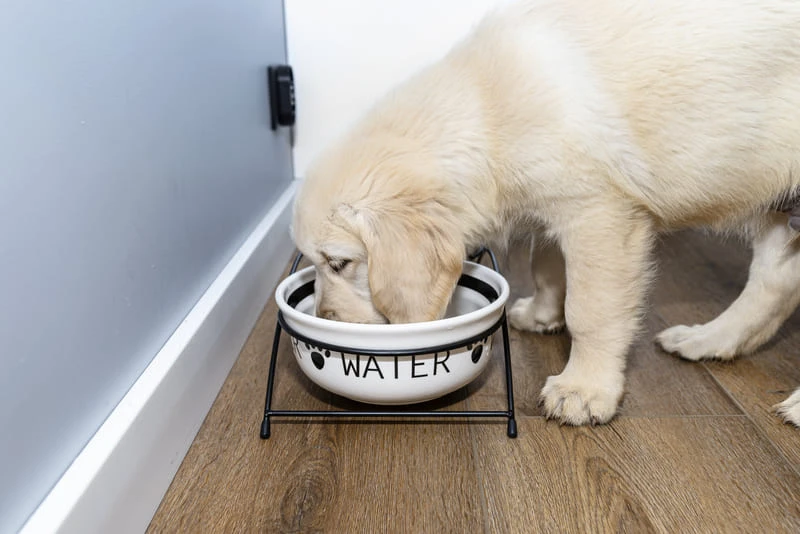
Cleaning is where many dog feeding station ideas fall apart. In one study of household germs, pet bowls ranked fourth among the most germ-infested items, hence the recommendation that they be washed daily. The FDA advises that pet food bowls and scoops be washed with soap and hot water after each feeding, and that dry food be stored in its original bag, with the top folded down, below 80 degrees Fahrenheit.
Unfortunately, very few pet owners follow these recommendations. In one 2022 study of 417 dog owners, fewer than 5% were aware of the FDA guidelines, while 18% cleaned the food bowl less often than every three months or never. As such, design your station to allow for easy cleaning.

Dog Feeding Station FAQs
First, you need to measure your dog’s height from the ground to its shoulders. Find out whether there are any risks for the breed when using an elevated feeding dish. Choose a non-porous material such as tile, stone or sealed solid wood, and add a drawer for food storage. A freestanding diy dog feeding station is a weekend project. A built-in niche is a cabinet job.
Are raised dog bowls bad for dogs?
For giant and large breeds that have deep chests, raised bowls are associated with bloat: a JAVMA study attributed about 20% and 52% of cases to them. Cornell recommends against using them. Raised bowls can help dogs with arthritis in the neck or front legs, so ask your vet.
Why are some dogs such messy drinkers?
The mouth of the dog cannot seal up to create suction, and hence it laps. The tongue dives in and then snaps back out with an acceleration of up to four times gravity. Dogs also dip much more of their tongues into the water than cats do. Some water always spills on the floor.
Is a built in dog feeding station worth it?
Only if it has both a waterproof surface and a dog who will eat from it. Owners from the forums have had theirs for one and a half to five years with no issues, while one said it was “one of the only regrets I have about my kitchen reno.” If you’re unsure, start with one of the simpler dog feeding station ideas, like a counter overhang or a freestanding stand.
Where should I put my dog’s food and water in the kitchen?
Somewhere calm, away from the cooking path, which is what the best dog feeding area ideas have in common. “Dogs or cats are supposed to eat in a calm place,” one owner wrote. The end of an island, a corner by the back door, or a floor-level niche all work for a dog feeding station in kitchen layouts.
What is the 95% rule in dog food?
It’s a labeling rule. Any pet food named for a single ingredient, such as “Beef Dog Food,” must contain at least 95% of that ingredient, excluding water.