
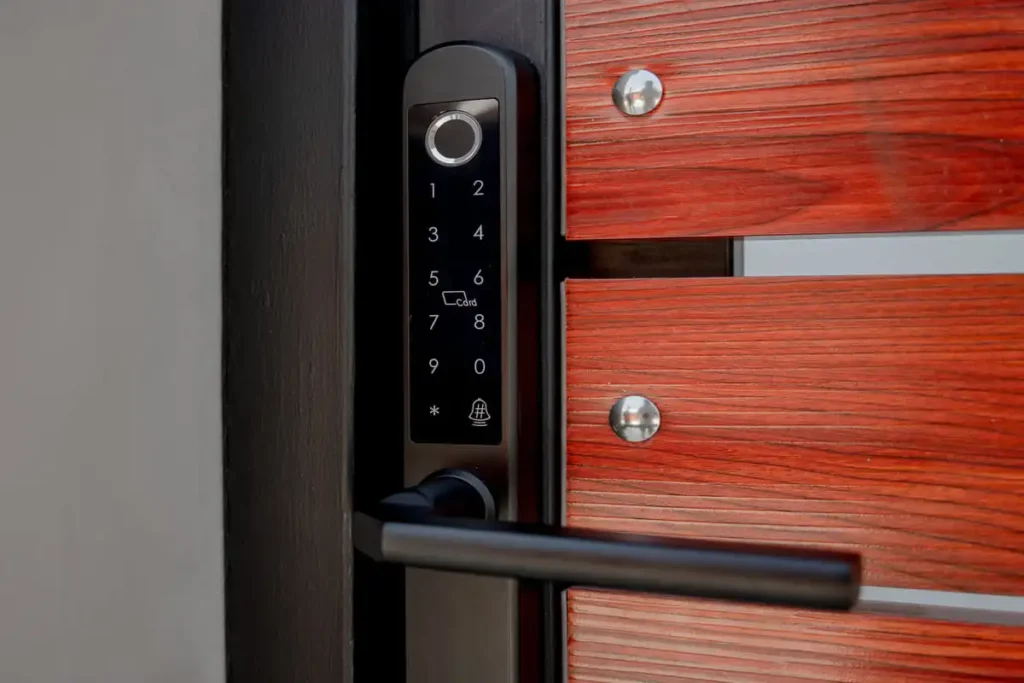
Considered as safe as classic mechanical deadbolts, but with a twist of digital security, smart locks are considered safe due to advanced digital monitoring features and capabilities. But like anything else in the industry, their safety standards depend heavily on how they’re made, their level of encryption, proper installation and your own personal digital habits.
With more than 1.5 million burglaries a year in the US and a significant increase during the colder months, it’s easy to understand why so many people try to keep on top of their security with new features and technologies. But is the lock really the weak point in residential home security? Are smart locks safe?
Here’s everything you need to know.
Are Smart Locks Safe From Hacking, or Is Break-in Risk the Real Threat?
So, are smart locks safe? When it comes to digital security, risks come from two different directions.
First, there’s the digital risk. Smart technologies can theoretically be hacked into. This means that no matter how thick, strong and secure your lock is, a hacker who gets unauthorized access to it can force it to unlock itself. No force at all, just code.
Second, you have physical force. There’s no digital technology involved, but pure brute force. Digital security won’t work against brute force, such as a crowbar, but you can monitor or be notified instantly on your phone if something’s happening.
From each point of view, smart locks are considered as safe as traditional locks, yet they offer an extra layer of peace of mind and daily convenience.
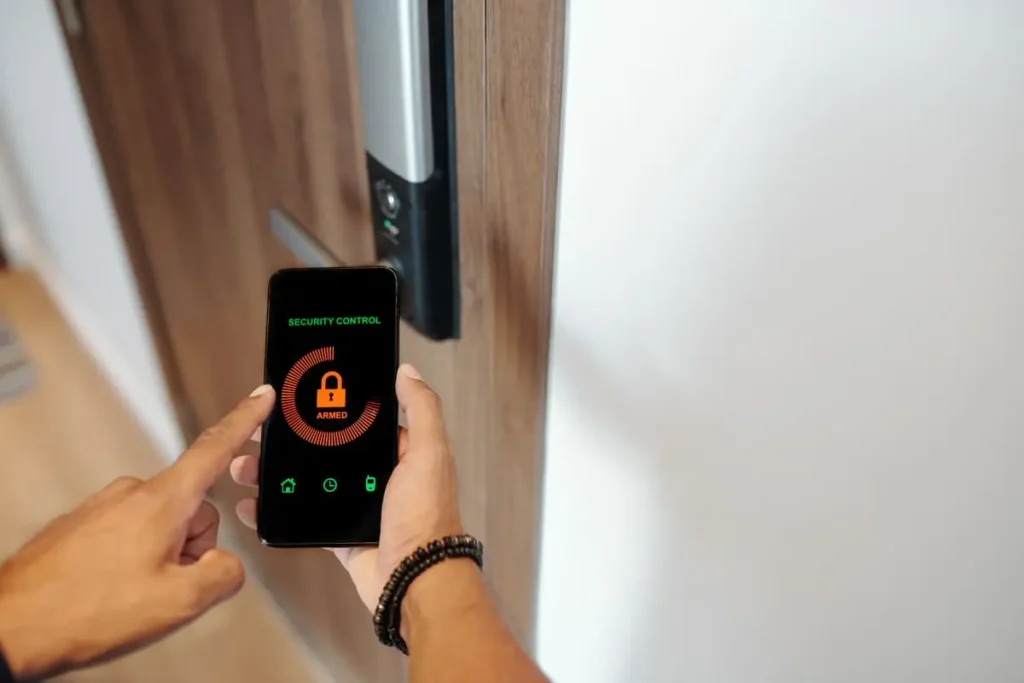
Can Someone Actually Hack a Smart Lock Remotely to Open My Door?
As a general rule of thumb, if you can unlock your door remotely , using an app, so can a hacker. Obviously, for a hacker to do this, they’ll need access to your device or account credentials. They may also have to login to your home wireless network and control everything through it.
This is when encryption kicks in. Fortunately, most reputable smart lock manufacturers provide high AES-128 or AES-256 encryption standards, meaning transmission between your device, connection and smart lock is encrypted. Therefore, it’s quite difficult for a hacker to gain access to your system without your password.
From a different perspective, you’ll also have to put yourself into a burglar’s shoes. If you’re good enough to hack into such high-encryption systems, you’ll probably want to hack a celebrity’s home. You’d rather go for a millionaire rather than a random person.
Most burglars aren’t this clever. Hacking is also a difficult job, so it’s simply not worth the headache. It’s much easier to break a window or try to pick your lock. That’s why, while it’s totally doable by an expert hacker, hacking into smart locks is almost never an issue.
Can a Flipper Zero Clone or Replay a Smart Lock’s Signal?
A Flipper Zero device can clone the signal of your smart lock, but only if you rely on an unencrypted system. This is never the case with modern smart locks, which rely on encrypted communication. Besides, rolling codes are less likely to be affected.
Flipper Zero records the signal to unlock the door and reuses it. When you get single-use cryptographic tokens for your lock, the recorded signal becomes useless immediately after its first use.
In other words, Flipper Zero does a decent job when it comes to old-fashioned unsecured locks. While they’re rare these days, some people still rely on cheap, outdated locks. That’s when problems arise.
Flipper Zero is a real device that’s still being used by thieves today. However, unsecured locks are almost impossible to find in commerce from major brands. No matter what system you use, chances are Flipper Zero won’t be able to record its signal and reuse it successfully.
Is a Smart Lock More or Less Secure Than a Traditional Deadbolt?
There aren’t really any differences between traditional deadbolts and smart locks. It’s like comparing apples and pears. In terms of design, build and security, they’re all the same. You’ll find both deadbolts and smart locks featuring the same high security standards, so they’re nearly identical underneath the keyway.
The main difference isn’t in security, but in features and capabilities. For instance, a traditional deadbolt can be locked. That’s it. A smart lock comes with some smart features too. It allows you to lock or unlock it remotely from anywhere in the world.
Also, a smart lock usually comes with an app that has countless features. You can get logs with entries too. You can set some patterns or rules, so the lock can lock or unlock itself automatically. All these features from a distance make the difference, but that’s it.
When it comes to security, it depends on how strong the lock is.
It’s important to know that some smart locks come with backup solutions in case something goes wrong (such as the Internet or electricity). In this case, a backup key cylinder will help you regain access. So, you should also pay attention to the security standards of this cylinder too.
Is the Window Next to My Door a Bigger Risk Than the Lock?
A window next to your door doesn’t really change anything in terms of security or your locks. Sure, a window right next to the door means that a burglar could break it, only to gain access to the door and unlock it. That’s the case if the keys are there.
Then, hackers could also find a better signal if they try to break into your home in a digital manner. Once again, unless you have millions in cash and everyone knows it, it’s not worth the headache.
In fact, around 30% of all burglars get into houses through unlocked doors or windows. Leaving a window open will most likely invite potential burglars in.
Protecting your home goes in two different ways. You could invest in high-security systems, such as cameras and smart locks. If you’d rather combine the two into one device instead of installing them separately, a smart door lock with camera handles both jobs from the same spot on your door. But you could also deter thieves with lots of visible aspects.
Make sure that everything around entry points is well lit. Your cameras should be visible too. Include signs and stickers about alarms and cameras. The more visible your security systems are, the more likely you are to be avoided. Most burglars will prefer properties with no security at all, as they’re easy targets.
No one likes unnecessary risk in such situations.
Doesn’t It Come Down to Human Error Either Way?
You might’ve heard of this before. Whether it’s your own cameras or a neighbor’s post in a social media group for your neighborhood, there are potential burglars walking around at night and trying doors.
They try doors on vehicles, but they also try front and back doors on homes. That’s because they know that the human factor often makes the difference. People sometimes forget to lock up, which is the main risk in residential security.
Anyone can break through an unlocked door, but not everyone has the nerve to break a window, let alone the experience and skills to hack into a system. That’s what puts smart locks above traditional locks.
You can lock or unlock doors remotely, check their status for your peace of mind, monitor the area and so on. All these smart features correct human error.
So, are smart locks safe? While on paper they’re identical to traditional deadbolts, extra features make them better.
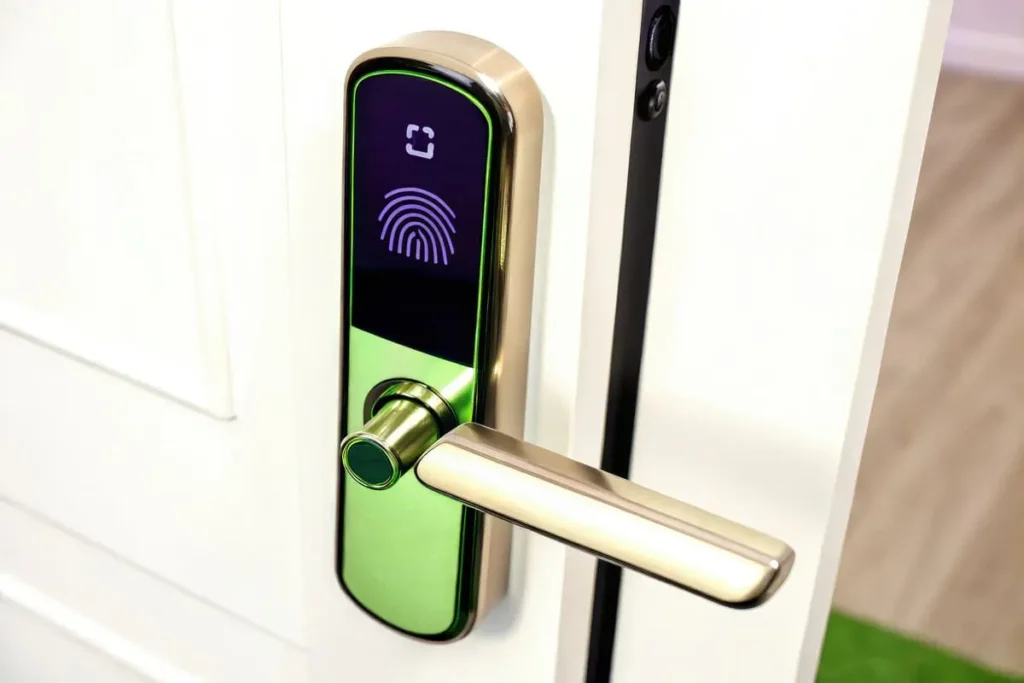
What to Look for in a Safe Smart Lock
Look for reputable brands with a few products, regular updates, plenty of reviews and easy accessibility for parts, spares or extras. But then, your research should go further than this. Here are some useful ideas.
- Encryption. Getting a unique rolling code every single time you use or log into the smart lock can prevent hackers from copying the signal.
- Backup. Emergencies can occur out of nowhere. No electricity, no Internet, app not working and so on. Having a physical backup solution is a must, but make sure that it’s also secure.
- Ratings. Look for smart locks that feature the same high durability standards and ratings as traditional locks, such as BHMA Grade 1 or ANSI Grade 1 ratings.
- Notifications. You need to know when someone’s trying to mess with the lock. You can react quicker, get home or call the police. Tamper notifications and alerts are mandatory.
- Remote control. You must be able to control the lock remotely for emergencies, such as leaving the door unlocked or having a family member get in without the key.
Apart from all these, keep in mind that every brand will promise you the world. It is, however, important to avoid no-name random brands made who-knows-where. Not only are they not encrypted, but they often come with flimsy apps, poor control, poor security standards and problematic parts.
Conclusion: Are Smart Locks Safe?
Bottom line, are smart locks safe? Yes, they’re considered as safe as traditional locks and deadbolts. Their safety standards are given by how they’re made and certified. The fact that they’re smart means that they come with extra control and convenient automation features.
Besides, the security of your home isn’t all about the lock. It’s also about how you use it, how well it’s installed and what kind of digital habits you have too. Not even the most advanced smart lock in the world can keep your home safe if you forget to lock the doors at night or leave a window wide open.
FAQs
Temporary external power is a common feature these days, yet most smart locks and cameras warn you about a low battery days or weeks before it actually drains. Physical backup is still there, but you shouldn’t end up in this situation.
The backup solution is usually the weak link in many smart locks. It’s often easier to work on this backup solution than on the smart lock. That’s why, while often overlooked, the mechanical backup lock also requires solid construction and high security standards.
What works for some people won’t work for everyone else. Also, the most expensive unit isn’t always the best one. Make sure you know what to look for in a smart lock and get all the checklist items done before spending your money.
There are such cases out there in cybersecurity labs, but they’re isolated in real life. It’s simply too much headache for everyday criminals. It’s much easier to bump a lock or break a window. Also, a professional hacker would rather try their luck on a millionaire’s home. And when it comes to millionaires, they usually use thorough monitored security and personnel too.