
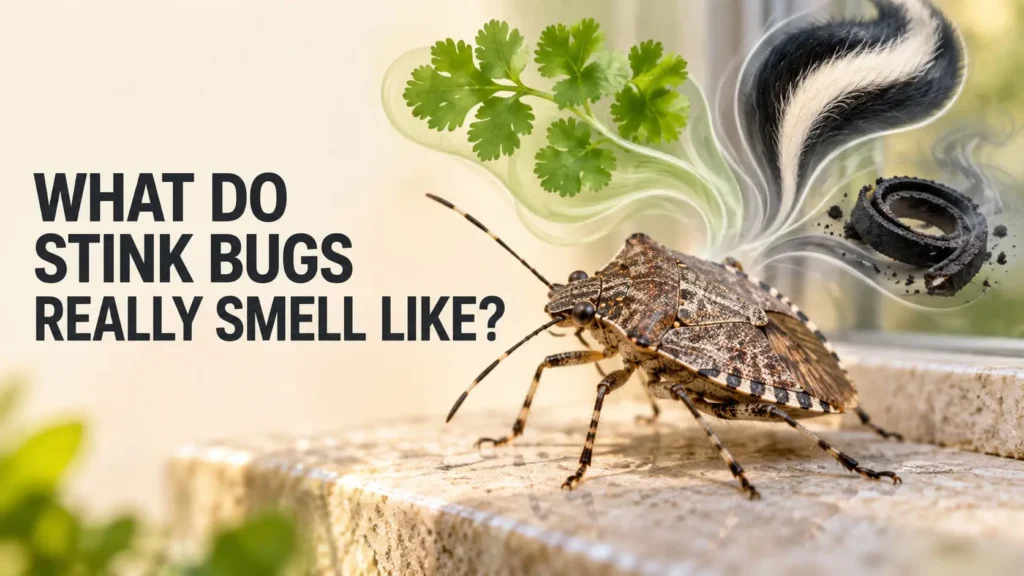
What does a stink bug smell like? Most people compare it to cilantro, coriander, skunk spray, or burnt rubber. Stink bugs release the odor from scent glands when they feel threatened, get handled or vacuumed, or are crushed. It isn’t toxic, but it clings to skin, fabric, and vacuum canisters, so it’s best to remove stink bugs without squashing them.
Below, you’ll find why the smell is so often linked to cilantro, why people describe it differently, whether it’s harmful, and how to get rid of stink bug smell from your skin, clothes, and home.
What Does a Stink Bug Smell Like?
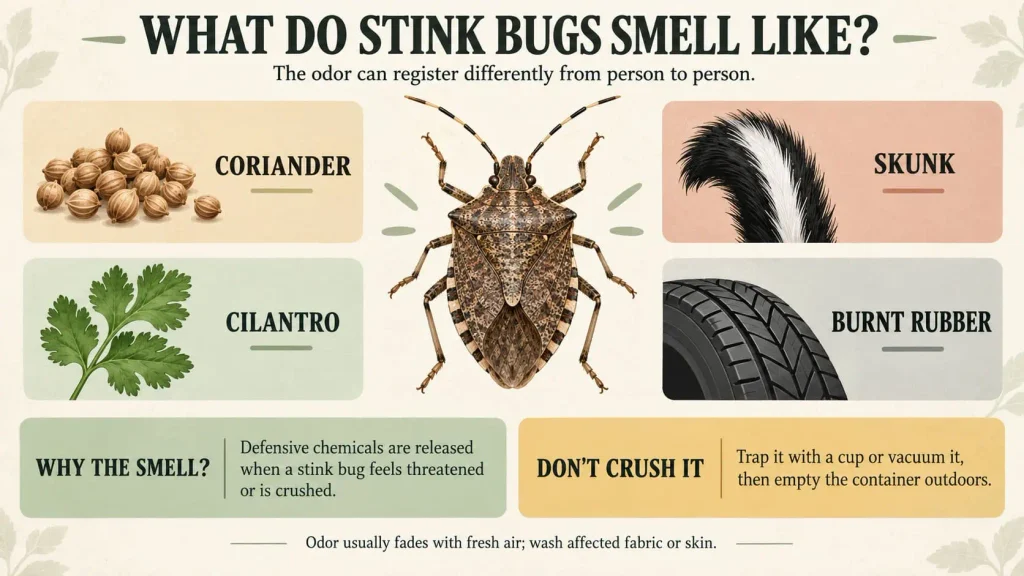
Most people land on one of these comparisons, or a blend of them:
- Cilantro or coriander: sharp, green, and a little soapy
- Skunk spray: musky and pungent
- Burnt rubber: acrid and chemical
Less common descriptions include musty cucumber, mildew, sour apple cider, and strong vinegar. Some people barely notice it at all. Why would a stink bug smell like vinegar to one person and cilantro to another? It comes down to chemistry, species, and your own nose.
Why Does a Stink Bug Smell Like Cilantro?
The association between cilantro and the stink bug’s odor is chemical. A key compound in the bug’s secretion, trans-2-decenal, is also found in cilantro. That’s why many people liken the two smells.
What makes a stink bug stink is a secretion from scent glands on its thorax and abdomen. It’s a defense. The smell and bitter taste make the bug unappealing to birds, lizards, and other predators.
Other Bugs That Smell Like Cilantro
Stink bugs aren’t the only insects with a cilantro-like smell. Bed bugs give off a sweet, musty odor that some people compare to cilantro or spoiled raspberries. It comes from aldehydes made in their scent glands, the same family of compounds stink bugs use.
The link even shows up in the language. The Greek word behind “coriander,” koriannon, is often traced to koris, the Greek word for bedbug, although etymologists don’t all agree on it.
If you notice a cilantro-like smell around a bed or upholstered furniture and haven’t crushed anything, it’s worth checking for bed bugs as well as stink bugs.
When Do Stink Bugs Release Their Odor?
A stink bug that is left alone does not emit an odor. It can stay on a curtain for days on end, and you would not even know it was there. The bug releases the odor whenever it is:
- Disturbed or threatened
- Touched or handled
- Sucked into a vacuum cleaner
- Squashed
The U.S. Environmental Protection Agency (EPA) states that a stink bug releases the odor when it is disturbed or crushed. Just one crushed stink bug is noticeable in a small room, and many squashed or vacuumed bugs create an even more pungent smell.
Why Do People Describe the Smell So Differently?
The honest answer to “What does a stink bug smell like?” depends partly on your nose. In wine-tasting studies involving trans-2-decenal, some tasters detected it at a concentration about ten times lower than most people needed. Responses were also polarized; some tasters enjoyed the odor, while others detested it. This may be due to genetic factors, cultural differences, or both. Cilantro divides people in the same way: some love its fresh odor, while others hate it.
The species also matters. The stink bug family, Pentatomidae, consists of over 4,700 species, and their secretions are not identical. In North American homes, the insect giving off the smell is usually the brown marmorated stink bug, an invasive species from East Asia. An insect you come across on vacation abroad might have a different smell.
Some people claim that diet or region changes the smell, but there is little research to support this.
Do Stink Bugs Smell Like Skunk?
Some people say so, but the two smells come from different chemistry. Skunk spray gets its punch from sulfur compounds called thiols. Stink bugs don’t produce sulfur compounds. Their odor comes from aldehydes such as trans-2-decenal, the same compound found in cilantro. What the two have in common is intensity: both are sharp, musky, and hard to ignore in a closed room, which is why “skunky” is such a common description. A stink bug’s smell also clears much faster.
Is Stink Bug Smell Harmful?
Stink bug smell is unpleasant but not poisonous. Unlike many insects, stink bugs don’t sting, and according to the EPA, they don’t bite people or pets and aren’t known to spread disease. Even swallowing one by accident isn’t dangerous, as explained in what happens if you eat a stink bug.
However, the secretion can irritate some people and animals:
- Skin and eyes: Crushing a stink bug on exposed skin can cause a rash in a small number of people. Tennessee State University Extension also advises wearing gloves, because the secretion can irritate sensitive skin and eyes.
- Allergies: People who are sensitive to the smell can get a runny nose and watery eyes.
- Pets: Stink bugs aren’t toxic to cats or dogs, but if your pet eats one, it may drool, paw at its mouth, vomit, or have diarrhea. These symptoms usually clear up within 24 hours. Consult your vet if symptoms persist beyond a couple of days, and immediately if your pet shows facial swelling, hives, or breathing difficulties. For dogs, see what happens if a dog eats a stink bug.
If your skin turns red or itchy after contact, learn more about what happens if a stink bug bites you.
How to Get Rid of Stink Bug Smell
Knowing how to get rid of stink bug smell is useful, but the easiest fix is not setting it off in the first place.
Remove Stink Bugs Without Crushing Them
Drop them into soapy water. Fill a container one quarter full with water and add a teaspoon of dish soap. Knock or sweep the bug into the water; it can’t climb out and will drown.
Try vacuuming the stink bugs. Both live and dead stink bugs can be vacuumed, but the vacuum may smell for some time afterward. To avoid this, place a knee-high stocking over the hose opening. The bugs will collect in the stocking, which you can then empty into soapy water.
Don’t release the bugs into the garden. The brown marmorated stink bug is an invasive species and a crop pest.
Get Stink Bug Smell Off Your Skin
Wash with dish soap and warm water as soon as you can. Dish soap is good at cutting oily residue, and you may need two or three washes. The smell usually fades within a few hours and is typically gone within a day. If the skin turns red or itchy, stop scrubbing and keep it clean.
Get Stink Bug Smell Out of Clothes and Carpet
The secretion can soak into fibers. Blot the spot instead of rubbing, which only spreads it. Wash clothing with your usual detergent. For carpet or upholstery, use a fabric cleaner and keep the room aired out. Expect the smell to clear within a day or two.
Clear the Smell From a Room or Vacuum
Open the windows and run a fan. A lingering stink bug odor in the air usually fades within a few hours.
For a smelly vacuum, empty the canister or swap the bag. Then wash the canister with warm soapy water and let it dry fully before using it again.
Keep Stink Bugs Out
Prevention is better than dealing with the smell afterward. According to the University of Maryland Extension, sealing entry points is the most effective way to prevent stink bugs from entering a house:
- Sealing openings around windows, doors, siding, and utility pipes
- Installing door sweeps and weather-stripping on exterior doors
- Fixing damaged window and door screens
- Sealing cracks in the foundation and capping or screening chimneys
Certain smells can also help with prevention, alongside the measures above. In a 2014 study published in the Journal of Applied Entomology, spearmint, clove, and lemongrass oils almost completely stopped brown marmorated stink bugs from entering baited traps. Still, they are no substitute for sealing gaps.
If you’re seeing young stink bugs in the garden, see how to get rid of stink bug nymphs before they become adults.
Stink Bug Smell FAQs
In a ventilated room, stink bug smell usually fades within a few hours. On skin, it tends to linger until you’ve washed a couple of times. On clothes or carpet, it can take a day or two unless you wash the fabric.
Why does my house smell like stink bugs?
A stink bug odor indoors usually means a group of bugs is hiding in walls, attics, or window frames. That’s common in fall and on warm winter days when they become active. Vacuuming or disturbing a cluster releases the smell all at once. Sealing gaps is the long-term answer to how to get rid of stink bug smell in a house.
Does every stink bug smell like cilantro?
No. The answer to what does a stink bug smell like changes with the species and with the person smelling it. Some people find the odor sharp and skunky, others notice something closer to cilantro, and a few barely smell it.
Why is it called a stink bug?
Because of the smell. Stink bugs have scent glands on the thorax and abdomen, and they release a strong-smelling secretion when threatened or crushed. The name refers to those glands.
Can stink bug smell make you sick?
The smell isn’t toxic. Sensitive people may get allergy symptoms such as sneezing or watery eyes, and skin contact can cause irritation in a small number of people.