
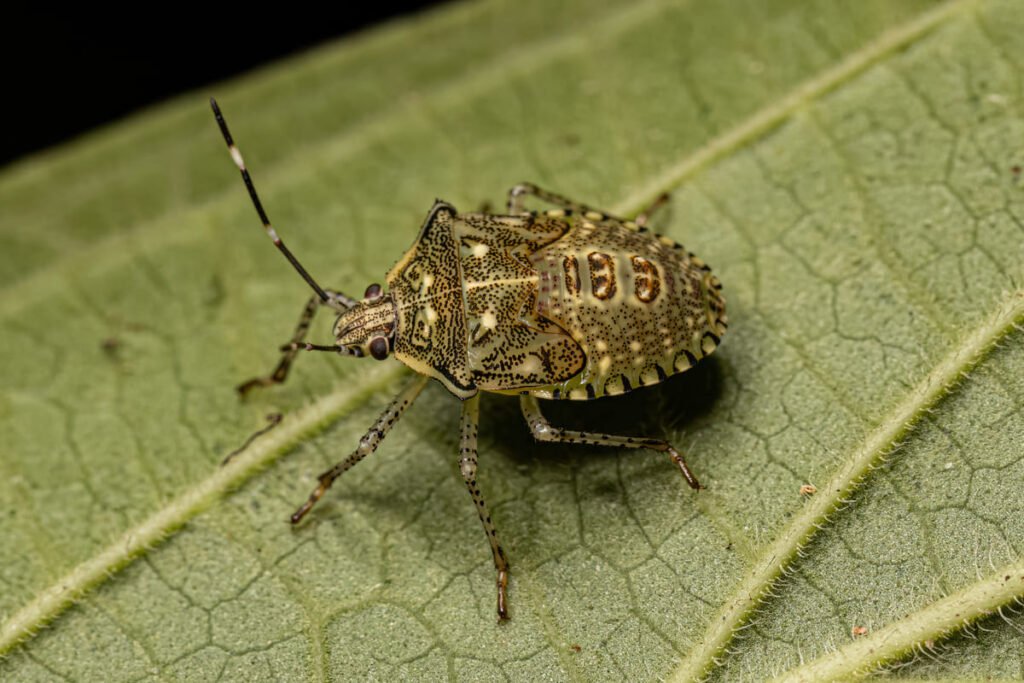
Whether you spot them around warm areas or you smell funny odors when watering your plants, chances are you’re dealing with stink bugs. And while some species don’t even bother with your plants, others are considered predatory species and should be removed immediately before they multiply.
Apart from the foul odors, you’ll also notice that your plants struggle to survive. With piercing-sucking mouths and consistent hunger, stink bugs feed on plant tissue and sap. From leaves and stems to buds and other elements, stink bugs cause plants, fruits and veggies to stop growing.
From this point on, there’s only one step to fungal rot.
Learning how to get rid of stink bug nymphs is highly recommended before they turn into hard-shelled, highly mobile bugs. Here’s everything you need to know about the signs associated with them, as well as a few helpful ideas for natural pest control.
What Are Stink Bug Nymphs?
Stink bug nymphs are newly hatched insects. They’re stink bugs, but in an incipient stage. They don’t have big wings, but at the same time, they don’t have that solid shell on their backs either. Eventually, when left alone, they’ll get to that point.
Most gardeners or homeowners will try to get rid of them as soon as they spot them. The earlier, the better. As they become adults, they’re likely to become more problematic. Of course, you’ll also need to know the signs of a stink bug infestation.
What Do Stink Bug Nymphs Look Like?
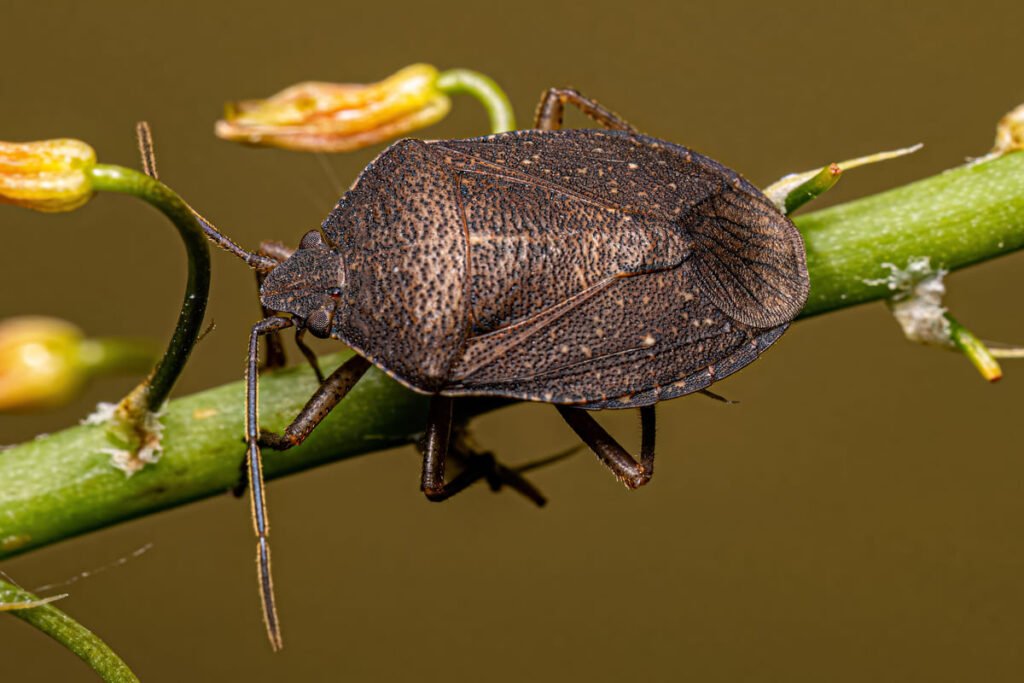
Ideally, you should try to get rid of stink bug eggs or nymphs before they become a problem. Nymphs are usually bright in color, whether yellow, orange or red. As they grow, they turn brown or black. They are round and similar to ticks in appearance. They don’t have wings either.
Depending on their stage, they might be patterned as well.
Some species have black antennae and legs.
If you haven’t dealt with baby stink bugs before, their behavior is also a good sign of identification.
Once they hatch, they don’t wander too far. You’ll usually find them close to leaves, normally on the underside, hiding close to an empty egg mass. They also stay in groups, so you’ll see them clustering all the time in dense little crowds.
The damage they leave behind is another issue. Look for stunted seedlings, wilting leaves and even scarred or distorted fruits and veggies.
And, of course, these garden pests are called stink bugs for a reason. They stink. When disturbed or crushed, they release a chemical that smells horrible, but with a twist of coriander.
Bottom line, getting rid of these garden pests is a must.
What Do Stink Bug Nymphs Eat?
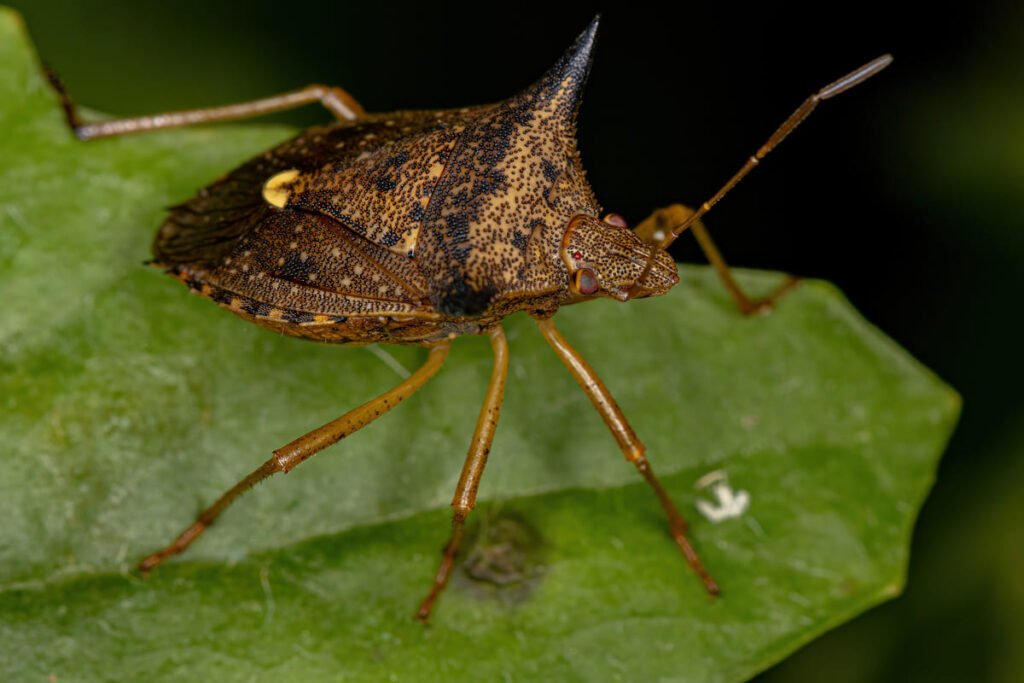
Despite being in one of the early phases in the stink bug life cycle, nymphs can still be harmful and cause plant damage. They are exclusively feeding on fluids. They won’t eat your leaves, fruits and vegetables whole, but their piercing mouths are quite strong for their size, so they’ll damage everything by drinking from the inside out.
Normally, they suck sap from plants. However, some species also inject toxic enzymes into plants.
Normally, baby stink bugs tend to feed on weed stems. The more they grow, the more diversified their diet will be. With time, they’ll move to bigger plants and can start feeding on anything.
If you have a vegetable garden, you may not see too much damage in the beginning. If you overlook the problem and let them develop, stink bugs will go for anything.
- Vegetables, especially tomatoes, peppers, beans, soybeans and corn.
- Fruits, especially apples, peaches, berries and stone fruits.
- Trees and weeds, especially wild grasses, flowering trees and early-season weeds.
How to Get Rid of Stink Bug Nymphs
Learning how to get rid of stink bug nymphs is easier when you spot them indoors because their available space is limited. When disturbed, they drop downward instinctively as a defense mechanism, so use a basic soapy water trap. Get some water and a few tablespoons of dish soap under the plant, tap the bugs and they’ll drown eventually.
If there are plenty of bugs, you can also vacuum them with a small attachment.
Make sure to use a vacuum with a bag. Once disturbed, the foul odors will make a bagless vacuum smell horrible for months. Get rid of the bag straight away.
Nymphs are also attracted to light, so a pan with soapy water under a light may attract them. Leave it there overnight, and you’ll find it full in the morning.
The Outdoor Element
Learning how to get rid of stink bug nymphs outdoors is different because you don’t have much control over nature.
Neem oil is a good idea. Water with dish soap is also useful. As the nymphs get coated in these substances, they’ll suffocate. Insecticidal soap also works, but get something that won’t harm your plants.
You can try inviting natural predators into your garden too. Minute pirate bugs, lacewings and mantises will work well against nymphs, but try to avoid going from one problem to another. Too many of these predators will also cause an infestation of their own if left entirely unchecked.
How to Remove Stink Bug Eggs Before They Hatch
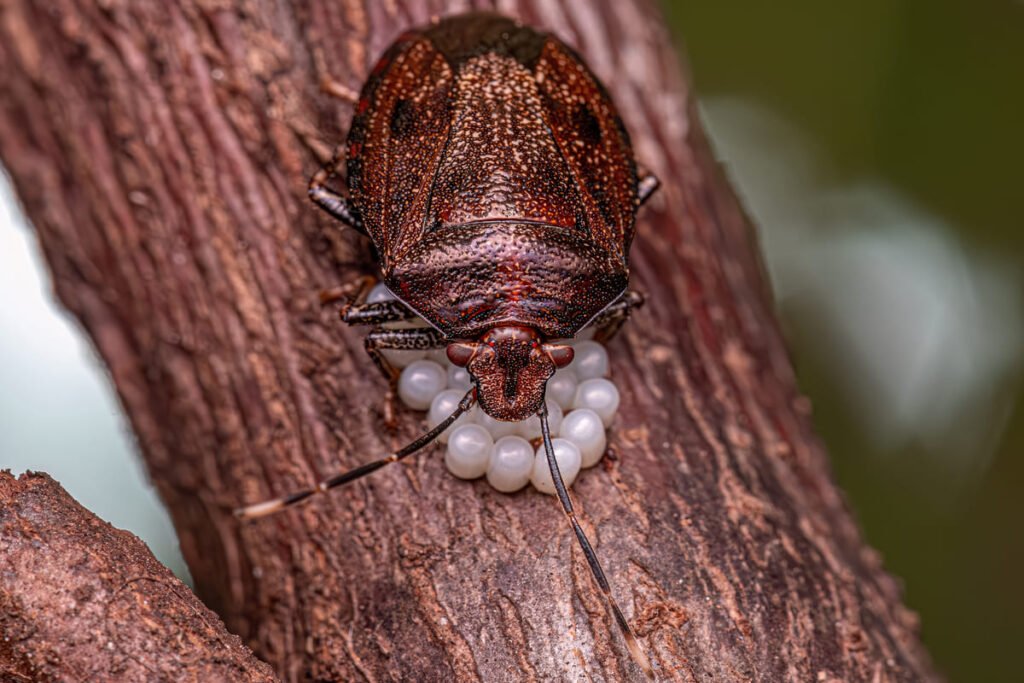
Whether indoors or outdoors, look for egg masses under leaves too and remove them. Just because you get rid of all the baby stink bugs, doesn’t mean that stink bug eggs aren’t left behind waiting for a fresh wave of hatchlings.
Get some sticky tape and use the sticky side to collect them. Once on the tape, fold it over to seal them inside, then crush and kill them, so they don’t have the chance to hatch.
What Not to Do When Removing Stink Bug Nymphs
When figuring out how to get rid of stink bug nymphs, your first instinct is to crush them one by one. Whenever you spot them, you’ll try to get rid of them. While it does get the job done eventually, it’s contraindicated.
Once crushed, stink bugs in any stage will release a foul odor that sticks to anything. It will stick to your hands, gloves or whatever tool you use, and it actually serves as a chemical warning signal that alerts other nearby bugs to scatter or hide. That’s why, even when you vacuum them, you’ll need a vacuum with a bag.
Don’t wait until stink bug nymphs become adults because they’ll be more difficult to get rid of.
Another common mistake homeowners make is ignoring the eggs. Get rid of the nymphs, but inspect your plants for eggs as well.
How to Prevent Stink Bug Nymphs from Coming Back
Learning how to get rid of stink bug nymphs isn’t everything. Here are a few practical ways to prevent further stink bug infestation.
- Seal gaps around windows or doors, repair screens and cover vents for indoor prevention.
- Trim vegetation, maintain your garden and reduce outdoor lighting for outdoor prevention.
- Use natural repellents like strong, fragrant smells, such as essential oils or dryer sheets.
When Should You Worry About a Stink Bug Infestation?
A few bugs are only a nuisance, yet, you should still get rid of them. When you find dozens or even hundreds of eggs, that’s when you need to worry. Crop and garden damage, home staining, foul odors, and allergies are also signs that you need to take action as soon as possible before your harvest is completely ruined.
Ideally, you shouldn’t wait until this stage to implement pest control measures.
Bottom line, figuring out how to get rid of stink bug nymphs isn’t that difficult if you stay proactive. Like with any other form of infestation, your job becomes significantly easier if you identify the problem at an early stage. Inspect your plants and crops on a regular basis to detect early signs and prevent more severe issues down the road.
FAQs
Are stink bug nymphs harmful?
While not harmful to people and pets since they do not transmit diseases, they can be annoying with their foul odors, but they’re also destructive to plants and crops.
Do stink bug nymphs bite people?
With their mouths specifically designed to suck on plant juices, stink bug nymphs don’t normally bite people.
Can stink bug nymphs fly?
Stink bug nymphs crawl to move because they can’t fly due to their lack of developed wings. As they become adults, they can fly much more easily.
What kills stink bug nymphs naturally?
Soap and water solutions are excellent for killing stink bug nymphs, but neem oil is also useful for disrupting their feeding habits. From a more natural perspective, beneficial predators (other insects) will also help.
Pingback: What Happens If You Eat a Stink Bug? Can You Eat One? | Nest & Aura
Pingback: Why Is It Called a Stink Bug? The Science Behind the Smell | Nest & Aura
Pingback: My Dog Ate a Stink Bug: Is It Dangerous? | Nest & Aura
Pingback: How Long Does a Stink Bug Live? A Straight Answer | Nest & Aura
Pingback: Stink Bug Smell: What It's Like and How to Get Rid of It | Nest & Aura