
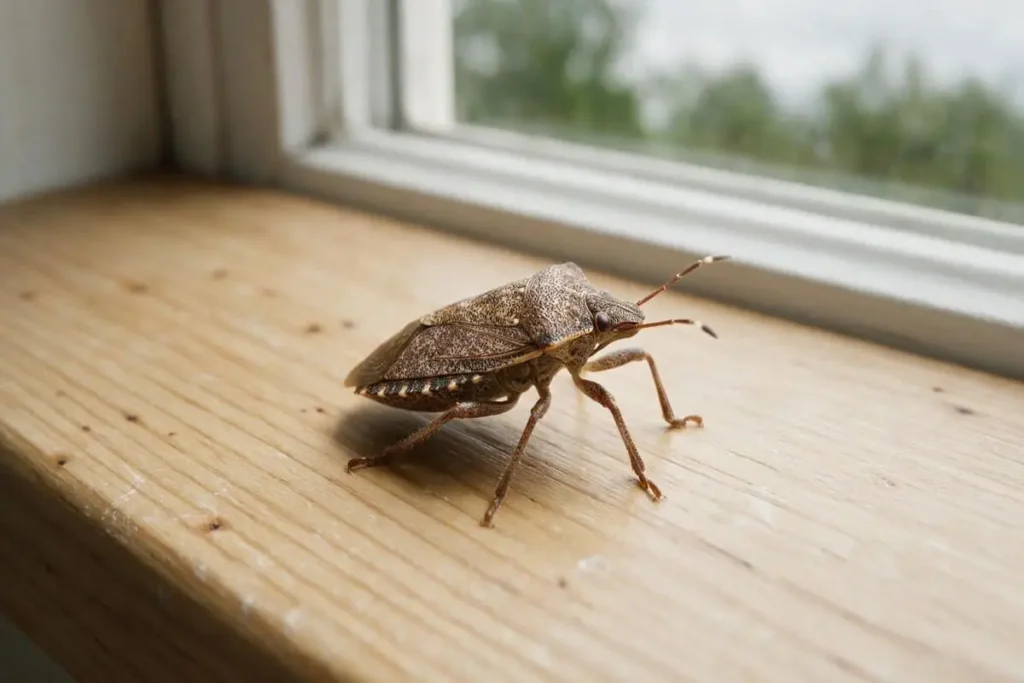
Why is it called a stink bug? It comes down to its own natural chemical defense. When it senses danger, it produces an odor that stops the predator from eating it.
This term refers to the insects belonging to the family Pentatomidae. The brown marmorated stink bug is the particular type that invades homes, especially during autumn and early spring. Odor from this bug can be produced while handling it, trapping it, disturbing it, or squashing it.
This odor is not emitting from the body all day long. The stink bug has control over the release of odor. It depends on the threat, but not the odor that emits constantly from its body. You might just notice a bug crawling on your wall, but when you try to catch it or kill it, you will know the difference.
So why is a stink bug called a stink bug, exactly? Because it can stink on command. How it makes and spreads that smell is the more interesting part.
What Makes a Stink Bug Stink?
What makes a stink bug stink is a chemical mixture stored inside special glands in its thorax, the middle part of its body. The bug contains the mixture until a trigger causes its release.
NC State entomologist Matt Bertone explains that the mixture doesn’t just drip out of the bug’s body. The bug releases it onto a rough patch of exoskeleton called the evaporatorium, which helps the chemical evaporate and spread fast. Think of it as a small scent-dispersal pad built into the bug’s underside.
This also accounts for the quick onset of the scent. The bug might have no smell at all while at rest but disturb it and within a few moments, it will release a pungent odor into the atmosphere. Crushing it releases the chemicals onto surfaces, so squishing a stink bug indoors is perhaps the worst solution.If your dog ever snaps one up, here’s what happens if a dog eats a stink bug.
The chemicals exist to ward off predators. Stink bugs don’t need to smell constantly for that defense to work, they release it only when they have to. Both adults and juveniles can use it.
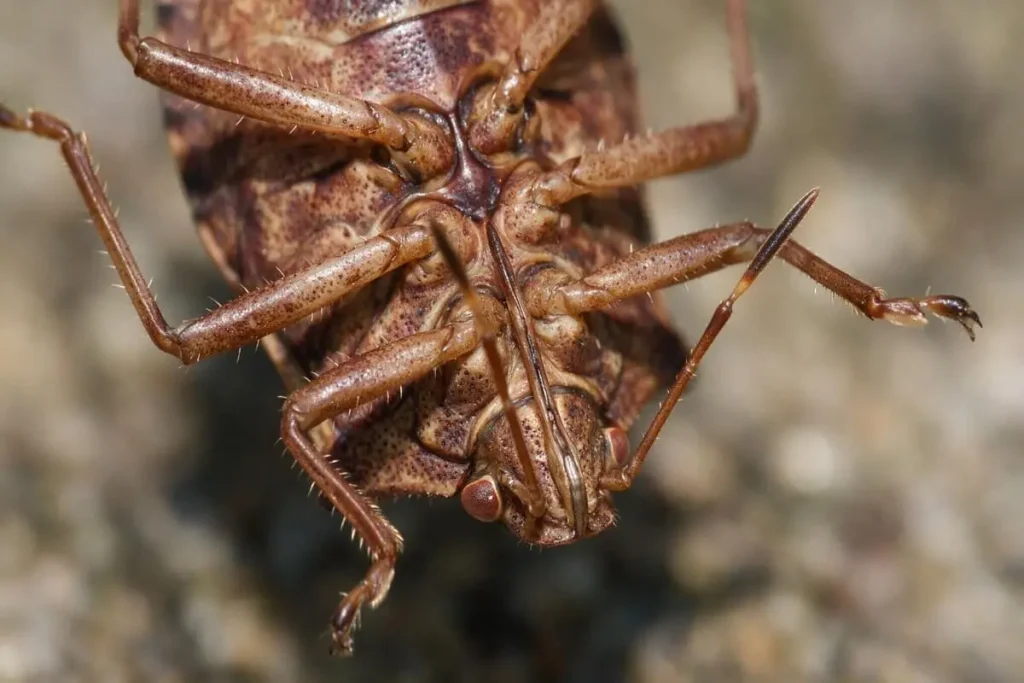
Why Does the Smell Vary So Much From Bug to Bug?
Why is it called a stink bug if one person smells foul chemicals while someone nearby barely notices anything? There are variations between humans on how their noses perceive the smell. Some say that the smell resembles cilantro or slightly sweet in nature, others describe it as pungent, acrid, or even unpleasant. Some might detect hardly any smell at all.
It also depends on the kind of stink bug in question. Different kinds of stink bugs do not emit the same chemical cocktail. According to Washington State University, various species might produce different chemicals and human noses might perceive them differently. Many compare brown marmorated stink bugs to cilantro or coriander. NC State describes its smell as sharp and acrid.
How much the bug emits will determine the intensity of the odor, but human perception plays a big role too. That is why when two people encounter the same indoor guest, their experiences could be completely different. Learn why the odor of stink bugs varies from person to person.
Do All Stink-Bug-Looking Insects Actually Stink?
No. Shape, color, or a habit of gathering near windows doesn’t guarantee an insect has the same odor defense.
The boxelder bug is a good example. It can enter homes in large numbers, and people often mistake it for other indoor pests. Adults tend to be more elongated than stink bugs, with black bodies marked by red or orange lines.
In addition, NC State notes that boxelder bugs lose the scent-producing glands during the adult stage. Thus, an adult boxelder bug cannot produce the distinctive odor of stink bugs.
That doesn’t mean every insect outside Pentatomidae is odorless, though. Leaf-footed bugs, assassin bugs, water striders, and giant water bugs can all produce defensive chemicals too, some almost as strong. Common names aren’t a reliable guide to insect chemistry.
For a homeowner, both appearance and odor are helpful indicators; however, both cannot be used individually. A shield-like body is an indicator of a stink bug while black and red marks on a slender body indicate a boxelder bug.
If you are uncertain, take a clear photo rather than crushing the insect to test it. The smell test is messy, and it may still lead to the wrong identification.
Quick Recap
Why is it called a stink bug? A controlled chemical release, not constant body odor. Thoracic glands hold the mixture and the evaporatorium helps it spread fast once triggered, while lookalikes like adult boxelder bugs don’t produce the smell at all.