
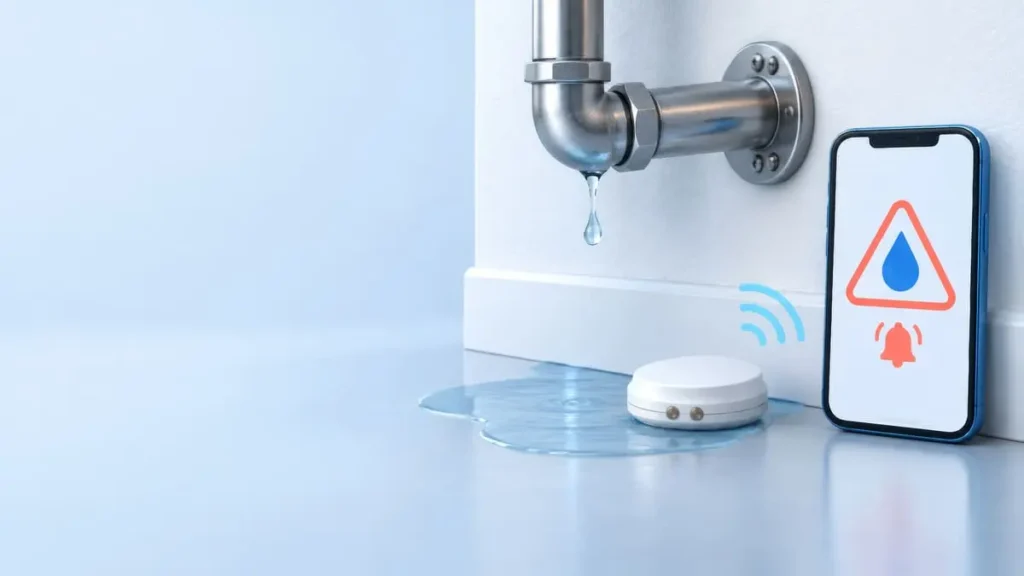
The best smart home sensors to buy first are water leak, motion and door sensors, in that order. In terms of reliability, Aqara’s P2 sensors and ThirdReality’s leak sensor are the best options, whereas IKEA’s newer Matter sensors perform the same tasks at $7.99 apiece. Add presence sensors, air quality sensors and smoke sensors next.
Below we rank seven of the best smart home sensors by what to buy first, with a budget option for each. Prices are US list prices at the time of writing.
Our Top Picks at a Glance
| Rank | Sensor | Top Pick | Price | Budget Pick |
|---|---|---|---|---|
| 1 | Water leak | ThirdReality Water Leak Sensor | $20.99 | IKEA KLIPPBOK, $7.99 |
| 2 | Motion | Aqara Motion and Light Sensor P2 | $32.95 | IKEA MYGGSPRAY, $7.99 |
| 3 | Door and window | Aqara Door and Window Sensor P2 | $29.99 | IKEA MYGGBETT, $7.99 |
| 4 | Presence | Aqara Presence Multi-Sensor FP300 | $49.99 | None |
| 5 | Temperature and humidity | IKEA TIMMERFLOTTE | $9.99 | Already the budget pick |
| 6 | Air quality | IKEA ALPSTUGA | $29.99 | Already the budget pick |
| 7 | Smoke and CO | First Alert SC5 | $129.99 | Kidde + Ring, about $75 |
The 7 Best Smart Home Sensors, Ranked
These are the best smart home sensors for each job, starting with the one that protects you from the biggest bill.
1. ThirdReality Water Leak Sensor: Buy This First
Price: $20.99 (IKEA KLIPPBOK $7.99)
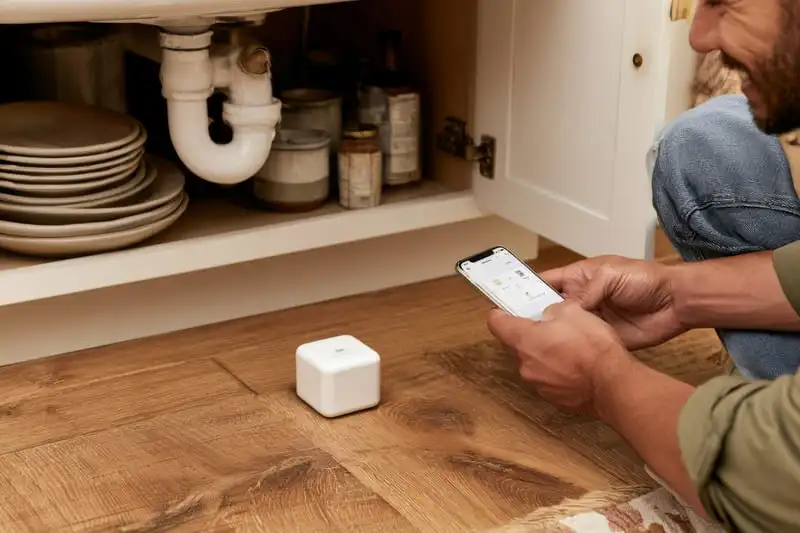
A burst hose can do thousands of dollars of damage while you’re on vacation, and a smart water leak sensor costs about $20. The ThirdReality sensor detects drips as well as puddles and comes with a 120 dB siren. Therefore, you’ll still hear it even if your hub or Wi-Fi goes down. The leak detector runs on the Zigbee protocol, which requires a Zigbee hub such as an Echo with a built-in Zigbee hub, SmartThings or Home Assistant.
Install one sensor under each of these: your water heater, washer, dishwasher, kitchen sink and refrigerator. Add more behind your toilets, in the HVAC drain pan and at the edge of the sump pit. If you have a smart shut-off valve installed, set a leak alert to shut off your main water supply.
Pros: Loud siren, drip detection, low price
Cons: Needs a Zigbee hub for phone alerts
2. Aqara Motion and Light Sensor P2: Best Smart Home Motion Sensor
Price: $32.95 (IKEA MYGGSPRAY $7.99)
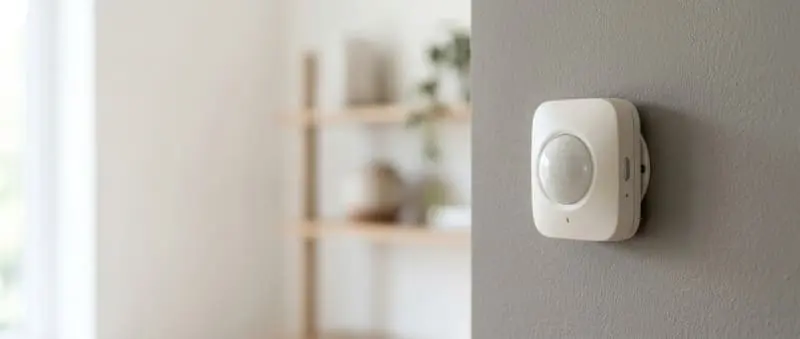
The P2 is the best smart home motion sensor for most homes because it uses Matter over Thread and is compatible with Apple Home, Google Home, Alexa, SmartThings and Home Assistant. It has a broad 170-degree field of view and a separate light sensor, so the hallway light only turns on if it is indeed dark in the hallway. The IKEA MYGGSPRAY offers everything you might need at a quarter of the price, and it can be used both indoors and outdoors.
Pros: Works with all major apps, separate light sensor
Cons: Requires a Thread border router
3. Aqara Door and Window Sensor P2: Best Smart Door Sensor
Price: $29.99 (IKEA MYGGBETT $7.99)
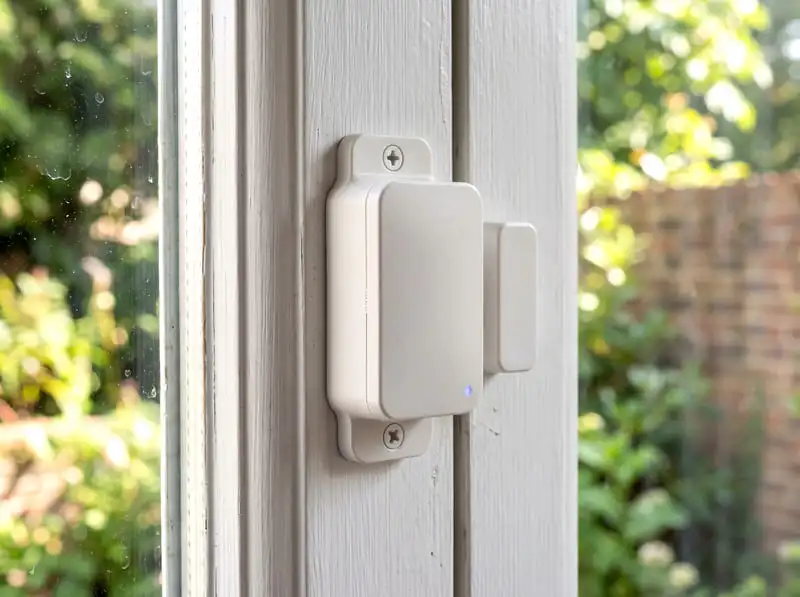
A smart door sensor consists of two tiny parts that report when they separate. Use it to notify you whenever the back door is opened at night, or to stop your heating system if a window is left open. The Aqara P2 is small, runs on Thread and works with any Matter app.
Pros: Compact size, reliable, works with any Matter app
Cons: Price is about four times higher than IKEA’s version
4. Aqara Presence Multi-Sensor FP300: Best mmWave Presence Sensor
Price: $49.99 (FP2 $83.99)
A motion sensor only detects movement, so the lights turn off while you sit still and read. An mmWave presence sensor, however, uses radar to pick up movement as small as breathing, which keeps the lights on even when you stop moving. The FP300 pairs the radar with a regular motion sensor and also measures temperature, humidity and light. It runs on batteries for up to three years on Zigbee and two years on Thread. The more expensive FP2 plugs into the wall and comes with room zoning and fall detection, which we discussed in our guide to smart home devices for elderly parents.
Pros: Wireless, five-in-one sensor
Cons: No zones, multi-person sensing or fall detection
5. IKEA TIMMERFLOTTE: Best Temperature and Humidity Sensor
Price: $9.99 (Aqara T1 $21.99)
This little device has its own display and works on Matter over Thread. You can use it to turn on a dehumidifier in your basement or a fan in your bathroom. According to the EPA’s mold guide, indoor humidity should be kept under 60 percent and preferably between 30 and 50 percent. If you use Zigbee, the Aqara T1 is what you need.
Pros: Inexpensive and has a display
Cons: Limited app features
6. IKEA ALPSTUGA: Best Air Quality Sensor
Price: $29.99
The ALPSTUGA detects CO2, PM2.5, temperature and humidity, while also functioning as a bedside clock. A CO2 level that is too high signals you to open a window, while a PM2.5 spike during cooking can activate the range hood or an air purifier. The device uses a cheaper CO2 sensor than dedicated monitors, so treat the readings as trends.
Pros: Four sensors for $29.99
Cons: Power adapter not included, less accurate CO2 measurements
7. First Alert SC5: Best Smart Smoke and CO Alarm
Price: $129.99 (Kidde + Ring about $75)
Google discontinued the Nest Protect in 2025, and the First Alert SC5 is its official replacement in the Google Home app. It works with your Nest Protects if you have them. Alexa and Ring homes should choose the Kidde + Ring alarm. No matter which you choose, the U.S. Fire Administration recommends testing alarms every month and replacing them every 10 years.
Pros: Room-by-room notifications on your phone
Cons: High prices and ecosystem dependency
Zigbee, Thread or Wi-Fi: Which Sensors Need a Hub?
Most of the best smart home sensors run on batteries, and battery sensors don’t use Wi-Fi because it drains them fast. They use a low-power mesh radio instead, and that radio decides what you need.
| Radio | What You Need | Examples |
|---|---|---|
| Zigbee | A Zigbee hub (Echo Hub, Echo Dot Max, SmartThings, Home Assistant) | ThirdReality, Aqara T1 |
| Thread (Matter) | A Thread border router (recent Echo, Nest Hub, HomePod mini, Apple TV) | Aqara P2, IKEA sensors |
| Z-Wave | A Z-Wave hub (Hubitat, Homey, Home Assistant with a stick) | Zooz, Ring Alarm |
| Wi-Fi | Only your router | Aqara FP2, smoke alarms |
Plug-in devices such as smart plugs serve as repeaters, so the network gets stronger as it grows. Not sure which box to go for? Our article on the best smart home hub will come in handy, along with our guide on what Matter is.
FAQ
For most homes, the Aqara Motion and Light Sensor P2 is the best smart home motion sensor because it works with every major app. On a tight budget, the IKEA MYGGSPRAY costs $7.99. If your lights switch off while you sit still, get an mmWave presence sensor like the FP300 instead.
What Is the Best Motion Sensor Alarm for Home Use?
For a burglar alarm, use the motion detector made for your security system, such as Ring Alarm or SimpliSafe. Only those trigger the siren and professional monitoring.
What Are the Downsides of Smart Sensors?
Even the best smart home sensors need a hub, and batteries add up, particularly the small coin batteries across a dozen sensors. Both pets and sunlight may lead to false triggers. Some early Thread sensors also went offline more often than Zigbee sensors, so keep their firmware updated.
What Is Replacing Zigbee?
Thread, used through Matter, is the newer low-power radio, and many of the best smart home sensors now use it, including IKEA’s whole new range. Zigbee isn’t going away, though. It’s still cheaper, and far more Zigbee sensors are on sale.
Do ecobee Sensors Really Work?
Yes, if you have an ecobee thermostat. The SmartSensor ($99.99 for two) detects temperature and occupancy, so the thermostat heats the rooms you’re actually in. The battery life is good, lasting up to five years. They can’t be used as generic sensors without an ecobee thermostat.
Where to Start With Smart Sensors
Start with a smart water leak sensor under your water heater and another by the washer, since they cost the least and prevent the biggest bills. Then add one smart door sensor on the front door and a motion sensor in the hallway, and build a single automation around each. Once those run for a month without trouble, add presence and air quality sensors. Our guide to smart home automation has ideas for what to do with them, and that’s where the best smart home sensors start paying for themselves.