
What Indoor Plants Like Coffee Grounds? Safe Houseplants, Risky Plants & How to Use Them
Wondering what indoor plants like coffee grounds? Good news: quite a few may tolerate them in small amounts. Houseplants such as pothos, peace lilies, African violets, spider plants, philodendrons, miniature roses, azaleas, Christmas cacti, and some ferns may benefit from composted coffee grounds or very diluted leftover coffee. But that doesn’t mean you should apply fresh coffee grounds directly to their soil.
When it comes to indoor pots, wet grounds can trap moisture, encourage mold, attract fungus gnats, or stress sensitive roots through compactness and poor airflow.
Compost or weak coffee grounds are safer alternatives than direct application, but avoid using them on succulents, cacti, aloe vera, jade plants, orchids, and carnivorous plants.
What Indoor Plants Like Coffee Grounds the Most?
Not all houseplants respond to coffee grounds the same way, which is why we put together this table to show the safe options, risky ones, and the best application method for each one.
| Indoor plant | Verdict | Best method | Frequency |
|---|---|---|---|
| Pothos | Yes | Diluted coffee tea or composted grounds | Every 1-2 months max |
| Peace lily | Yes | Use only compost grounds | Every month |
| African violet | Yes, with care | Mix tiny amounts of used coffee grounds with water, filter the grounds out, and pour the water on the soil while keeping the leaves dry. | Every 4-6 weeks |
| Spider plant | Yes | Diluted coffee tea or compost mix | Every 4-8 weeks |
| Philodendron | Yes | Compost or weak coffee grounds | Apply every 4-6 weeks (during growing season) |
| Azalea | Yes | Compost grounds | Apply it monthly (and only during growing season) |
| Miniature rose | Yes | Compost coffee blend | Every 3-4 months |
| Christmas cactus | Yes (be careful) | Stick to compost only and avoid wet grounds | Rarely |
| Boston fern / some ferns | Tread carefully (or don’t do it) | Compost or weak tea | Occasionally |
| Snake plant | Be cautious | Use only tiny amounts of compost grounds | Every 6-12 months max |
| Aloe vera | No | Skip it | None |
| Jade plant | No | Skip it | None |
| Succulents / cacti | No | It’s best not to bother | None |
| Orchids | No | Use orchid fertilizer instead | None |
| Carnivorous plants | No | Just let it be | None |
Are Coffee Grounds Actually Good for Indoor Plants?
The short answer is yes, they can offer good benefits to houseplants, but they’re far from the miracle fertilizer they’re usually made out to be.
Used coffee grounds for indoor plants contain small amounts of nitrogen, potassium, and other trace minerals, plus they add organic matter that can support soil structure over time. But they’re not the complete package and should never replace the actual houseplant fertilizer during the growing season.
Another myth is that they lower the soil pH, but in reality, they’re close to neutral after brewing. This makes them an unreliable option for making the potting soil acidic or feeding acid-loving plants.
Before using coffee grounds, you ought to know that indoor plants are very different from outdoor garden plants. The former are grown in pots, which hold less soil and have less airflow and less microbial activity to break down organic matter naturally. So, when you leave coffee grounds on the soil surface, they can trap moisture, reduce drainage, compact the soil, attract fungus gnats, and make mold grow.
That’s why compost coffee grounds are safer than direct application for most houseplants. Use them as a mild addition to the soil instead of as a primary nutrient source and observe how the plant responds before repeating the treatment.
Best Indoor Plants for Coffee Grounds
There are a handful of houseplants that can tolerate small amounts of compost grounds or diluted coffee tea (when used sparingly). But even for these plants, you should treat coffee grounds as an occasional soil amendment instead of a replacement for fertilizers.
- Pothos: It’s one of the more forgiving plants when it comes to tolerating small amounts of compost or diluted coffee grounds. However, it’s not a heavy feeder so occasional use of coffee grounds for Pothos during the growing season is enough.
- Peace Lily: It appreciates evenly moist soil and organic matter but its preference for moisture can become a headache if the coffee grounds create soggy conditions or cause poor airflow around the roots.
- African Violet: While some growers report success, tread with caution. If you choose to experiment, use only diluted coffee on the soil and take care to keep the leaves dry.
- Spider Plant: It’s low-maintenance and may respond well to compost or diluted coffee but you only need a light application monthly or bi-monthly (during the growing season).
- Philodendron: A tropical foliage plant that may get a mild nitrogen boost from small amounts of coffee grounds, but stick to fertilizer for long-term feeding.
- Azalea: Indoor Azaleas are acid-loving plants and since used coffee grounds can’t significantly lower soil pH, only use them as a secondary source of organic matter.
- Miniature Rose: One of the most nutrient-demanding houseplants that can tolerate small amounts of compost coffee during the growing season, but they should only be supplemented with more balanced rose fertilizers.
- Christmas Cactus: Unlike the desert cactus, this indoor plant enjoys slightly higher humidity levels and organic-rich potting mixes. But still, use coffee grounds sparingly and only in compost form to prevent compaction and excess moisture that can cause root problems.
- Boston Fern and Other Ferns: Many ferns prefer consistently moist soil and may handle coffee grounds better than drought-tolerant indoor plants. However, you should use it in moderation because dense layers can reduce drainage and airflow in the pots.
Avoid using coffee grounds entirely on seedlings or newly propagated plants because they’re more sensitive to caffeine and excess moisture.
Indoor Plants That Do Not Like Coffee Grounds
Some of the plants grown in the home either gain little or suffer when you apply coffee grounds to their soil. Some notable mentions are:
- Succulents: Most of them prefer gritty, fast-draining potting mixes that dry quickly between watering sessions. Coffee grounds for Succulents do the exact opposite by trapping moisture and creating conditions which lead to root rot.
- Cacti: It’s similar to Succulents in the sense that they prefer dry and well-aired soil with minimal organic material or microbial activity. Coffee grounds keep the roots wet for longer than they can tolerate.
- Aloe Vera: Do aloe plants like coffee grounds? No. They don’t need extra organic matter and thrive in soil that drains fast. Coffee grounds can make the soil soggy and raise the risk of rot and fungal problems.
- Jade Plant: Like the others, it thrives when occasionally watered and the soil has excellent drainage. If the coffee ground you apply is wet or poorly composted, it will create the exact conditions this houseplant dislikes.
Can You Sprinkle Coffee Grounds on Top of Indoor Plant Soil?
In most cases, you shouldn’t. Using a thin dusting of coffee grounds mixed with soil is unlikely to cause problems for the houseplants. However, directly dumping a layer of used coffee grounds on the top layer of the indoor soil is one of the quickest ways to create problems for the pot.
Coffee grounds on the soil surface tend to clump together and form a dense crust that reduces air flow & drainage, and makes it harder for the potting mix underneath from drying evenly. Over time, the damp state of the soil will create the conditions that welcome mold growth and put stress on the roots. It also makes the soil a perfect breeding ground for egg laying and larval development of fungus gnats.
You also have to worry about compaction because coffee grounds are made up of fine particles that can pack tightly in soil containers with limited volume. On the other hand, the direct application of coffee grounds on outdoor soil is not a problem because there’s more volume, airflow, and microbial activity that can help break down the grounds.
If you want to apply used coffee grounds for indoor plants, consider these safer options:
- Add the used grounds to a compost pile first and only use a small amount of the finished organic matter.
- Make a diluted coffee tea and apply it to the soil occasionally and only during the growing season.
- If you want to apply directly, make sure the grounds are completely dry and mixed into the topsoil instead of sprinkling it on the surface.
- Test the application method on one plant and wait for 2-4 weeks before trying it again.
Best Ways to Use Coffee Grounds for Houseplants
For most houseplants, compost coffee is usually the safest option while direct application should only be the last resort.
Compost Coffee Grounds First (Best Option)
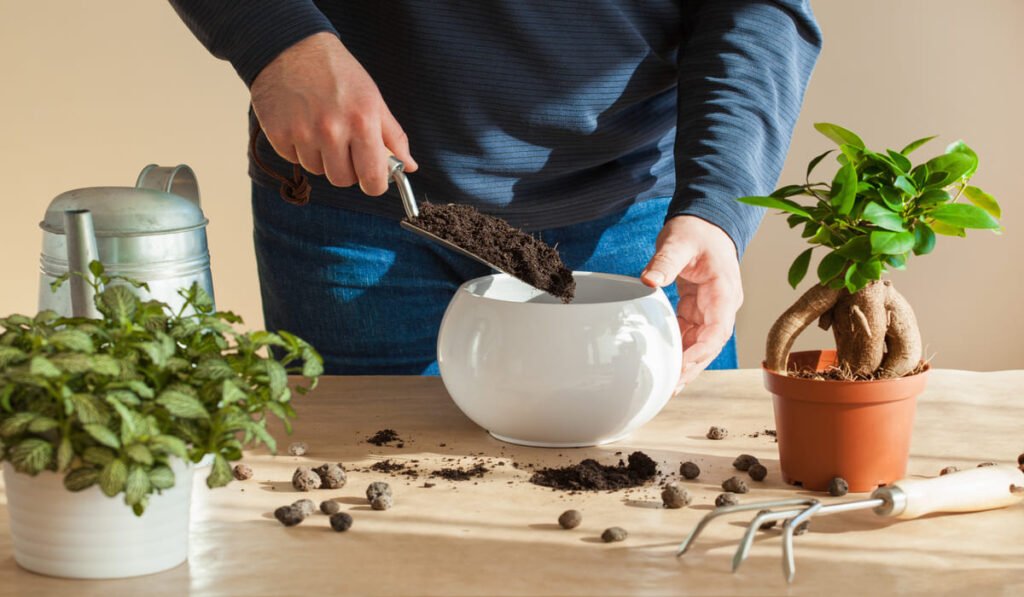
Composting is the most widely recommended way of using coffee grounds for indoor plants. The reason is that it supports microbial activity, which breaks down the grounds and reduces the risk of compaction, excess moisture, and root stress.
To make compost coffee, you will mix the grounds with materials like dried leaves, cardboard, or paper. Once it’s fully decomposed, use only a small part of it for the potting mix or topsoil dressing. It provides organic matter and trace minerals to indoor plants without exposing their roots to concentrated pockets of decomposing material.
Use Weak Coffee-Ground Tea (Second-Best Option)
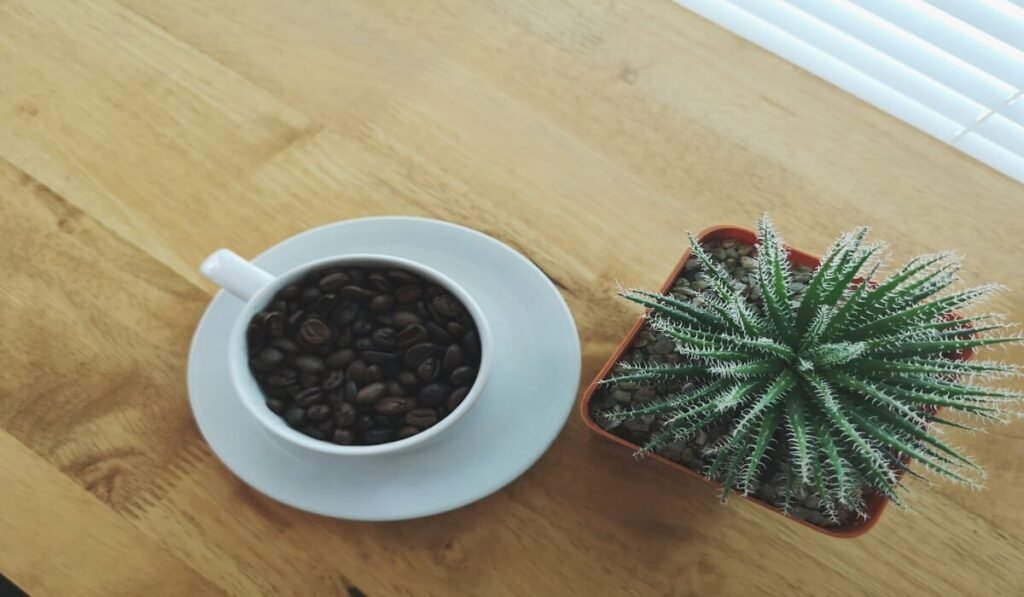
Add 1-2 tablespoons of coffee grounds to a gallon of water, allow the mixture to steep for 12-24 hours, and strain thoroughly before use. Apply the liquid occasionally and only during the growing season. This method delivers a mild nutrient boost to the houseplants without the moisture-retaining layer associated with direct applications.
Apply Directly Only in Tiny Amounts (Last Resort)
It carries the highest risk indoors and you should only use it on plants that can tolerate small coffee grounds in trace amounts. Before using it:
- Dry the grounds completely
- Add a half teaspoon for small pots and 1 teaspoon for medium-sized pots
- Mix it with the topsoil and wait at least 2-3 months before applying it again.
Avoid using this method on succulents, cacti, orchids, aloe vera, jade plants, and other moisture-sensitive plants.
Used Coffee Grounds vs Fresh Grounds vs Leftover Coffee
Not all coffee waste affects houseplants the same way. So, if you decide to use it, ensure you adopt the safest approach for each type;
| Type | Recommended Use |
|---|---|
| Used coffee grounds | It’s safest when it’s dried, composted, or brewed into weak coffee tea |
| Fresh coffee grounds | It’s best to avoid it because it contains more residual caffeine and other biologically active compounds which may inhibit germination and plant growth when concentrations are high enough. |
| Leftover black coffee | Only use if it’s plain, unsweetened, cooled, and heavily diluted |
| Cold brew grounds | Dried or composted. |
| Coffee grounds and eggshells | They work best in a compost mix which will give the eggshells time to break down and provide calcium for the houseplants. |
Never use coffee containing sugar, milk, cream, syrups, flavorings, or oils on houseplants. Keep coffee grounds and treated pots out of reach of pets. Coffee grounds are toxic to dogs and cats if eaten.
Signs You Used Too Many Coffee Grounds
You should stop or pause using coffee grounds if your indoor plants begin to show any of the following signs after an application:
- You notice white or gray growth (mold) on the soil surface
- There are fungus gnats around the plant pot(s)
- The potting soil gives off a sour or unpleasant smell (it’s indicative of poor airflow and excess moisture)
- The leaves lose their natural color and turn yellow
- The soil stays wet for too long (shows poor drainage)
- You notice a hard or crusted layer on the topsoil (it will trap moisture and worsen airflow)
- The plant is wilting or the roots are rotting.
When you notice any of these signs, remove the coffee grounds to improve airflow around the pot and let it dry completely before watering again.
FAQs
We don’t recommend direct application because it can clump the soil, trap moisture, reduce airflow, encourage mold, and attract gnats in the potting soil. But if you must apply coffee grounds directly, dry them first and mix only a tiny amount into the top inch of soil.
What indoor plants like coffee grounds the most?
Houseplants that like coffee grounds include Pothos, Peace Lilies, African Violets, Spider Plants, Philodendrons, Miniature Roses, Azaleas, Christmas Cacti, and some ferns. They can tolerate small amounts of compost grounds or diluted coffee-tea. But even for these plants, use it sparingly and only as a supplement for fertilizers.
Do coffee grounds attract fungus gnats?
Not directly, but wet grounds trap moisture and create damp conditions that allow gnat populations to thrive and grow fast.
Do coffee grounds make indoor plant soil acidic?
They’re actually close to neutral after brewing, so they’re unreliable for lowering soil pH.
Can I water houseplants with leftover coffee?
Yes, but only if it’s plain coffee that has been cooled and heavily diluted plus you should only use it occasionally.
Do aloe plants like coffee grounds?
No. Aloe wants fast-draining soil that dries out between waterings. Coffee grounds hold moisture and raise the risk of rot, so skip them.