
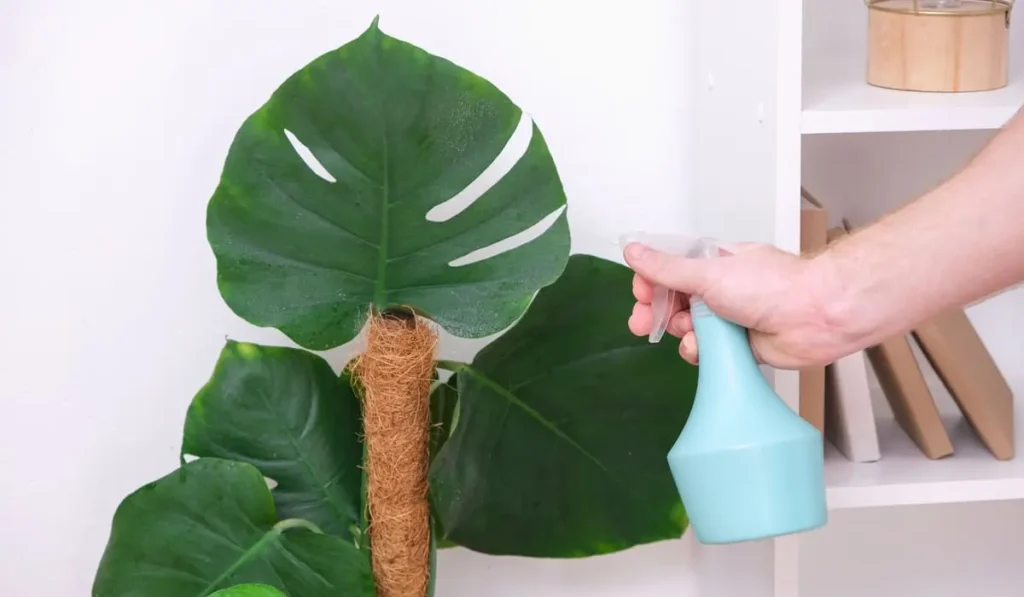
Artificial plants and flowers look better than ever. Whether you call them artificial, fake or faux flowers, they collect dust the same way. They look like natural plants, full of color and available in countless designs. While they don’t require as much care and maintenance as natural flowers, you still have to look after them in order to make sure they look great. That’s why knowing how to dust artificial flowers properly matters, it’s what keeps them looking fresh instead of dull. Not sure what yours are made of? See our guide to what faux flowers are.
A little regular cleaning will also help them last longer and keep them from looking dull or faded over time.
With this thought in mind, here’s how to dust artificial flowers and help them retain their glowing appearance.
How to Dust Artificial Flowers: Quick Steps
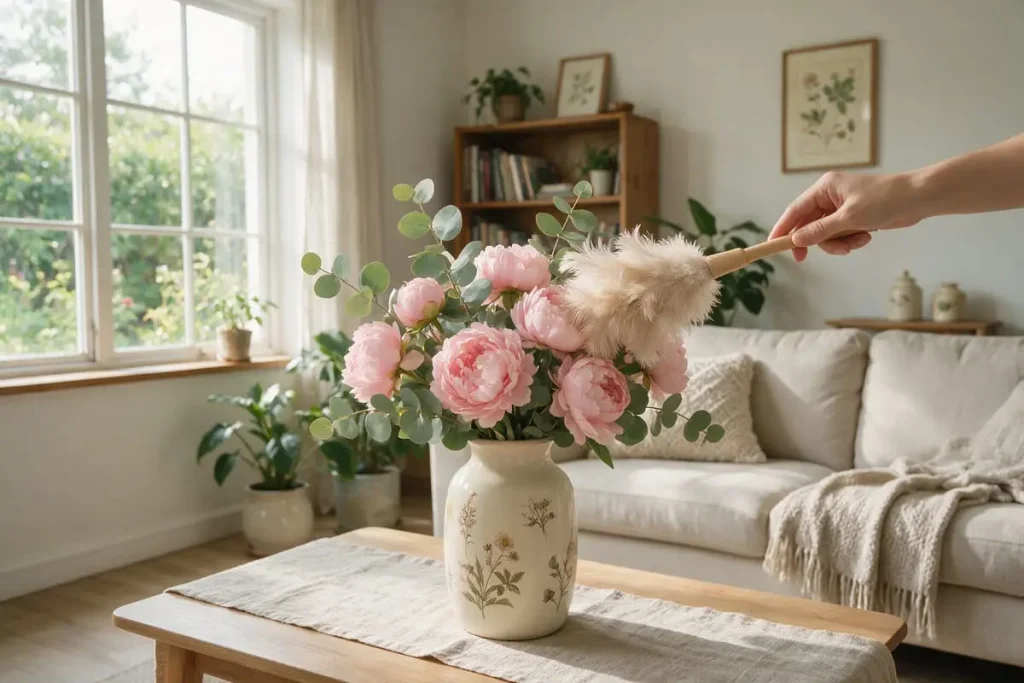
- Knock off loose dust gently with a feather duster or soft brush, working from the top down.
- Wipe stubborn spots with a slightly damp microfiber cloth.
- Let the flowers air dry. Never use heat.
- Finish with a dust-repelling spray made for your plant’s material, if you like.
What Cloths Should You Use?
Artificial flowers tend to be quite fragile. Sure, they’re more solid than natural plants, but they still require care and attention. Plus, unlike natural flowers, if you break something, it won’t grow back, so that means you need to be even more careful. Treat them the same way you would treat a favorite decorative item or heirloom piece.
Now, most people use feather dusters because they’re soft on plants, but hard on dust. On the same note, you can also get a microfiber cloth. Such cloths require more attention, but they’re suitable for large areas. When it comes to intricate designs or tight places, a feather duster is better.
Start wiping leaves and petals at the top and move towards the bottom.
Why Should You Avoid Heat?
When learning how to dust artificial flowers, you’ll realize that dust could be a bit stubborn at times. If you’ve skipped cleaning for a while, you might notice a slightly gray film building up on petals and leaves.
When it comes to stubborn dirt deposits, use a gentle cloth that’s a bit wet. That’s it, no harsh chemicals or heat. Heat is one of the most problematic elements and unfortunately, lots of people use it without knowing it.
You don’t even need any high heat to damage an artificial plant. Even a hairdryer on a low setting can put out enough heat to damage or burn a delicate material. This means your plant may start melting, even if just a little bit. It will affect its shape and appearance, as it won’t recover.
Any damage caused by heat will most likely be permanent in terms of deformation.
When Is Dry Dusting Your Only Option
It’s very tempting to use water, especially on a plant that seems to be made of plastic. Submerging it in water may seem ideal, especially since you normally use this method for plenty of other things. It’s not a great solution for artificial plants though. Too much water can seep into joints, fade painted details or even loosen glued parts.
When learning how to dust artificial flowers, submersion is one of the most common contraindications, even if they’re made of plastic. It makes sense to avoid submerging paper flowers and plants in water, but what about the plastic ones?
The explanation is fairly simple. To look natural, artificial plants use thin, delicate petals and leaves, and those parts are fragile. Therefore, submerging them in water could put too much pressure or weight on fragile elements, leading to deformation or even breakage.
A natural plant may regrow a twig, but an artificial one won’t. Therefore, dry dusting is probably the best choice. If you do have stubborn dirt, a slightly wet microfiber cloth will do.
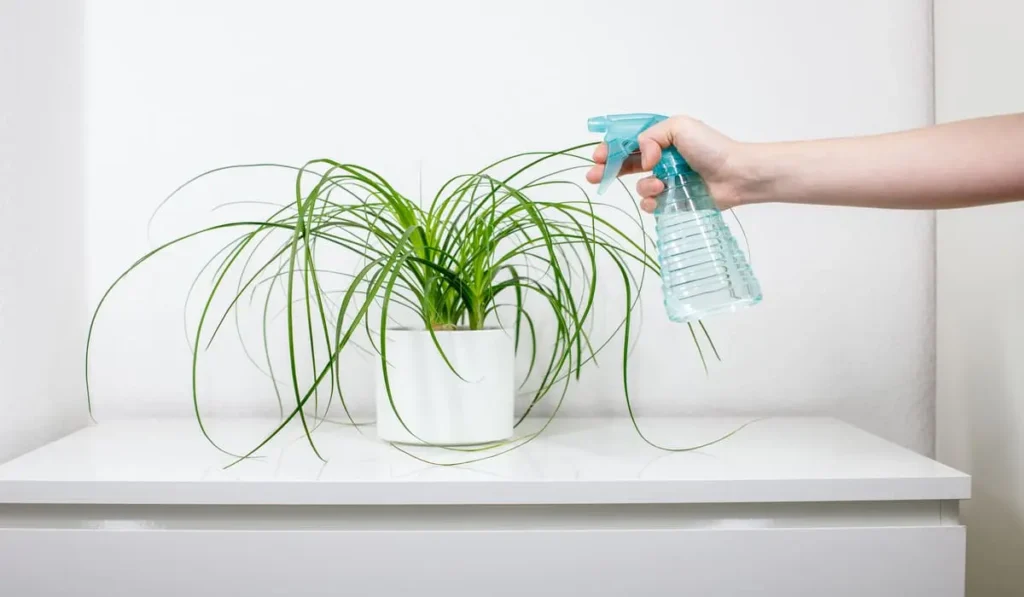
How to Clean Dust Off Fake Flowers: Silk, Plastic and Paper
Silk and fabric flowers: Dust dry. Use a damp cloth only on spots, and never soak them.
Plastic flowers: A damp microfiber cloth handles grime. Keep them away from heat.
Paper flowers: Dry dusting only. Water can warp or ruin them.
How to Remove Dust From Artificial Plants
Leafy artificial plants like ficus, ferns and palms hold a lot of dust on their flat leaves. Here’s how to remove dust from artificial plants without damaging them:
- Dust from the top down with a feather duster or soft brush, so dust falls onto leaves you haven’t cleaned yet.
- Wipe leaves with a gray film using a slightly damp microfiber cloth. Support each leaf with your other hand.
- For big, sturdy plants, use a vacuum with a soft brush attachment on low suction, and keep the brush moving.
- Use compressed air from a distance on tight clusters of leaves.
Go easy on glued leaves. If one starts to loosen, stop and dust that area dry.
How Often Should You Dust Artificial Flowers?
A light dusting every week or two keeps buildup from setting in. Do a deeper clean every few months, or whenever you see a gray film on the petals.
How Do You Add Shine at the End
Learning how to dust artificial flowers isn’t everything. Once you’re done dusting, you’ll realize that dust starts settling again. It’s just a matter of a few days. From this point of view, you also need a bit of finishing in terms of shininess.
Not only does it make your plants look more natural, but it can also keep dust away.
There are certain artificial plant cleaners or mist sprays that can repel dust and add a more natural layer of shininess. Make sure you pick such products based on the material your plants are made of or you risk damaging them.
How to Keep Artificial Trees and Plants Dust Free
Dust comes back fast, but you can slow it down.
- Dust a little and often. A light pass every week or two is easier than a big clean every few months.
- Use a dust-repelling spray made for your plant’s material. Test it on one leaf first.
- Keep them away from vents, open windows and the kitchen. Moving air carries dust, and cooking leaves a sticky film that dust clings to.
- For tall artificial trees, use an extendable duster so you can reach the top without a ladder.
- Cover them with a light cloth when you store them.
How Do You Dust Artificial Flowers in Hard-to-Reach Areas
Again, hairdryers are contraindicated, but if you have a product with a cool setting, you might be able to use it. Just make sure there’s no heat whatsoever, as it can cause the plant to melt. If you don’t have such a hairdryer, you may have to use compressed air.
According to the kind of plant you have, you may need to deal with intricate areas or delicate elements. Some areas could be impossible to reach otherwise. Compressed air (not too much power) can help you dust such elements.
What Do You Do About Stubborn Grime
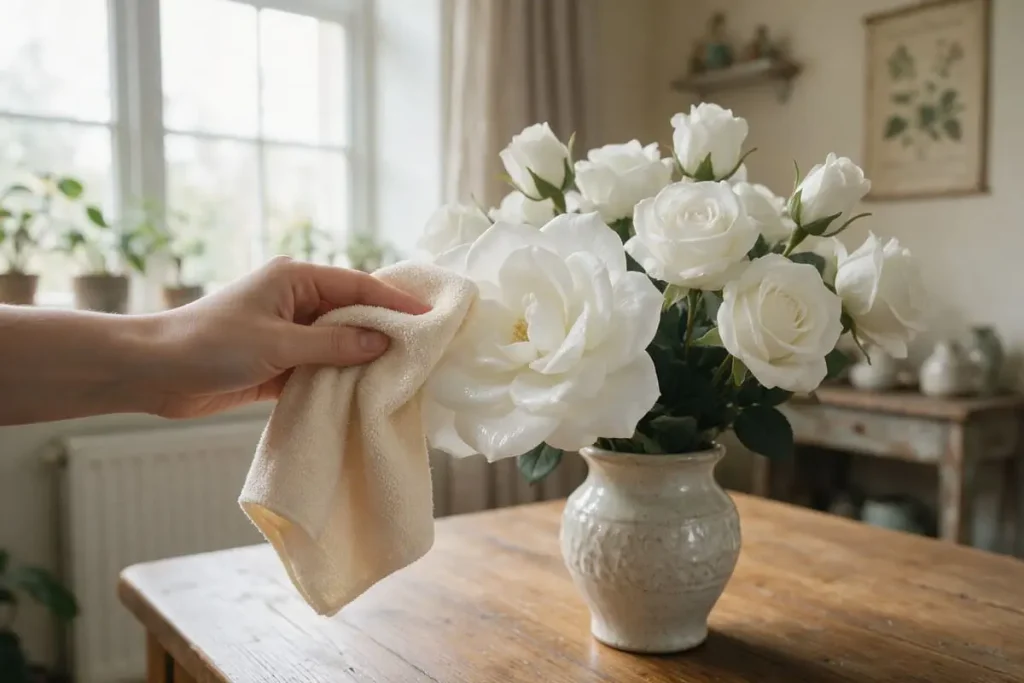
Stubborn dust, dirt or grime will most likely require more than just a duster. You can wipe leaves with a clean microfiber cloth. Dip it in water first. In some cases, you can use a mild detergent too, but make sure it’s not harmful to the material.
Last, but not least, if you have a small and sturdy plant, you can use the salt method too. Get it in a zip-lock bag with a bit of salt, and then give it a good shake. The salt acts as a gentle abrasive that rubs off dust from textured petals. Make sure the plant is solid enough or you’ll break its leaves.
In the end, figuring out how to dust artificial flowers isn’t as complicated as it might seem. Make sure you’re patient and stick to natural and light solutions to avoid damaging your plants.