
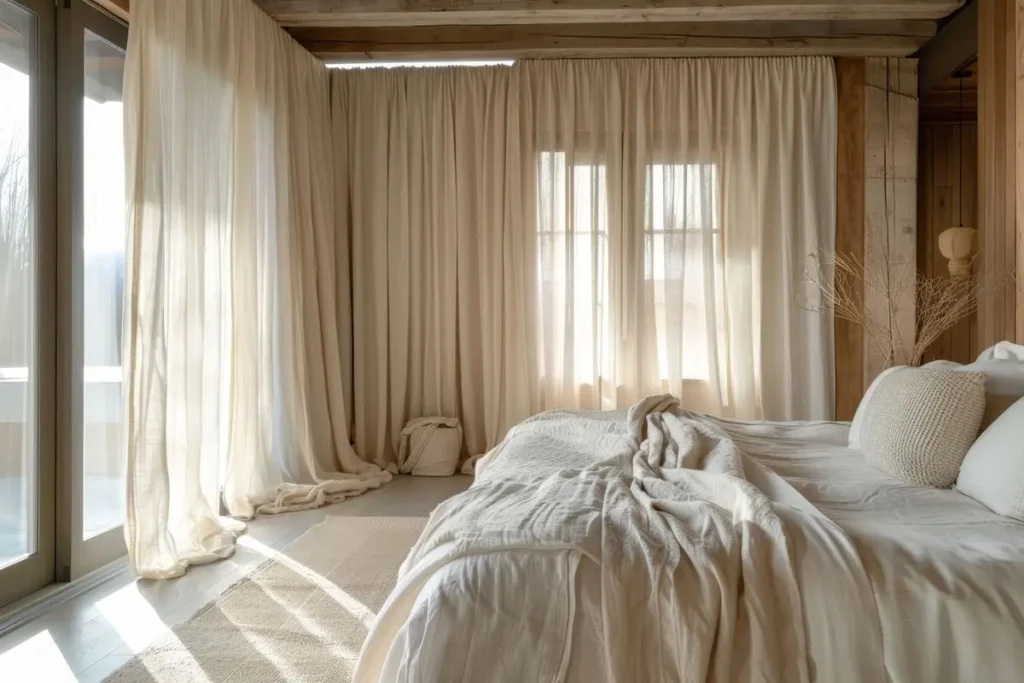
You can have cream bedding and blue cushions, and your Nancy Meyers bedroom will still appear incomplete. The things that would be missing are very simple: proper lamps, proper fabric curtains and some genuinely old furniture.
The look feels comfortable because it makes room for ordinary life. There is somewhere to put a book. The bed invites you to lean back. An old dresser sits happily beside a newer lamp. Here is how to build that feeling at home.
What is the Nancy Meyers bedroom aesthetic, actually?
The Nancy Meyers bedroom aesthetic combines traditional shapes, soft textiles, useful furniture and personal possessions. Its film references are broader than the blue-and-white coastal rooms that dominate social feeds.
Something’s Gotta Give gives us Erica’s Hamptons beachside home and Erica’s writing desk located in her bedroom. The Holiday provides us with two different choices of direction with Iris’s cozy English cottage and Amanda’s well-tailored California home.
In It’s Complicated, we get linen, solid wood and a Santa Barbara feel. Father of the Bride provides a traditional family home environment. The Intern blends brownstone architecture with modern furnishings. In Home Again, a new, colorful take on the interiors is presented by Hallie Meyers-Shyer, who wrote and directed the film, and Nancy Meyers, who produced it.
Credits matter as well. Production designer Jon Hutman and set decorator Beth Rubino worked on Something’s Gotta Give and It’s Complicated. Interior designer James Radin worked on the interiors of both films and The Holiday. Production designer Ellen Brill and set decorator Nicole Cates worked with Meyers-Shyer to create the interiors for Home Again.
What connects Nancy Meyers bedrooms is a sense of their occupants. A writing desk belongs to a writer. Books look readable. You can borrow the furnishings, but the personal part comes from keeping things you actually use and like.
Why this look is still having a moment
Interest in Nancy Meyers bedrooms was already surging in 2024. Pinterest’s summer trend report recorded a 1,505% increase for the bedroom search and 2,055% for “Nancy Meyers homes,” figures also reported by Homes & Gardens. These are Pinterest search increases, not Google search volumes.
Ahrefs data for US searches shows two waves for “nancy meyers bedroom”: one in October-November 2024, followed by a larger surge from August through November 2025. By 2026, demand had settled at a baseline roughly 40-70% above its pre-2024 level.
The second wave started before the death of the actor who starred in Something’s Gotta Give, Diane Keaton, on October 11, 2025, when she was 79 years old. The interest was already there.
The same Ahrefs data shows “nancy meyers bedroom aesthetic” registering measurable demand from June 2024 and still climbing as of mid-2026.
The appeal comes down to the fact that these spaces speak to comfort. One could easily spend an entire rainy afternoon in such a room without having to move anything around. If you like building a room around a pop culture reference, see our Taylor Swift bedroom ideas and Y2K bedroom ideas.
The color palette
Start with creamy whites and sandy beiges. Let muted green or blue appear in the bedding, curtains or a painted piece of furniture.
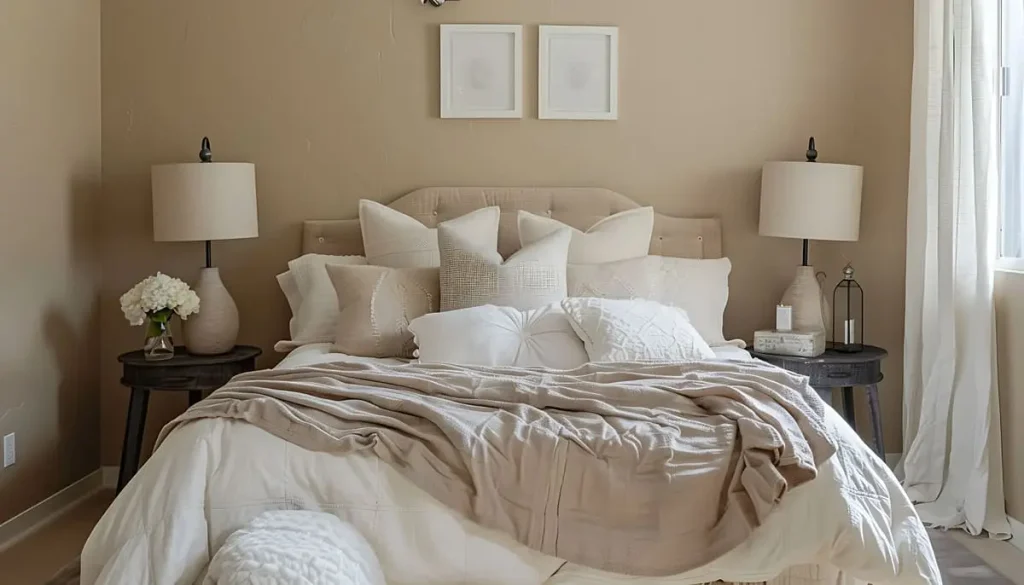
These Benjamin Moore colors are useful sampling candidates, rather than claimed matches to film-set paint:
- White Dove OC-17: an off-white starting point for walls and trim.
- Pale Oak OC-20: a light neutral with warm gray undertones, worth testing beside beige upholstery.
- October Mist 1495: a muted sage for a greener room.
- Quiet Moments 1563: a soft blue-gray option for a coastal direction.
For a Nancy Meyers aesthetic bedroom, keep some difference between the pale surfaces. Cream walls, an oatmeal headboard and white sheets give the eye more to work with than five identical shades of beige. If pale neutrals are not for you, our gothic bedroom ideas go the opposite way.
Use paint boards with samples that are 12 inches in size. Put them near the floorboards and the headboard, and then view them at night with your lamps turned on. The correct neutral should sit comfortably beside your existing wooden furniture.
Furniture and the antique-meets-contemporary mix
Consider an item that deserves its spot. Secondhand dressers with rounded corners and non-uniformly weathered wood are more interesting than a brand-new chest bearing the same factory scratches.
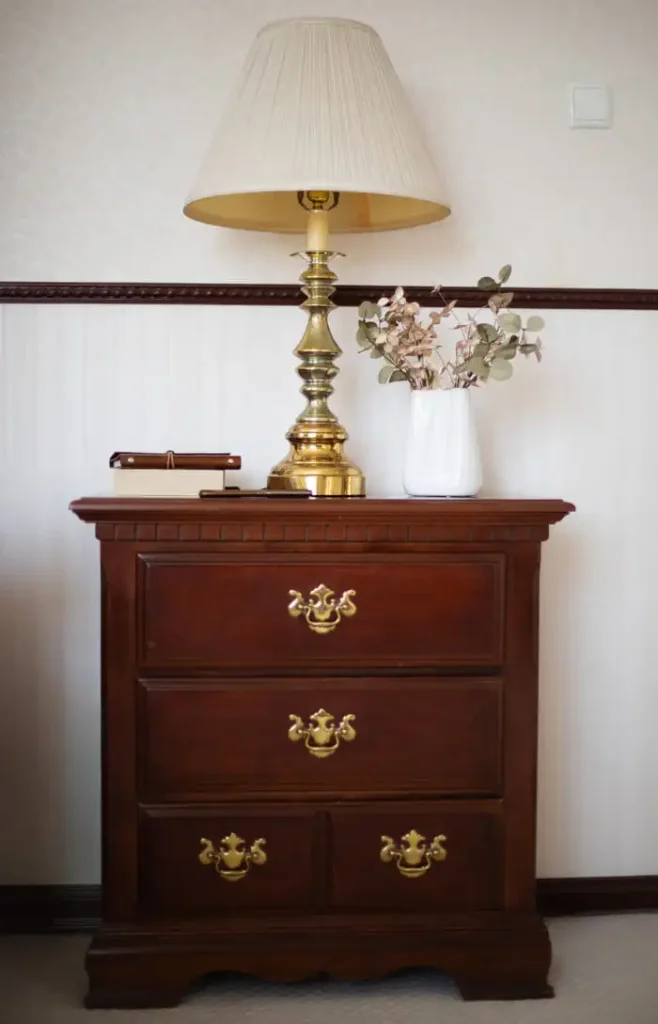
Evaluate the practical issues. Open all drawers. Search for loose joints, damaged veneer, and any smell. Good vintage pieces may require some care, but age does not guarantee quality.
Complement your dresser with an elegant upholstered headboard or a simple bedside table. Never buy a set of bed, dresser, and nightstand together. Common measurements and colors can unite pieces of different origin.
A convenient bedside surface is 24-30 inches wide, with its top level with the top of the mattress. If you need a place to write, use a small desk about 36 inches wide and 20 inches deep beside your bed in place of a nightstand. Check that there is enough knee clearance and room for a chair.
Table lamps around 26 to 30 inches high are a good beginning. Sit on the bed before making the decision. The lampshade needs to hide the lightbulb when you’re reading in that spot.
A bench or an old trunk at the foot provides space for the clothes you’ll be wearing the next day. You need to have approximately 30 inches of space left after placing the bench or trunk in order to move freely.
Layering: bedding and textiles
Start by making your bed according to how you sleep. Use cotton percale if you want crispness, or linen if you want a looser texture. Include a duvet wide enough to cover the mattress edges.
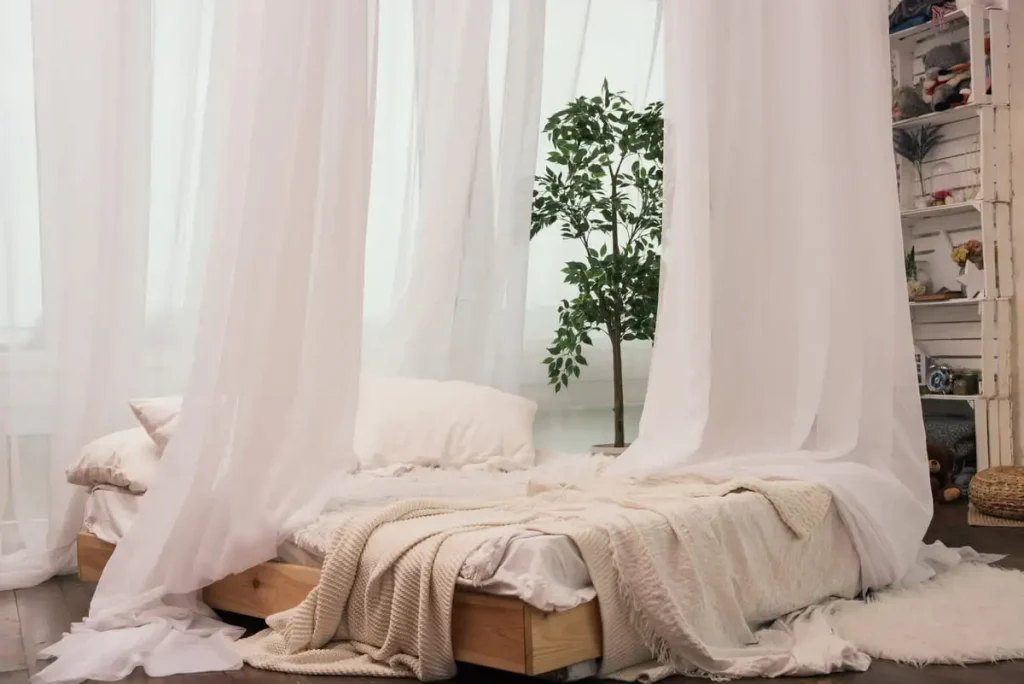
Give the bedding a touch of personality with a small floral quilt, striped bedding or a matelassé bedspread. Matelassé bedding has a raised weave that gives texture without introducing any color. Fold the quilt across the lower third of the bed if a bed covered entirely in pattern looks cluttered.
Always use floor-length curtains regardless of whether the blinds take care of light in that room. These two serve different purposes. Blinds create darkness while curtains soften the window and adjacent wall.
To create a relaxed look, allow the hemline to barely skim the floor. Consult the curtain company on how much fullness is recommended. Usually, twice the width of the rod is the starting point for most gathered curtain panels. It is easier to hide cheap fabric than skimpy fabric.
Control the finishes. Two types of wood and two metals will be fine: perhaps honey oak and walnut, and aged brass and a touch of blackened iron. Do not introduce a third type of wood just to furnish one small table in the room. Think of this advice as an editing tool, not a disqualification.
The detail almost nobody mentions: trim and molding
Even quality furniture appears disjointed amid bare walls. Baseboards, door casing, and wall molding establish the shape of the space prior to placing the bedding down.
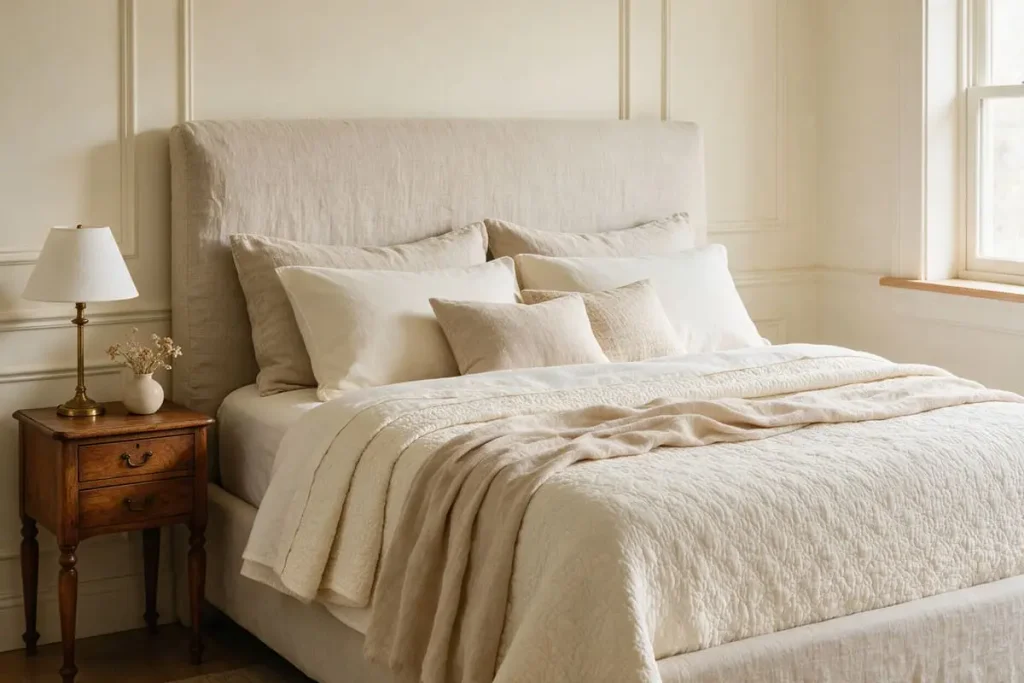
A relatively simple choice is picture frame molding. This is narrow molding placed on the walls in the form of rectangular shapes and not actual wood panels.
The wall behind the bed makes a good starting point. Three rectangle frames of 24 x 48 inches require about 36 feet of molding prior to waste. An additional 10-15% is added for waste, and then pricing is calculated by the do-it-yourselfer for molding, nails, filler, and paint. The cost of labor varies from region to region and cannot be calculated.
Marking the rectangles on the wall using painter’s tape first is a good idea. Evaluate how well these frames go with the headboard, electric outlets and bedside lamps. Equalize the spacing and select a profile that complements the door casings.
Painting the molding and wall in the same cream color helps keep the shadows soft. This is a cheap way of achieving an expensive but lived-in look because it will enhance the background of the entire room. Large and fancy cornices are unnecessary, especially for rooms with low ceilings.
What to splurge on and what to save on
Spend where you will notice the material or construction every day. Save where careful sizing, washing or a better lampshade can do much of the work.
| Worth the splurge | A sensible place to save |
|---|---|
| A mattress and supportive bed frame. Comfort is the purchase you use every night. | Decorative pillows. Keep the quantity manageable and use removable covers from IKEA or Target. |
| A well-built real-wood dresser. Pay for sound joints, working drawers and a finish you like. | Secondary wood pieces. A structurally sound secondhand side table or frame may offer better value than a new reproduction. |
| Natural materials you touch. Linen upholstery or a wool rug deserves attention. | Throws and seasonal quilts. Compare fiber labels at Target or World Market instead of paying for branding. |
| Window treatments that fit. Unusual windows may justify custom work. | Standard-length curtains. Ready-made IKEA panels, hemmed correctly, can look considered. |
| A comfortable reading chair. Test the seat depth and back support. | Small accents. Secondhand frames, a simple ceramic bowl and books you own supply the personal detail. |
Natural materials are worth considering, but construction still matters. Thin linen is not automatically better than sturdy cotton. If the budget is tight, finish the bed and lighting first. Let the decorative pieces accumulate.
Two example bedrooms
A coastal room inspired by Something’s Gotta Give
Imagine a room measuring 12 by 14 feet, with a queen-size bed. The wall color should be White Dove, with an oatmeal upholstered headboard. Incorporate a washed blue quilt along with one pillow featuring a very thin blue stripe.
The rug sits beneath the lower two-thirds of the bed and measures 8 by 10 feet. Check that the doors can swing over it before ordering. Use oak nightstands and a deeper wood on a small table or frame.
Hang ivory drapes over the blackout blinds. Include ceramic lamps and, if there is any additional space, a 48-inch upholstered ottoman. A landscape painting will help you get the coastal look. You do not need shells for that.
A warmer room inspired by It’s Complicated
Start off with Pale Oak walls (test a sample first) and a white linen headboard. Add an old walnut dresser and a honey-colored old trunk. Let the wood be mostly visible by leaving the furniture surfaces relatively empty.
Cover the bed with an ivory matelassé coverlet and an old floral quilt in olive and rust colors. Reuse olive on the cushion of a reading chair. Use aged brass table lamps with white linen shades. Add floor-length oatmeal curtains.
Decorate with a small framed drawing and an old book. Both rooms take their inspiration from the films. Treat them as a starting point.
FAQ
Keep the furniture that still works. Prioritize the bed, lighting and curtains. Buy a single secondhand wooden piece if the room lacks character. Cotton bedding and properly hemmed curtains supply most of the character.
Is the Nancy Meyers look the same as coastal grandmother?
They overlap in light colors, natural materials and traditional furniture. The film style is more wide-ranging. It takes in English cottage interiors, warm Californian interiors and brownstones. Coastal blue-and-white design is just one example.
Does the Nancy Meyers look work in a small bedroom?
A Nancy Meyers aesthetic bedroom can work in a small space if the furniture suits it. Use a compact bedside chest, full-length curtains and a simple upholstered headboard. Skip the bench if it restricts walking space. Keep useful surfaces clear enough to use.
How do you keep a Nancy Meyers-style room from looking dated?
Use classic wood furniture along with simple fabrics and minimal pattern. Repeat colors, leave space between objects and size lamps to the furniture. Accessories are good, but not every surface requires one.