
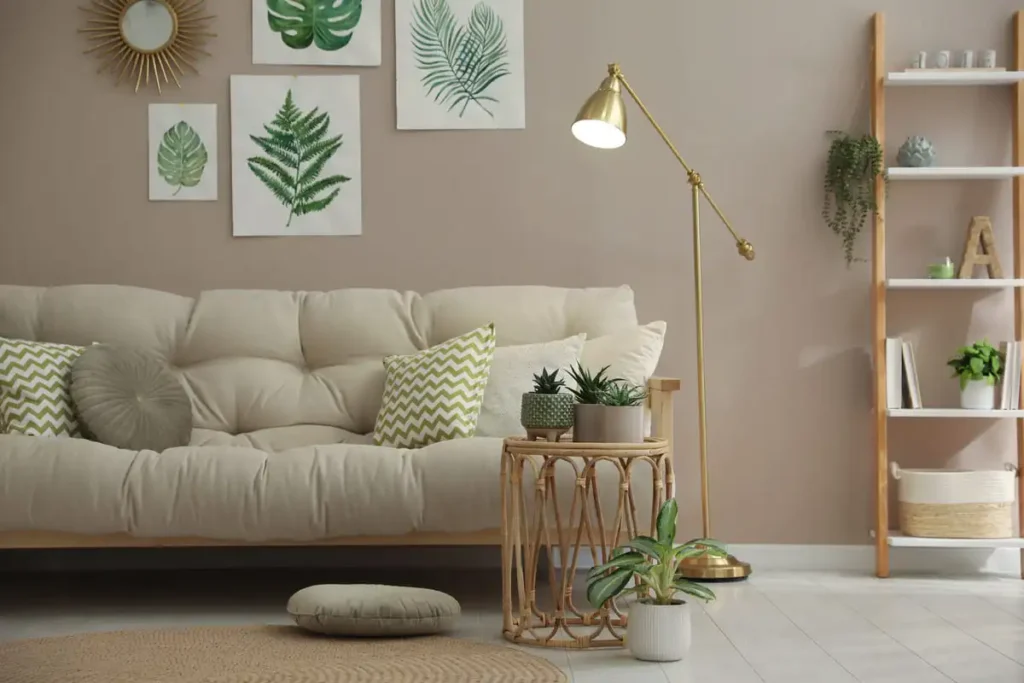
A sofa, rug, and coffee table can look perfectly settled while the wall behind them still feels unfinished. Buying another small print rarely fixes the problem. Useful living room wall decor ideas begin with what the room needs: more light, useful storage, texture, or something personal.
In Houzz’s 2026 study, 42% of surveyed U.S. homeowners who renovated in 2025 bought artwork. But good living room wall decor can do much more than hold a frame. These eight approaches help you choose something that earns its place.
How Much Wall Are You Actually Working With?
The living room wall decor ideas worth considering depend on your usable wall space, the furniture below it, and whether you want one focal point or a full-wall treatment.
Measure the width and height of the wall, as well as the width of the furniture. Indicate windows, switches, vents, and door openings on the rough sketch.
Next, decide what the wall needs to do. A blank space above a sofa needs an anchor; an empty corner needs height. Check how the proposed addition relates to your existing living room decor, including what you see from the doorway.
What Size Should Your Wall Decor Be?
For wall art above furniture, aim for a piece or grouping roughly two-thirds to three-quarters of the furniture’s width, using eye level as a starting point and the furniture to guide its final position.
The precise calculations concerning how high to hang and gallery spacing are all contained in the wall decor hanging guide we have developed.
Make sure you know the final measurements, including the frame, before placing your order.
8 Living Room Wall Decor Ideas (Beyond Just Art)
Wall decor for living room spaces can include a gallery wall, statement mirror, floating shelves, architectural texture, woven object, wall light, display cabinet, or tall plant.
1. Build a Gallery Wall With a Common Thread
A curated gallery wall needs a common thread, such as color, theme, or frame finish.
When working on an eclectic gallery, blend in an image of your travels, a small painting, and a drawing of your family with the same one or two colors repeating.
Choose the artwork that you like the most first and then let the rest complement it. Your living room wall decor will feel more personal when each addition has a reason to be there. Remove anything included only to fill a gap.
2. Use a Statement Mirror to Change the View

A statement mirror creates a sense of depth and reflects existing light, especially when it faces a window or an attractive part of the room.
The location should be determined by how the reflection looks from where you normally sit. The mirror shouldn’t reflect wires, the mess of the kitchen, or the glare from the TV. The arch-shaped mirror can soften straight lines in the furniture while the rectangular one can bring a sense of order to a room where seating is curved. Consider the shape as carefully as the finish for the frame.
A single large mirror would define a small wall better than many small mirrors.
3. Add Floating Shelves or a Picture Ledge
Picture ledges are useful wall decor for living room layouts that change often because you can refresh the display without remounting each piece.
Choose a shallow ledge for photographs and cards, or a deeper shelf for books and pottery. Measure its depth in relation to the furniture to ensure no one hits a head or shoulder on the wall-mounted piece.
You can keep some pieces permanently in place, for example, your favorite photo and the vase, and then update others according to the season. Vary the heights of the objects and let some shelf space show through. If the shelf becomes crowded, it will turn into another storage challenge.
4. Let Architectural Texture Become the Decoration
Wainscoting, board and batten, plaster, or limewashing can add personality to an otherwise simple wall to make it work on its own.
Pick what you wish to achieve. Wainscoting adds a distinct bottom section; board and batten gives a rhythmic effect; plaster gives a physical texture; and limewash creates soft variations in color.
Repeat a tone already present in your living room decor to connect the treatment to the furniture. See how the pattern works in the corners, around the outlets, and where the doors meet the walls before installing anything. Always test your finishes in both sunlight and lamp light, as shadows have a way of bringing out the texture of the finish.
5. Hang a Woven or Three-Dimensional Object
A woven hanging, sculptural basket, carved panel, or metal object adds physical depth to the wall.
Select one large piece where there is enough detail in the rest of the room. Select a small group of pieces where the pieces share a medium, color range or shape.
Contrast makes the difference – the rough weaving will contrast against smooth upholstery, and the dark wooden object will give definition to the light wall. Take note of how the shape looks from across the room before purchasing; the details won’t be seen from this far away, but the shape will.
Consider maintenance, too: intricate pieces take longer to dust.
6. Give the Wall Its Own Light
Sconces or a picture light can help bring the wall into your evening lighting strategy, adding illumination and a sculptural feature.
Houzz’s 2026 study found that 48% of surveyed U.S. homeowners who renovated in 2025 bought light fixtures. The figure covers purchases throughout the home.
A picture light highlights artwork or another displayed piece, and sconces can illuminate a reading nook or frame a console table. Check the view from the sofa so exposed bulbs do not shine into your eyes. Lighting makes living room wall decor noticeable after daylight fades.
7. Make Bookshelves or a Display Cabinet Do Two Jobs
Bookcases and display cabinets fill wall space while providing homes for your books, collections, and belongings.
Go for closed cabinets below if you have many toys, chargers, and papers lying around. The open parts should be reserved for your books and collections which make you happy, with some space between them.
Also, check cabinet depth and door clearance so the doors can open without hitting the coffee table or blocking a walkway. Repeat a wood tone or color from your living room decor to help it belong. Anchor tall furniture securely; CPSC specifically recommends anchoring bookcases to prevent tip-overs.
8. Fill an Awkward Corner With a Tall Plant
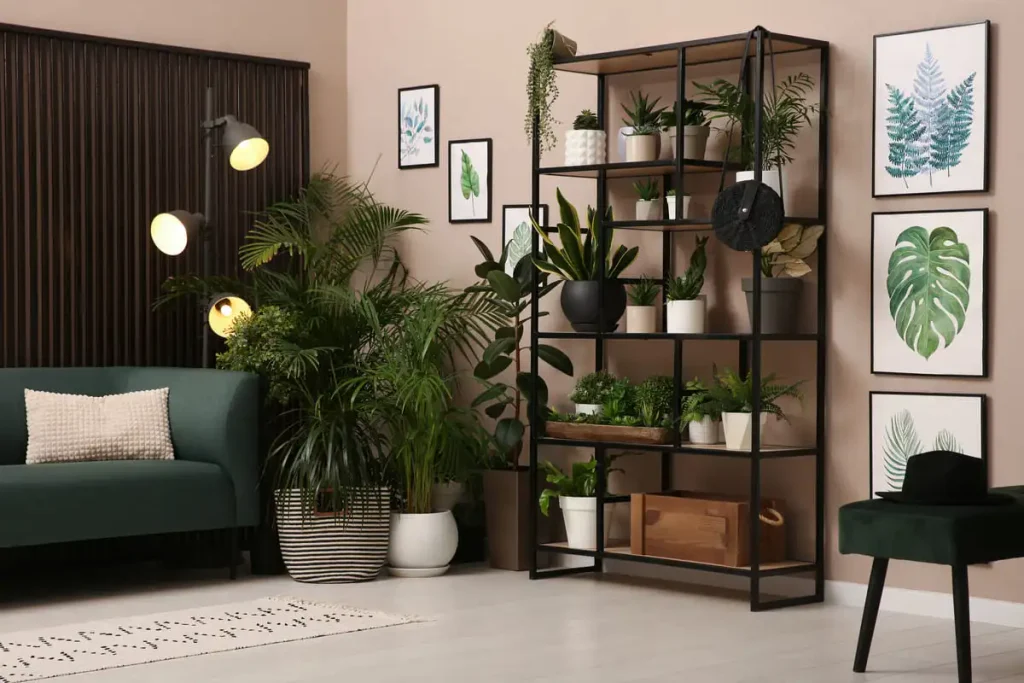
Plants offer wall decor for living room corners by filling vertical space without requiring nail holes.
A leafy plant can soften a corner or balance a tall cabinet. You will find our Tall Indoor Plants for Low Light Corners helpful in finding plants that work for darker corners; low light does not mean no light.
Humidity-loving plants will be good choices for humid corners when putting up framed paper art is not feasible, with one condition being that the wall remains dry. For living room areas, select the right type of plant and planter and place it away from play paths. The plant can take the place of other wall decorations.
Renter-Friendly Wall Decor (No Holes Required)
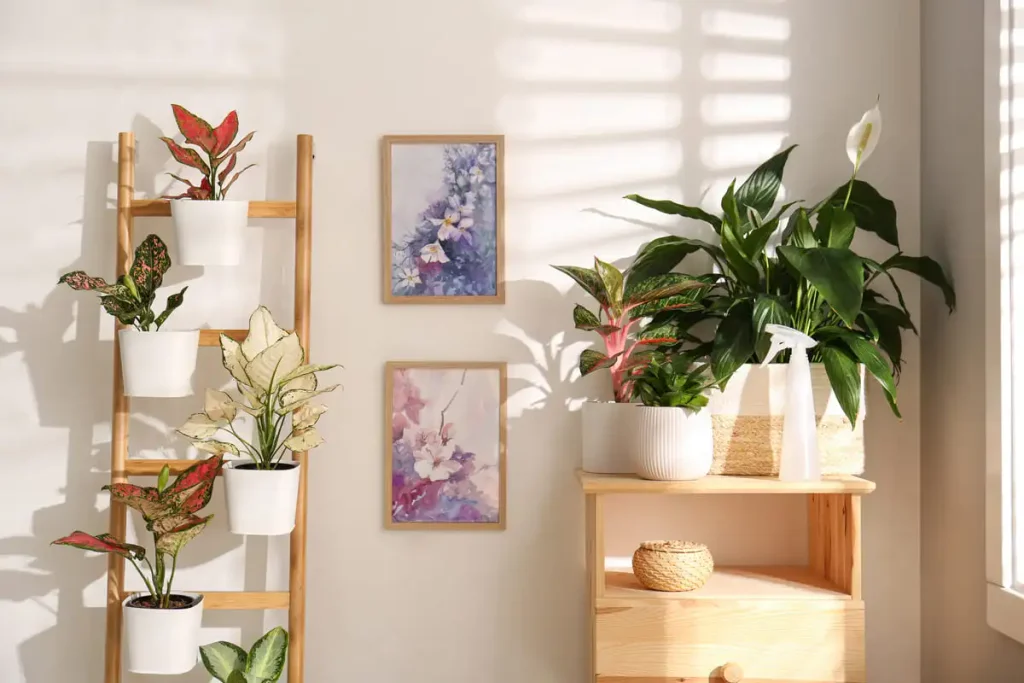
The most practical living room wall decor ideas for renters include removable peel-and-stick wallpaper and tension-mounted shelving that grips between floor and ceiling.
Paper one wall to make a quick change to your pattern or color scheme. Test a sample before installation and follow the manufacturer’s surface requirements: Tempaper says to use smooth, sound, primed and painted surfaces. Just because wallpaper is labeled “removable” doesn’t mean it is suitable for every surface.
Select a shelving system designed for floor-to-ceiling compression, then check ceiling suitability, installation requirements, and load limits. Try out the Rakks line for shelving of this type. For all other methods, see our renter-friendly hanging tips.
Free and Low-Cost Wall Decor Ideas
Free living room wall decor ideas start with rearranging the frames, keepsakes, and artwork you already own.
Collect items from around other parts of the house and take pictures of some of your potential combinations before purchasing any new materials. A frame can be used for a kid’s artwork, a travel postcard, or even a pressed flower.
Group related postcards or display small souvenirs together on an existing shelf. Place one dried flower stem in a vase so that its shape stands out against the wall behind it. Remat or crop an outdated picture with the materials you have available.
FAQ
Begin with a large piece of art around 40 × 60 inches or larger, if the wall allows. One big piece makes for a better focal point than a series of smaller ones.
What size should wall decor be above furniture?
Aim for roughly two-thirds to three-quarters of the furniture’s width. Our wall decor placement guide explains the exact hanging-height and gallery-spacing measurements.
Can I decorate a wall without putting holes in it?
Yes. Try compatible peel-and-stick wallpaper or a properly installed tension-mounted shelving system. Our moody wall decor guide covers other renter-friendly hanging options.
What’s the cheapest way to decorate a large wall?
Organize your existing items before adding any new ones. Create a combination of existing frames, highlight treasured heirlooms, or showcase artwork from your kids.