
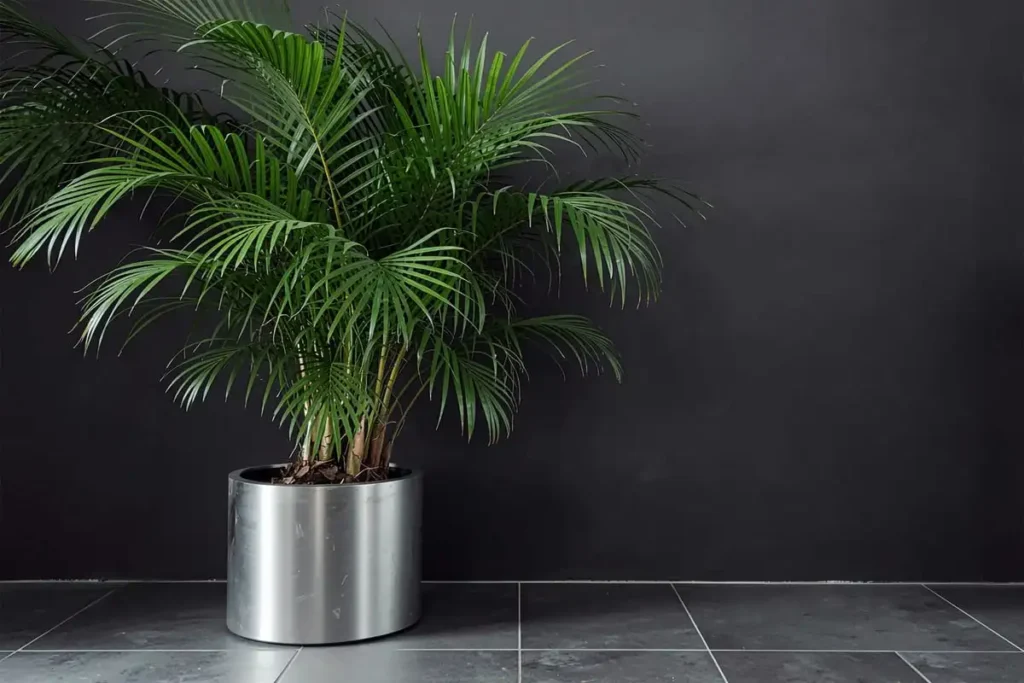
Got an empty corner that never sees direct sun? Finding tall indoor plants low light rooms can actually support is trickier than nursery tags let on. Most “shade-tolerant” labels at the garden center still want bright, indirect light to look their best. Stick one in a genuinely dim spot and within a few months it’s leggy, dropping leaves, leaning hard toward whatever window it can find.
The ten below aren’t like that. They’re real low light indoor plants, ones that hold their shape in a dim corner instead of just enduring it. If you want more forgiving picks for beginners, our hard-to-kill houseplants guide has other tough options worth a look.
Why do some tall plants handle low light when most do not?
Two key factors set these plants apart: broad leaves with a high density of chlorophyll that absorb more light than other plants can under low light conditions, and a slow growth rate.
Their high density of chlorophyll lets them absorb more of the available light. Leaf color alone doesn’t necessarily indicate how much chlorophyll is present. Plants also have to be able to live off their stored energy while growing slowly due to a lack of sunlight, and that’s the criterion behind this list. Because there’s usually more chlorophyll in the green parts of a leaf than in the pale or white portions, green varieties generally perform better than variegated ones. The pale areas of a variegated leaf carry less chlorophyll, so they absorb less light.
For a broader look into what constitutes low light, our article discussing the best low light indoor plants lists those types.
Which 10 tall indoor plants low light rooms actually support?
Nest & Aura
10 Tall Indoor Plants for Low Light Corners
Height, water needs, and pet safety for the plants that actually hold their shape in a dim room, ranked at a glance.
Snake plant
Dracaena trifasciata
Cast iron plant
Aspidistra elatior
Corn plant / mass cane
Dracaena fragrans
Bamboo palm
Chamaedorea seifrizii
Parlor palm
Chamaedorea elegans
Chinese evergreen
Aglaonema spp.
Madagascar dragon tree
Dracaena marginata
Kentia palm
Howea forsteriana
Pothos, on a moss pole
Epipremnum aureum
Heartleaf philodendron, on a moss pole
Philodendron hederaceum
Slow-growing palms, tough foliage plants, and vining plants trained up a support: that’s what the best tall indoor plants low light rooms can support have in common. Buy the biggest one you can afford. Growth crawls in low light, so a small plant stays small for a long time.
1. Snake plant (Dracaena trifasciata) Height: 4-6 feet It holds its straight, upright shape even in a dark room and barely takes up floor space. Skip the variegated types here; they fade fast without enough light, so stick to solid green. Light: Low to medium indirect | Water: Let the soil dry out almost completely | Pet-safe: No. Toxic if eaten. Check our Pet & Child Safe Plant Finder Tool before bringing one home if you have pets.
2. Cast iron plant (Aspidistra elatior) Height: 3-4 feet The name isn’t marketing. This is about as close to indestructible as houseplants get, and a mature specimen fills out nicely from the base up. Light: Low to medium indirect | Water: Let the top few inches dry out | Pet-safe: Yes, safe for cats and dogs.
3. Corn plant / mass cane (Dracaena fragrans), green form Height: 6-10 feet Usually sold as a cluster of cut canes planted together in one pot. Go with a solid green variety; the stripes on ‘Massangeana’ tend to fade in low light, while plain green ‘Janet Craig’ genuinely prefers it. Light: Low to medium indirect | Water: Let the top third of soil dry out | Pet-safe: No. Dracaena is toxic to cats and dogs. Use the Pet & Child Safe Plant Finder Tool to double check.
4. Bamboo palm (Chamaedorea seifrizii) Height: 5-7 feet Thin, clustered stems make it a good soft screen between two spaces. It handles low light fine, just slower to grow and thirstier than most people expect from a palm. Light: Low to medium indirect | Water: Keep evenly moist, never soggy | Pet-safe: Yes, safe for cats and dogs.
5. Parlor palm (Chamaedorea elegans) Height: 4-6 feet A mature one adds real width along with the height, and it tolerates dim rooms better than most palms manage. Don’t buy it expecting a young plant to get there fast, though. Light: Low to moderate indirect | Water: Let the soil dry slightly between waterings | Pet-safe: Yes, safe for cats and dogs.
6. Chinese evergreen (Aglaonema species), green or silver form Height: 3-4 feet It’s one of the shorter plants here, but a mature specimen still fills a wide corner. Stick to green or muted silver leaves since the variegated types need more light to hold their pattern. Light: Low to medium indirect | Water: Let the top 1-2 inches dry out | Pet-safe: No. Toxic if eaten. Check the Pet & Child Safe Plant Finder Tool first.
7. Madagascar dragon tree (Dracaena marginata) Height: 6-10 feet Height without eating up floor space, thanks to those thin trunks. Good for tight corners, though it’ll lean if all the light comes from one direction, so rotate it. Light: Low to medium indirect | Water: Let the top half of soil dry out | Pet-safe: No. Dracaena is toxic to cats and dogs. Check the Pet & Child Safe Plant Finder Tool.
8. Kentia palm (Howea forsteriana) Height: Up to 10 feet indoors It’s not cheap. A large specimen makes a dim corner look finished the day it arrives, though, and it tolerates lower light than most palms while growing slowly enough that buying the height you want makes sense. Light: Low to medium indirect | Water: Let the top layer dry before watering | Pet-safe: Yes, safe for cats and dogs.
9. Pothos trained up a moss pole (Epipremnum aureum) Height: 6-8 feet with support Tie it to a moss pole and a trailing vine turns into an actual floor plant. Stick to plain green (jade) pothos for true low light; the variegated forms fade and get leggy fast. Light: Low to medium indirect | Water: Let the top few inches dry out | Pet-safe: No. Toxic if chewed. Check the Pet & Child Safe Plant Finder Tool.
10. Heartleaf philodendron trained up a moss pole (Philodendron hederaceum) Height: 6-8 feet with support Climbs just as readily as pothos but reads softer. Pick a plain green variety and tie new growth to the pole before it starts trailing across your floor instead. Light: Low to medium indirect | Water: Let the top 1-2 inches dry out | Pet-safe: No. Toxic if eaten. Check the Pet & Child Safe Plant Finder Tool.
Which tall plants get recommended for low light but should not be?
It seems that all five plants listed – Monstera, Rubber Plant, Umbrella Tree (Schefflera), Fiddle Leaf Fig, Weeping Fig – do poorly in very low light conditions; however, each will appear normal or good for a couple of months after being placed in a very low light area. The plants also show other issues: Monstera’s leaves get smaller and split less often.
Rubber Plants lose some or all of the bottom leaves. Scheffleras thin out. Figs drop leaves the moment the plants begin to show signs of stress. It does not happen quickly, and this makes it difficult to realize that your plants aren’t really tolerating low light conditions.
There may be another factor contributing to why so many people find themselves with an under-performing houseplant. Many popular plants are described as tolerant of low amounts of direct sunlight by retailers.
One naming mix-up is worth clearing up: dragon tree is just a common name for Dracaena marginata, already on the good list above. See “dragon tree” recommended somewhere else? Check the botanical name before assuming it’s something different.
How should you style a tall low-light plant in a room?
Use it to fill dead space: the corner of a room, the area beside a doorway, the bottom of a staircase, or as a soft divider in an open-plan space.
While you’re at it, throw away the plastic grow pot. If your furniture leans wood and leather, a terracotta planter fits right in. If your space is more modern, go with something in matte ceramic instead. Either way, it turns the plant into a design element rather than an afterthought.
Large low light indoor plants can look sparse on their own once the foliage sits up near eye level. Layer something shorter at the base, a cast iron plant, a ZZ plant, or a green pothos if pets can’t get to it. That second layer is the difference between a room feature and one stick in a pot.
How do you care for a tall plant in low light?
Caring for tall indoor plants low light rooms actually support comes down to two things: water less than you would for a bright-light plant, and buy the biggest specimen your budget allows, since growth in low light is slow no matter what you do.
Buy the largest plant you can afford. Palms and other large low light indoor plants take forever to catch up once they’re stuck in a dim spot.
Wipe the broad-leaf plants periodically to prevent dust from blocking any existing light. Fine-leafed palms will do fine with a spray of water now and then, as opposed to wiping them down.
Rotate the container (pot) about one-quarter of the way around every couple of weeks to keep it from leaning toward the window.
Water less frequently than you would for a bright-light plant. Since soil in low light holds moisture longer than soil that’s getting direct sun, you may be able to go longer before watering again.
If your plant has a tendency to become too top-heavy, place it in a large, heavy terracotta container, or weigh down the bottom of the container with something heavy, like rocks. This matters most if you have a tall cane, a moss pole, or a palm.
FAQ
Quick answers to the questions people actually ask about tall indoor plants low light rooms can support.
Mass cane and Dracaena marginata both grow up to 6-10 feet tall when grown indoors for a couple of years. Kentia palm also grows 10 feet tall but requires more ground space
Not forever. No houseplant does. If the room is really windowless, then use a full spectrum grow light for 8-10 hours per day.
It is chasing all the light that it can find. A quarter turn every two weeks usually takes care of it, and moving it closer to the light source helps when it is already tall and spindly.
Yes, but be gentle. Half strength, once a month during spring and summer. Discontinue when growth ceases.
Use a heavy terracotta pot, or a weighted inner pot, and make sure the moss pole is firmly anchored in the mix.
Cast iron plant, bamboo palm, parlor palm, and Kentia palm won’t hurt cats or dogs. The other six will. Run the exact species past our Pet & Child Safe Plant Finder Tool, or our full guide to low light indoor plants safe for cats and dogs, before buying anything on the toxic side.