
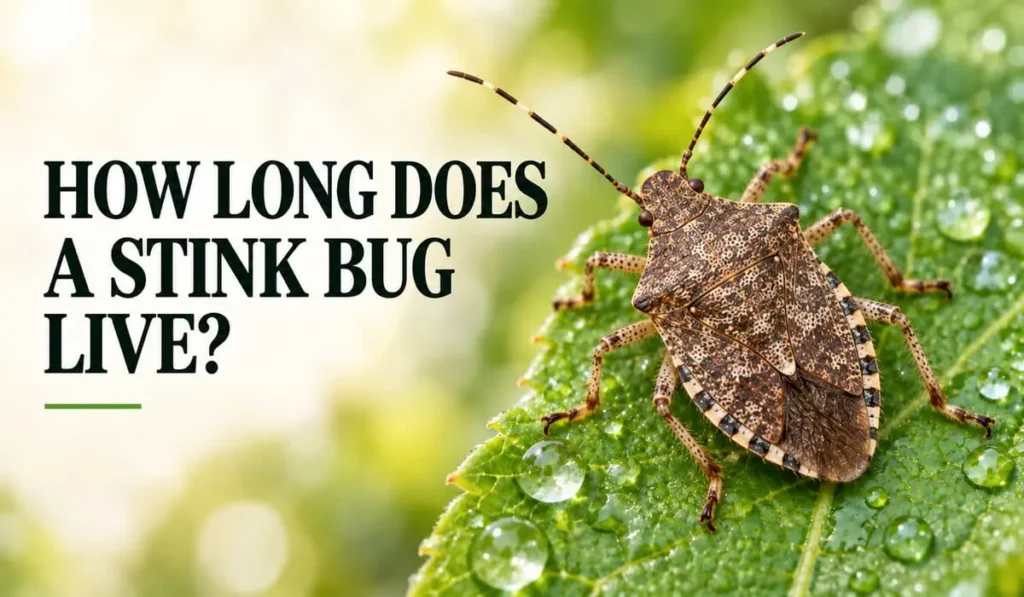
How long does a stink bug live? Most live for six to nine months, though some survive up to a year with enough food and shelter. If you keep finding stink bugs around your home, understanding their lifespan and winter habits can help explain why they stick around.
How Long Does a Stink Bug Live?
How long does a stink bug live? While there are thousands of different species of stink bugs, most of them normally live for six to nine months. Their living standards and conditions can greatly affect their lifespan, especially ambient temperature, humidity levels, and predator exposure.
In other words, some stink bugs can live longer than this if they find the perfect conditions. Assuming they can find food and good shelter over the winter, healthy adults can live for up to a year, so they’re less likely to get over this time frame.
On the same note, stink bugs struggling to find food or shelter will also live less than half a year, particularly when exposed to prolonged freezing outdoor drafts, synthetic insecticides, or dehydration.
What Is the Full Lifespan of a Stink Bug, Egg to Adult?
Once eggs are laid, they’ll hatch in about a week. Therefore, if you face a stink bug infestation, getting rid of the bugs isn’t everything. Just when you think you’re done, you’ll realize that the infestation is back due to eggs hatching.
Once the eggs hatch, nymphs go through five different stages. How fast these stages go depends on the living conditions and available food. Normally, these stages take anywhere between four and six weeks. If you spot young stink bugs on your plants, our guide explains how to get rid of stink bug nymphs before they become adults.
So, what is the lifespan of a stink bug then? Once the nymphs turn into adults, they normally live for months. Based on the conditions, some may die within a few months only. If they find the perfect conditions, they’ll live for up to a year.
How Long Can a Stink Bug Live Without Food?
Stink bugs are incredibly resilient and can go for long periods of time with no food at all. So, how long can a stink bug live without food? It also depends on the living conditions. Generally speaking, stink bugs can easily go for weeks without having any food at all, as their bodies efficiently conserve internal moisture and energy stores.
During the winter, they can live without food for months, but that’s only because they become dormant. Once the cold season kicks in, they reduce their activity, so they’re less likely to be too visible. Since their needs are low, they can go without food for months.
That’s why stink bugs can easily survive indoors. Just because there’s no food available, doesn’t mean that they’ll die straight away. In the winter, they also go dormant, so they can stick around and hide for months before being discovered.
Why Do Stink Bugs Seem to Stick Around All Winter?
So, how long does a stink bug live, and why does it seem to show up out of nowhere in the winter? Overwintering is a phenomenon that allows bugs to survive without food and in harsh conditions for weeks or even months. They become dormant, similar to hibernation in other animals. According to the U.S. Environmental Protection Agency, adult brown marmorated stink bugs seek sheltered places inside homes and other buildings to spend the winter.
While it may look like they’re dying, they actually become dormant in different shelters. Some of them hide in wall voids. Others go in attics or basements, window framing, and behind ceiling molding. As long as the spot is sheltered and doesn’t face too much traffic, it makes a good location for a dormant stink bug.
That’s why you’ll find stink bugs showing up out of nowhere on warm days. Even during the winter, when the temperature goes high, or when home furnaces heat up interior walls, they’ll start moving around, sluggishly crawling toward light fixtures and sunny windowpanes in search of an exit.
Frequently Asked Questions
Dead bugs are usually found upside down, curled with their legs tightly tucked inward toward the chest. They look dry and hollow. They don’t move at all, not even when moved into a warm spot. Besides, if they’ve been dead for too long, they may show signs of mold. Hibernating stink bugs cling tightly to surfaces in a natural posture and display a firm, colored body.
Why does a stink bug move when disturbed, then stop again?
Stink bugs move when they’re disturbed. It’s a natural reflex to escape, so they may try to hide somewhere safe, such as a leaf. However, they also stop and freeze to avoid detection. At times, they switch to tonic immobility, meaning they’re trying to fake death in order to escape from a threat. Movement isn’t their only response to danger. Stink bugs can also release a defensive odor when disturbed, which explains why they’re called stink bugs.
Do stink bugs reproduce inside your house?
Stink bugs get into your house to find shelter or a warm place to survive the winter. They’re less likely to lay eggs inside your home. Their indoor population is normally fixed. Females reproduce outdoors, on plants. However, some may also use your indoor plants for reproduction, yet such cases are very rare.
Will a stink bug die if you put it outside in winter?
Yes. Stink bugs can’t survive in very cold temperatures. Once outdoors, they basically break their natural winter sleep. The process is called diapause. Furthermore, since they can’t live in freezing temperatures, they’ll face a thermal shock, which leads to a quick death, as their bodily fluids freeze rapidly without the protective warmth and insulation of your home’s walls.
’ll face a thermal shock, which leads to a quick death.