
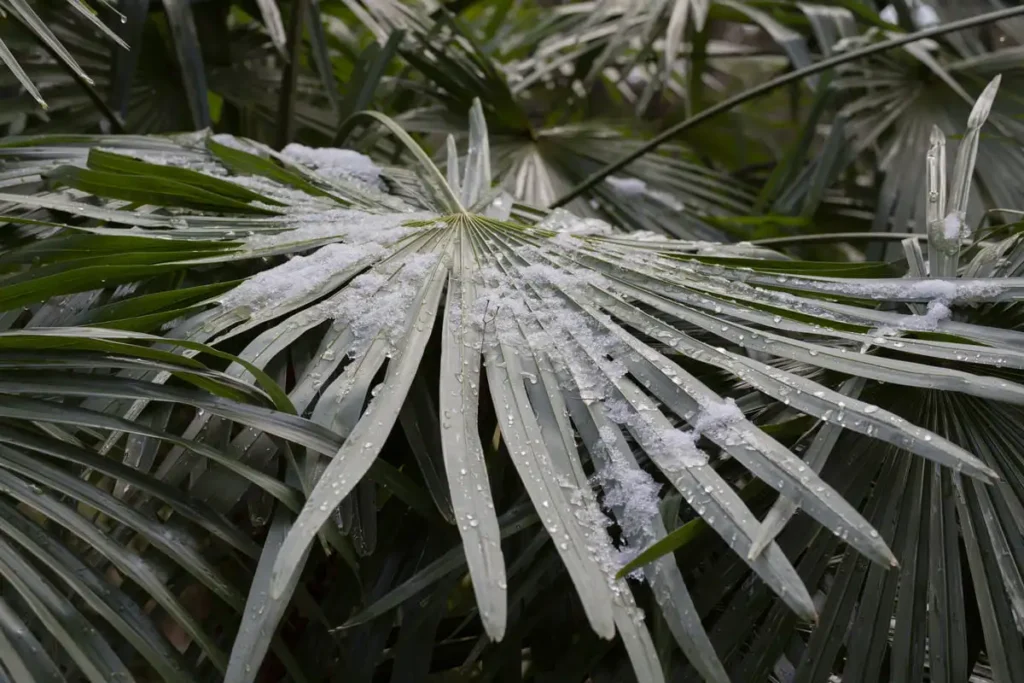
Learning how to protect large palm trees from freeze damage starts with knowing what you’re working with. With so many varieties and species out there, choosing the right palm trees for your garden can be tricky and overwhelming for many homeowners. Apart from the available space and overall appearance, you’ll also need to consider the maintenance, let alone care and protection throughout the winter.
Learning how to protect large palm trees from freezing requires a bit of homework. Ideally, you should’ve researched all these important details before getting the first palm trees, as some species can easily resist freezing temperatures while others are extremely tender. There are some frost-resistant types, such as windmill palm, needle palm, and pindo palm, that can tolerate short freezes to the lower teens or even lower numbers when acclimated, but there are also the tropical types that will begin to sustain damage when temperature drops below 45°F. Queen palms generally do well during a regular winter season but suffer in freezing temperature in the teens, while pygmy date palms can only tolerate 30°F. Knowing where your palm falls on that range before winterizing large palm trees makes the rest of this guide much easier to plan around.
But don’t worry if you’re late with your research. Here are some useful ideas, tips and tricks to make sure that your large palm trees can survive a harsh winter without suffering irreversible damage.
Canopy and Heart
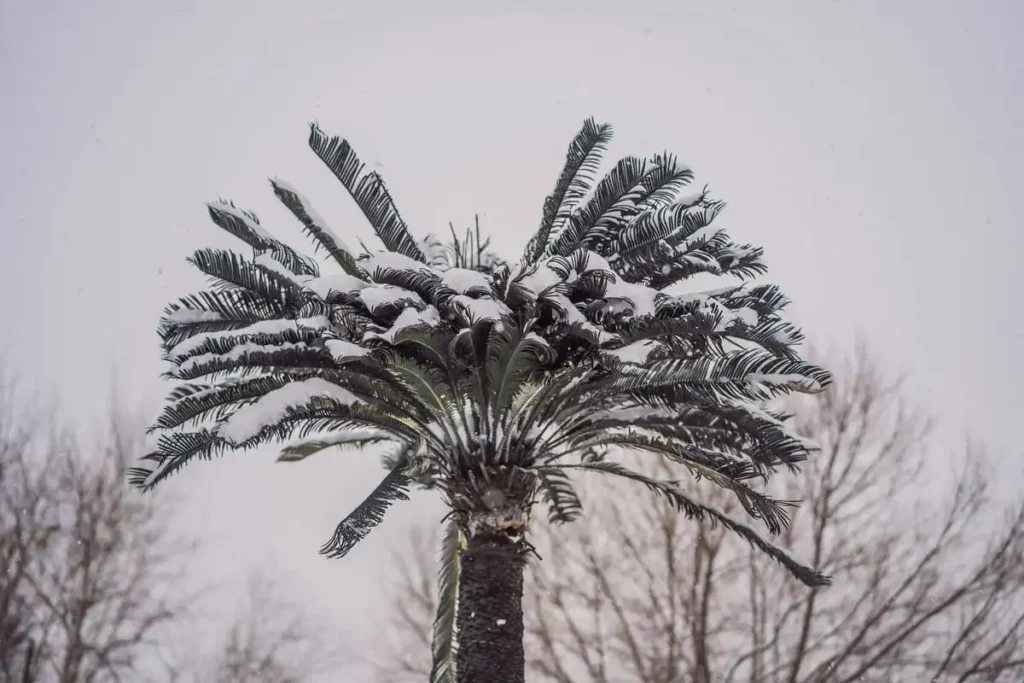
These are some of the most important parts. Unfortunately, they’re often overlooked by inexperienced gardeners. Maintenance is relatively simple though. Before beginning, remove any dried or unhealthy fronds, as they will not be of any use in protecting from the cold and moisture that will enter into the wrapping once completed. Gather the outer fronds upward. Get them close to the central tip, the spear. Tie them gently together with twine.
The idea is to keep the bud safe and warm. Offering a bit of protection may keep frost away.
Once you’re done tying fronds together, you can start wrapping the crown. There are specific materials used in anti-frost clothes. You can also use burlap. Just make sure that you get something suitable. The material must be breathable as well so moisture doesn’t get trapped. On an approximate basis, every additional layer of burlap or frost cover provides protection of about 2°F, meaning that a palm far outside its comfort zone is better off with two to three layers instead of just one.
You can also find plastic, but don’t leave it in direct contact with the plant. It can go over a cloth layer though, just for an extra barrier of protection.
Finally, you can also add some heat sources that look nice too. Some non-LED Christmas lights or a heat tape will look good and radiate nice warmth for your palm tree on the coldest nights.
Of course, all these apply to real plants. Should you go for faux palm trees, maintenance is completely different.
Root Protection
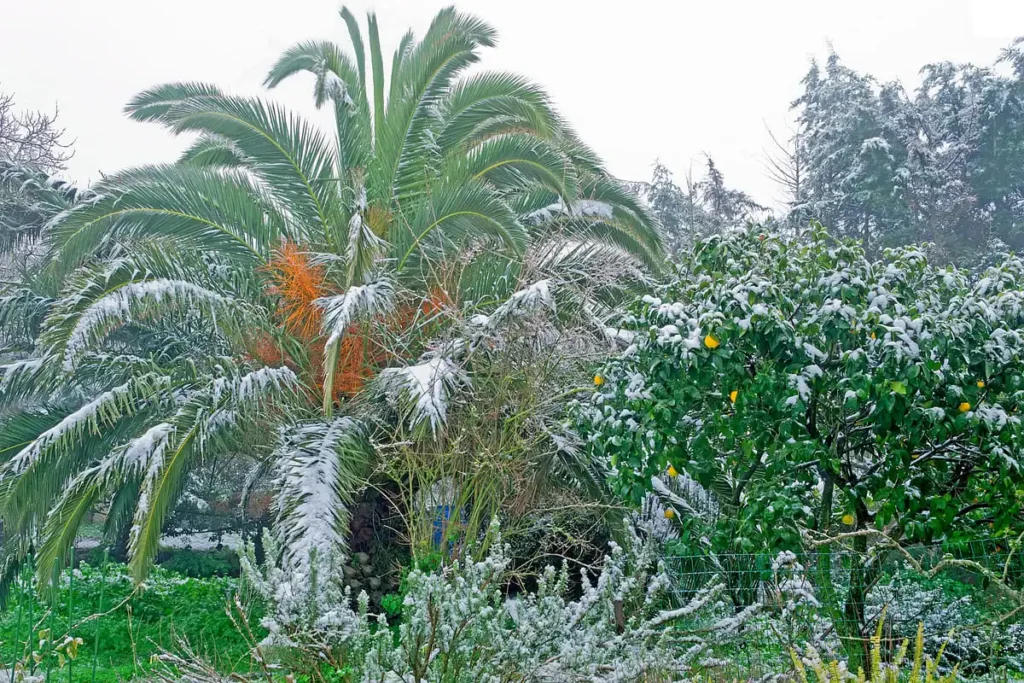
Roots require plenty of protection during harsh winters too. Learning how to protect large palm trees from freeze isn’t just about what you can see, but also about what’s underground. Soak the root zone deeply about 24 hours before freezing temperatures kick in. This is especially important for new plantings of palms, as they have not yet had time to develop an extensive root system and thus suffer the most in freezing conditions. It is also helpful to water ahead of time, as the palms will become less able to take up water once the soil becomes colder than about 40 degrees Fahrenheit.
Wet soil tends to absorb heat and radiate it back. Besides, plenty of water will also slow down the freezing process deep beneath the surface.
Add an extra layer of protection with mulch. Get a layer of up to five inches of organic mulch. Spread it around the base of the trunk. It acts like natural insulation and can protect the roots against freezing temperatures and frost heave.
Once Freezing Temperatures Come
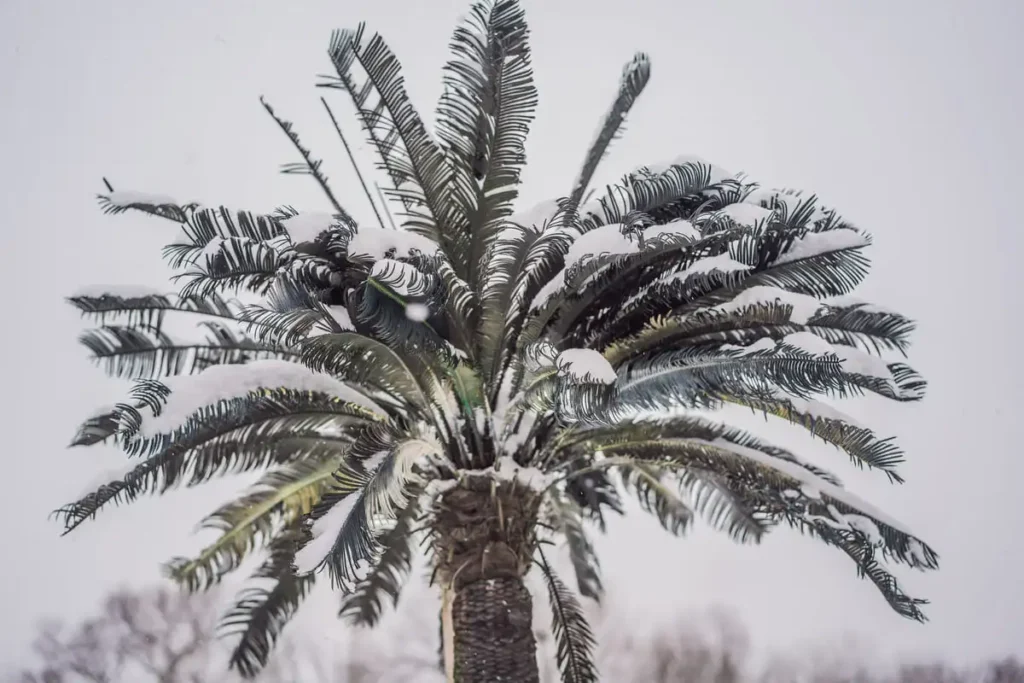
While the above-mentioned steps are recommended before the freezing temperatures come, there are things to do once they kick in too.
If you do use any plastic covers, remove them during the day if the temperature goes around or slightly above the freezing point. It prevents the tree from overheating. Palm trees can also rot if there’s too much humidity building up underneath the cover.
As for minimal wraps, keep the clothes or structural protection there until temperatures go back to normal. One thing worth knowing: palm tree frost damage doesn’t always show up right away. In some cases, it will be weeks before symptoms of die back or browning become noticeable. Don’t dismiss a palm as being fine because it appears to be in good shape soon after freezing weather and also avoid discounting a palm prematurely because it’s not looking its best.
Now, learning how to protect large palm trees from freeze is relatively simple for natural plants. Sure, you may struggle a bit in the beginning, but once you get it, maintenance becomes a breeze. What do you do when it comes to fake plants then?
Do Fake Palms Need Protection?
Most people naturally assume that plastic palm trees won’t require any protection at all, but that’s only a misconception. In fact, artificial plants also require care and maintenance during the freezing season if you want them to last.
Freezing water will normally expand. It can crack anything, from fiberglass trunks to plastic leaves or silk stems. Then, cold weather will also make plastic fronds brittle. This means that they’re more likely to snap if the freezing temperature comes with strong winds too.
Trapped moisture and ice will lead to rust, peeling and fading, let alone metallic elements on the inside, such as frames corroding over time.
How to Protect Large Palm Trees from Freeze If They’re Artificial
Some large palm trees go in large pots or have some sort of hidden base. Some others go in the ground. If you can relocate your palm trees, do it. Whether they can go indoors, inside a shed, garage or observatory, they should be protected throughout the winter from extreme weather.
If they’re stuck outdoors, you can wrap them tightly with waterproof covers. Make sure they’re heavy-duty. Thick plastic sheeting is also suitable for artificial plants.
Secure the base to avoid potential damage caused by strong winds. If the wind can lift the base, your palm tree can be severely damaged or toppled over.
Finally, give your faux palm trees some occasional checks. If it rains a lot, check the tree after each storm. Look for pooled water and get rid of it. Melting snow from the fronds could also cause similar problems if left sitting for days.
In the end, figuring out how to protect large palm trees from freeze depends on what kind of trees you have, whether they’re natural or artificial and the potential weather conditions in your area. Generally speaking, your trees will need some maintenance before, during and after the winter to stay in pristine condition. Whether you’re wrapping palm trees for winter for the first time or just fine-tuning your routine, staying on top of palm tree winter care every year is what keeps large specimens looking good for decades instead of struggling back from damage each spring.