
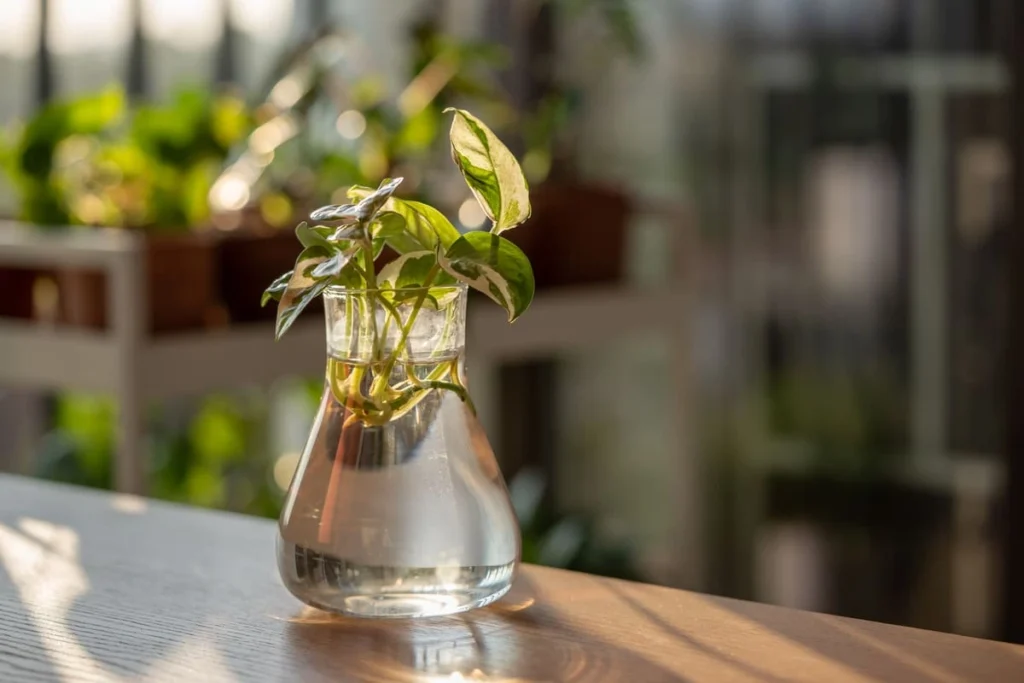
Here’s how to propagate pothos in one sentence: cut a 4 to 6 inch piece of vine just below a node (the small brown bump where a leaf meets the stem), then root it in water, moist soil, or damp sphagnum moss. In a warm, bright room, most cuttings show roots within one to two weeks.
That’s truly all it takes. Pothos roots so easily that one plant can turn into a whole shelf of free ones. So the real question isn’t whether it will work, but which technique suits you best. Water propagation lets you watch the roots develop. Planting directly in soil saves a step, while layering allows the vine to root before you cut it free. If your pothos is leggy rather than compact, there’s also a simple fix that doesn’t require a new pot.t.
Where Should You Cut a Pothos to Propagate It?
Cut about an inch below a node on a healthy vine, a few leaves back from the tip, and leave any brown aerial root nub attached. Most guides on how to propagate pothos stop at “cut below a node,” but there’s actual research on the details.
In 1988, Texas A&M University horticulturists Yin-Tung Wang and Carol Boogher studied how different cuts of golden pothos grew and published their results in HortScience. Here are three findings worth copying at home:
- Don’t use a cutting from the tip. Cuttings taken at the newest fully open leaf needed about 42 days to unfold their first new leaf. Cuttings from the second to sixth node back needed 31 to 35 days.
- Leave some stem below the node. Cuttings with 3 cm (1¼ inches) or more of stem below the node produced shoots at least 22% longer than cuttings with shorter stems.
- Leave an aerial root stub. Cuttings that kept 6 to 8 mm of the old aerial root unfolded their first leaf in 21.6 days, compared with 24.3 days without it. Their shoots were also longer: 11.9 cm compared with 7 cm.
It’s easy to explain why. Pothos doesn’t grow roots along bare stem. Roots form only from the cut end of an old aerial root or from a node, so a piece of vine without a node can’t produce a new plant.
Use clean, sharp scissors (a wipe with rubbing alcohol is enough), and make sure each piece has both a node and a leaf. You can cut one long vine into several single-node pieces. The sap contains calcium oxalate crystals that can irritate skin, so wear gloves if you’re sensitive.
How Does Pothos Propagation in Water Work?
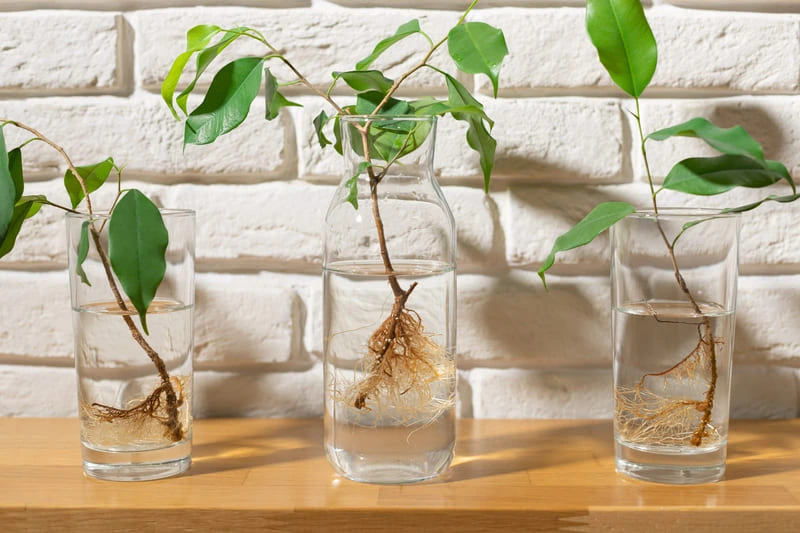
Pothos propagation in water works by keeping a node under water until it pushes out roots, which usually takes one to two weeks. It’s the most popular method because you can see exactly what’s happening.
- Use a cutting 4 to 6 inches long with at least one node, cut as described above.
- Remove any leaves that would sit below the waterline. Submerged leaves rot and cloud the water quickly.
- Stand the cutting in a glass of room-temperature water so that the node is fully submerged.
- Place it somewhere warm with bright, indirect light. Direct sun heats the water and encourages algae.
- Replace the water every three to five days, or sooner if it turns cloudy, and clean the glass each time.
- Pot it up once the roots are 2 to 3 inches long.
Plain tap water is fine. A small student study comparing golden pothos roots grown in College Station, Texas tap water against purified water found no significant difference over 22 days. If you’re rooting several pothos cuttings in one jar, leave them room. Crowded jars go cloudy faster.
Just don’t leave the cuttings in water too long. Roots grown in water are thinner, have fewer root hairs than soil roots, and are more prone to rot once transplanted. The longer they stay in water, the harder it is for them to adjust. Once potted, keep the soil evenly moist for the first two weeks.
How Do You Propagate Pothos Directly in Soil?
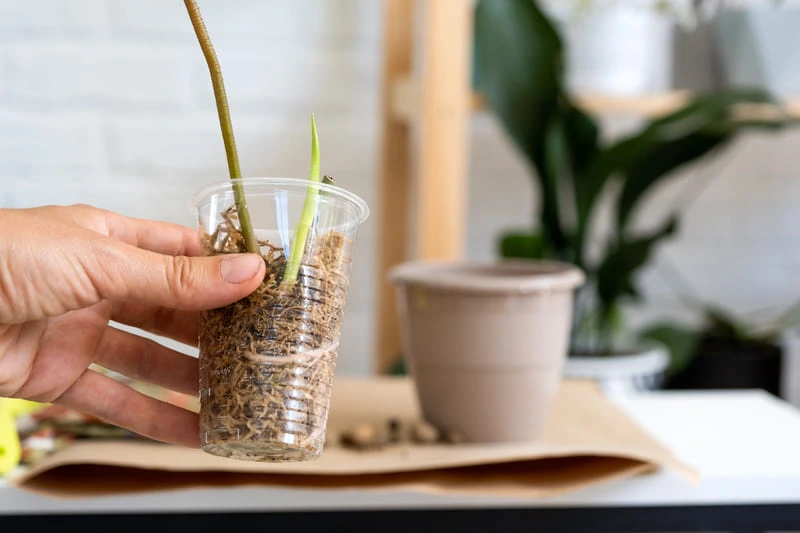
Just skip the water: strip the leaves from the bottom one or two nodes of the cutting, then push it into moist, well-draining potting mix so those nodes sit just under the surface. Keep the mix evenly moist, but never soggy, for the next three or four weeks.
A few tips will help:
- Moisten the mix and let it drain, then poke a hole with a pencil so you don’t damage the node when you insert the cutting.
- Avoid a heavy mix. Regular potting soil with a handful or two of perlite works well. In a study on ‘Marble Queen’ cuttings, the rooting medium had a bigger effect than any other factor tested, including rooting hormone.
- If the air is dry, cover the pot loosely with a plastic bag, keeping it off the leaves.
The catch is that you can’t see the roots. After three or four weeks, give the cutting a gentle tug. If it resists, it has developed roots. A new leaf will confirm it.
The upside is that soil roots are built for soil from day one, so there’s no transition shock later. It’s also the easiest way to root several pothos cuttings in one pot at the same time.
What About Propagating in Moss Instead?
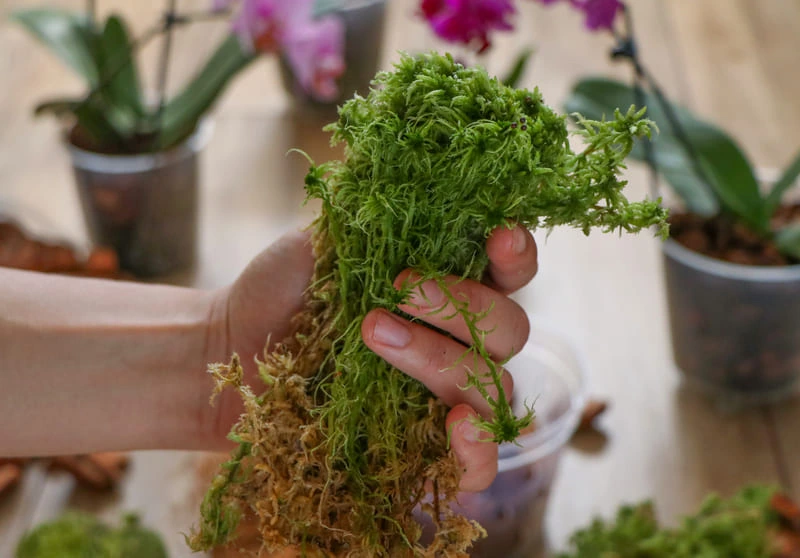
Moss is a middle ground between water and soil. It roots cuttings the same way soil does but holds moisture more evenly, so it’s harder to get wrong. Soak dry sphagnum moss for about 30 minutes, then squeeze it out until it’s damp but not dripping.
Pack it loosely into a small pot or clear jar and insert the cutting so the nodes are covered. A clear jar is especially nice here because you can often see the roots growing against the glass. Keep the moss damp until the roots are an inch or two long, then move the cutting into potting mix.
It isn’t a big upgrade over soil, though. If you already have potting mix and don’t mind checking moisture, soil does the same job.
Can You Propagate Pothos Without Cutting the Vine at All?
Yes. It’s called layering: you pin a still-attached section of vine into a second pot of soil, let it root there, and cut it free only once it’s established. If you’re nervous about snipping a favorite or pricey variety, this is the most forgiving answer to how to propagate pothos.
Put a small pot of moist potting mix next to the parent plant and lay a long vine across it. Press a node onto the mix and secure it with a bobby pin or a paper clip bent into a U. Keep the mix moist at all times. Roots usually develop within a few weeks, and the same tug test will tell you when they have. At that point, cut the vine on the mother plant’s side of the new pot.
It’s less risky because the new section stays attached and keeps drawing water and nutrients from the mother plant the whole time. You can also pin down several nodes along one vine to get several plants at once. Pothos does this by itself, too. Any trailing vine that rests on soil long enough will often take root there.
My Pothos Looks Leggy and Bare: Can I Fix It Without Starting Over?
Yes. Coil the long, bare vines back over the top of the same pot so their nodes touch the soil, pin them down, and they’ll root where they sit and fill the plant back in. Most pothos propagation guides only cover making separate new plants, but this is the fix most people with a straggly hanging basket actually need.
Pothos goes bald on top because the plant puts its energy into the growing tips. Older leaves near the pot drop off over time, and low light stretches the gaps between leaves. The vines get longer while the crown gets thinner.
You can fix it with a trick called basketing:
- Lift one long vine off the rim of the pot.
- Loop it around the inside edge of the pot, pressing the nodes onto the soil or slightly below it.
- Secure each section with a plant pin, bobby pin, or bent paper clip.
- Repeat with the other vines, then water as usual.
It looks fuller the same day, before any roots form. Over the next few weeks, those nodes will root and push out new growth.
You can also root cuttings separately and plant them back into the mother pot. That’s how nurseries get such full plants. A University of Florida plant patent describes commercially grown pothos with about 15 cuttings per 15 to 20 cm pot. So if your homegrown pothos isn’t as full as your store-bought one, it’s not your fault. It’s the number of cuttings in the pot.
How Long Does Pothos Propagation Actually Take?
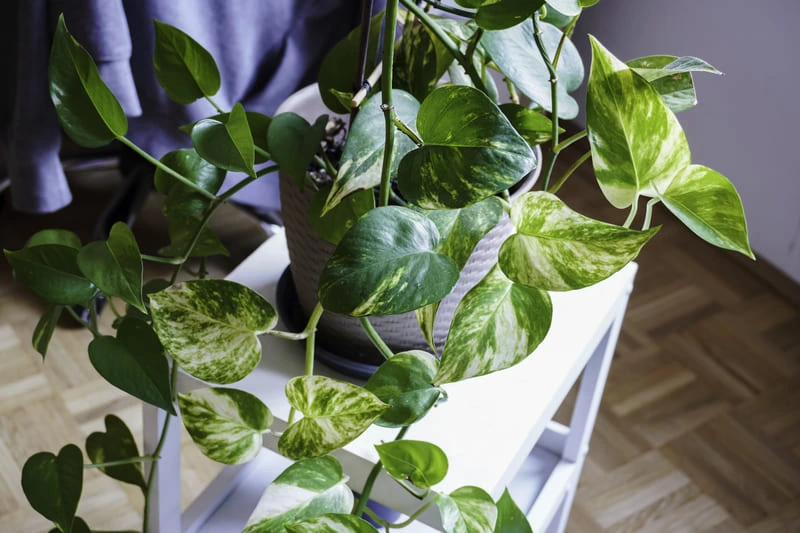
Pothos propagation usually shows first roots within one to two weeks in water during spring and summer, and closer to three or four weeks in fall and winter when growth slows. Here’s a rough timeline for a warm, bright room:
| Stage | In water | In soil or moss |
|---|---|---|
| First roots | 1 to 2 weeks | 2 to 4 weeks (check with a gentle tug) |
| Ready to pot | 3 to 5 weeks, once roots hit 2 to 3 in | Already potted |
| First new leaf | About 4 to 6 weeks | About 4 to 6 weeks |
For comparison, commercial growers in Florida rooting cuttings under mist expect about 21 days to root initiation.
Warmth makes the biggest difference at home. According to Clemson Cooperative Extension, pothos prefers 70 to 85°F during the day and 60 to 70°F at night. A cold windowsill in January can stall a cutting for weeks, so a seedling heat mat is worth using in winter.
Variety matters too. Variegated types such as ‘Marble Queen’, ‘Snow Queen’, and ‘Manjula’ have less chlorophyll in their leaves and grow more slowly than ‘Neon’ and ‘Jade’. Give them your brightest indirect spot and a little extra patience.
There’s no need to rush your cutting into a pot as soon as it grows its first roots. Pothos is happy in a glass of water for a month or two. If you add diluted liquid fertilizer every four to six weeks, it can even live in water long term.
How Do You Turn a Propagation Station Into Actual Decor?
Treat the glass as part of the room: choose the vessels on purpose, group them, and put them where the roots are on show. A propagation station is just pothos propagation in water with better glassware, and roots in water are decorative on their own. Grab whatever cup is nearby and it reads as a science experiment. Use a clear apothecary jar or a row of matching bud vases and it reads as styled.
Pick Vessels That Do the Work for You
Narrow-necked bud vases hold a single cutting upright with no clips. Wide jars need a clothespin or bobby pin across the rim. Wall-mounted test-tube racks and small wooden stands free up shelf space and look tidy with three or four cuttings in them.
Should You Use Clear or Tinted Glass?
Choose clear glass if you want to see the roots, and tinted glass if you’d rather change the water less often. Clear glass lets light into the water, which encourages algae, while amber or other dark glass stays algae-free longer. Don’t expect colored glass to speed up rooting, though. The university horticulturists behind the Garden Professors blog say there’s no proof it makes a difference. In fact, roots exposed to blue or green light grow less than roots under white light.
Group Cuttings for Variety
Combine cuttings of different lengths, and place a tall jar behind two short vases. Mixing leaf colors works well too: chartreuse ‘Neon’ next to creamy ‘Marble Queen’ looks far more intentional than three identical cuttings.
Put It Where People Will See It
Floating shelves, bookcases, or console tables near a bright window show off the roots at eye level. On a kitchen counter, the jars get lost among everything else. Keep the station out of direct sun so the water doesn’t overheat or turn green.
Keep It Out of Reach of Pets
The ASPCA lists pothos as toxic to cats and dogs. The plant contains insoluble calcium oxalate crystals that can irritate the mouth, cause vomiting, and make swallowing difficult. Cats also love drinking from vases, so keep the station up high. If you want greenery on lower surfaces, our Pet-Safe Plant Finder can suggest alternatives.
Keep the Display Going
When one cutting gets potted, start a new one in the same jar. Once you know how to propagate pothos, the shelf never has to look empty.
A row of cuttings won’t purify your air, though. According to a 2019 study by Bryan Cummings and Michael Waring of Drexel University, you’d need roughly 100 plants per square meter to beat standard ventilation. Grow them because they look good.
FAQ
Usually one to two weeks for the first roots in spring and summer, and three to four weeks or longer in colder months. Transplant when the roots are 2 to 3 inches long.
Do you need rooting hormone to propagate pothos?
No. Pothos roots easily without hormones. Rooting hormone can speed things up, especially in soil: a study on ‘Marble Queen’ cuttings found that 500 mg/L of IBA led to earlier rooting and more roots. A 30-day study found that aloe vera gel produced the longest roots, though the difference from a commercial rooting hormone wasn’t statistically significant.
Can you put multiple pothos cuttings in one pot?
Yes, and it’s the fastest way to a full-looking plant. Planting several pothos cuttings together is exactly how nurseries do it, often around 15 to a pot.
Is water or soil propagation better for pothos?
Pothos propagation in water is easier for beginners because you can watch the roots form. Soil takes a little more faith but builds sturdier roots from the start, with no transition shock later.
Can I propagate pothos in winter?
Yes, but pothos propagation slows down a lot in fall and winter, and fewer cuttings take. Keep them somewhere at least 70°F, away from cold window glass, and consider a heat mat.
Can you propagate pothos from just a leaf?
No. Without a node, a leaf can survive for weeks in water, but it will never grow into a plant. Every cutting needs at least one node.
Why is my pothos cutting turning yellow or mushy in water?
It’s usually rot, caused by a leaf sitting under water, water that hasn’t been changed, or a spot that’s too cold. Trim the rotted stem back to firm green tissue, wash the jar, and start again with fresh water. If the node itself has rotted, take a new cutting.
Can you grow pothos from seed?
Not realistically. Pothos almost never flowers. A 2016 study published in Scientific Reports linked this to a gibberellin deficiency and found no reported cases of pothos flowering since 1962. It’s highly unlikely that pothos seeds sold online are genuine.