
LLearning how to care for mums in pots starts with getting watering, sunlight, and drainage right. Potted mums can fade early when a crowded nursery pot dries quickly or a decorative cover hides standing water.
Knowing how to care for mums in pots also means checking what’s happening below the flowers. This guide explains how to water mums in pots, keep blooms looking good, and decide whether your plant can return next year.
How do you make potted fall mums last longer?
- Sun: Aim for six or more hours of direct sunlight outdoors.
- How often to water mums in pots: Check daily. Water when the top inch feels dry.
- Pot: Use drainage holes. Move crowded roots into a slightly larger pot.
- Flowers: Remove faded blooms.
- How long do mums last in pots: Several weeks, with four to eight weeks possible in cool conditions.
- Afterward: Hardy mums may overwinter. Treat florist mums as seasonal flowers.
Buy the right mum first
Choose a healthy mum with plenty of unopened buds, and check its label for the variety and winter hardiness.
For anyone deciding when to buy mums for fall, bud stage matters more than the calendar. Mostly closed buds give you more flowers still to open. For a party this weekend, some open flowers make sense.
Check beneath the flowers for healthy leaves and insects. Feel the soil, too.
Garden mums are outdoor plants selected for garden use. Florist mums are usually sold for temporary displays. Pot size and gift wrapping don’t reliably identify them.
Are garden mums perennials? Yes, when the variety suits your climate and survives winter. Florist mums are poor candidates for cold-climate gardens, as Iowa State Extension explains.
Buying for next year? Read “Do mums come back every year in pots?” before choosing.
How to take care of mums outside in pots: sun, pot and soil
Give outdoor mums at least six hours of sun, drainage holes and potting mix that holds moisture without staying soggy.
That’s the foundation of how to care for potted mums. Some afternoon shade helps during hot weather. Avoid a deeply shaded porch.
Indoors, use a cool spot with bright, indirect light, away from heating vents. Iowa State suggests temperatures around 60 to 70°F for flowering gift mums.
How to plant mums in pots
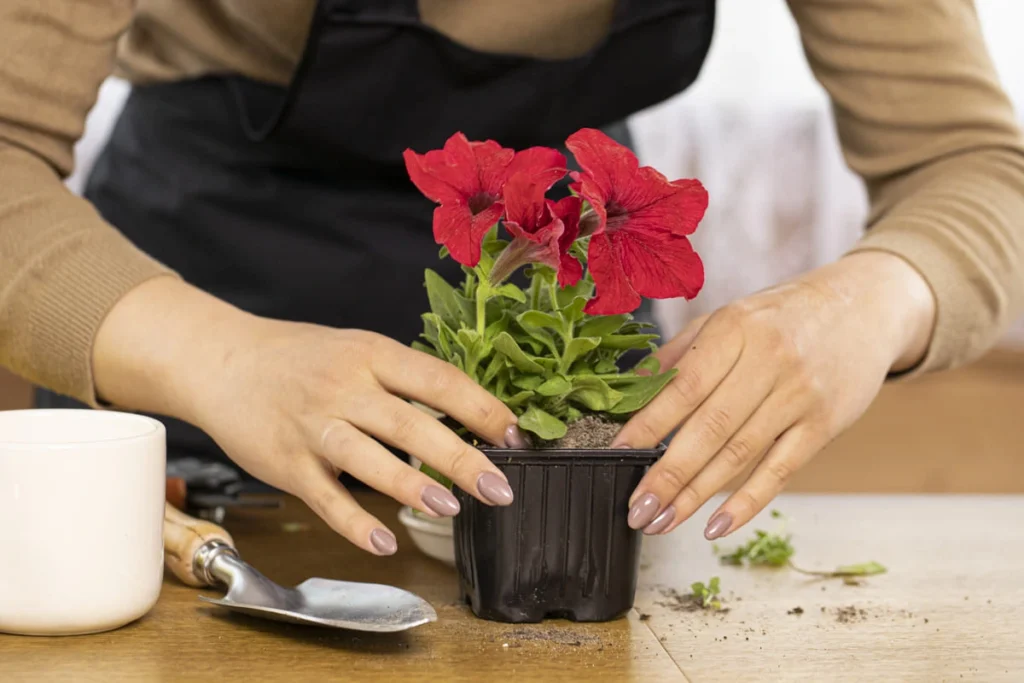
Repot when roots crowd the pot or the root ball is not able to retain enough moisture. A root ball consists of the root system and the potting mix surrounding it.
- Select a pot one size larger with drainage holes.
- Add enough fresh potting mixture to the bottom of the new pot to keep the plant at its original depth.
- Remove the mum from the existing pot and gently loosen the circling roots on the outside.
- Repot at the same depth, filling around the root ball with fresh potting mixture.
- Keep at least one inch of space below the top of the pot for watering.
- Water thoroughly until excess water drains from the bottom of the pot.
A decorative pot without drainage holes can be used as an outer cover for the nursery pot. Lift the nursery pot out to water, allow it to drain, and then return it to the decorative pot.
How often to water mums in pots
Check every day and water when the top inch of potting mix feels dry.
There’s no single answer to “how often do you water mums in pots?” Sun, wind and pot size change how often to water potted mums.
Use two checks:
- Finger test: Reach beneath the foliage and feel about an inch into the mix. Water if it feels dry. If it’s moist, wait.
- Lift test: Lift the pot after watering and draining. Remember that weight. A noticeably lighter pot means it has lost water. Check the soil before refilling.
Make this a morning habit. You’re checking daily, which doesn’t mean you’ll always be watering daily.
How often do you water mums in pots?
These are starting points, not a schedule.
| Situation | Starting point |
|---|---|
| Small nursery pot, warm weather, full sun | Check daily. Daily watering may be needed. |
| Slightly larger pot, mild weather | Check daily. Watering may be needed every two to three days. |
| Cool, cloudy weather | Check daily, but expect longer gaps. |
| After rain | Check beneath the canopy. Water only if the root ball still needs it. |
Dense flowers can keep rain from reaching the soil. Empty any rainwater trapped in the outer pot.
How often should you water mums in pots when the weather cools?
Usually less often, because the mix dries more slowly. Keep checking rather than cutting back by a fixed amount. Don’t let the root ball become completely dry.
How to water mums in pots
Pour slowly onto the soil beneath the flowers. Work around the pot until the root ball is wet and excess water drains from the bottom.
If water rushes straight through, feel the center. Dry mix can shed water around the edges while the roots stay dry.
Try bottom soaking by standing the nursery pot in a shallow tray of water until the mix absorbs moisture. Then remove the pot and let it drain fully. Empty the saucer before putting it back.
How long do mums last in pots?
Outdoor mums can display flowers for several weeks, with four to eight weeks possible in cooler conditions.
That isn’t a promise of eight weeks after purchase. A mum bought in full bloom is already partway through its flowering period.
How long do mums last in the fall?
Costa Farms gives a practical range of four to six weeks across much of the country. Hot climates can shorten that to two or three weeks. Repeated wilting can also shorten the show.
How long do potted mums last indoors?
Flowering gift mums commonly provide about three to four weeks of enjoyment, according to the University of Georgia.
Faded flowers don’t necessarily mean the plant is dead. Bloom time and plant lifespan are different things.
How to keep mums blooming all fall
Prune off the faded blooms, avoid letting the root ball dry out completely, and skip additional fertilizer while the plant is blooming.
There’s no formula to ensure blooms all fall long. Start with a lot of buds and then try to preserve the flowers as they open.
Rotate the plant so all sides receive light. Try some afternoon shade during heat waves.
How to deadhead mums in pots
Once a week, remove brown, dead flowers by pinching or snipping them just above healthy leaves, leaving any closed buds and healthy leaves intact.
Deadheading will help neaten your plant, although it does not guarantee another flush of flowers once all buds have bloomed.
Do not prune flowering stems, since doing so will cause you to lose your blossoms.
How to keep mums alive in pots: what’s wrong with yours?
Start with soil moisture, because wilting in dry mix needs a different response from wilting in wet mix.
Problems with watering mums in pots can look surprisingly similar. Check before adding another drink.
| What you see | Possible cause | What to do |
|---|---|---|
| Drooping leaves and dry mix | Not enough water | Soak the root ball, drain and reassess. |
| Wilting or yellowing with wet mix | Poor drainage or damaged roots | Empty trapped water. Check drainage before watering again. |
| Crispy petals or leaf edges | Heat or repeated drying | Offer afternoon shade and check moisture more often. |
| White powder on leaves | Powdery mildew | Improve airflow and remove badly affected leaves. |
| Fine webbing or clusters of small insects | Mites or aphids | Separate the pot from other plants and rinse affected foliage carefully. |
If pests remain, identify them before choosing treatment. Follow the product label.
How to care for mums in pots when frost hits
Hardy mums can tolerate light frosts, but freezing weather can damage their flowers and buds.
If you’re learning how to take care of mums outside in pots, watch overnight forecasts. Protecting flowers for another week is different from protecting roots through winter.
Can potted mums survive frost?
Some can, particularly hardy varieties, but protection helps preserve the display. Transfer the pots to the garage at night or cover them with a frost blanket supported above the flowers. Remove the cover during the day.
The roof of the porch itself may not provide enough protection from a hard freeze. Our advice on how to bring your potted plants inside before frost will help you plan for moving them.
Do mums come back every year in pots?
Sometimes, depending on the variety, your climate and how well you protect the roots.
If you’re asking, “Do potted mums come back every year?”, start with the plant tag. “Hardy” describes a plant’s potential in suitable conditions. Roots in a small container face colder conditions than roots insulated by garden soil.
What to do with potted mums after blooming
Plant your hardy mum early, allowing roughly six weeks for roots to establish before winter. Spring planting offers the roots more time to establish. Once the ground begins to freeze, loose mulch keeps soil temperatures from fluctuating too much.
Keep your hardy mum in its pot. According to Virginia Cooperative Extension, potted hardy mums can be kept over winter in a protected location like an insulated garage or unheated basement where they won’t freeze. The location should be cold but not below freezing. A heated living room isn’t ideal because it’s too warm for dormant storage.
Decrease watering once growth slows, but water when necessary. Don’t let it dry out completely. Leave the stems until new growth appears in spring. Then remove dead stems and refresh the potting mix if needed.
Compost your seasonal florist mum. You can keep it if you choose, but getting it to rebloom can take extra effort.
If you live in an apartment with no yard
A protected balcony gives some shelter. Arrange pots of hardy mums next to a wall, and insulate the containers by mulching or wrapping them.
These plants may not survive a harsh winter even with protection. With no adequate space for cold storage, enjoying the mum for just one season makes perfect sense.
Are garden mums toxic to cats and dogs?
Yes, mums are toxic to cats, dogs and horses, says the ASPCA.
The term “hardy” does not mean the plant is non-toxic. Symptoms include vomiting, diarrhea, excessive salivation, loss of balance, and skin irritation.
Avoid allowing pets access to mums. If a pet ingests any part of a mum, consult your veterinarian immediately. Discover plant alternatives using the Plant Finder Tool.
Style your mums in pots
Choose a decorative container that still lets you reach the soil and remove trapped water.
Taking care of mums in pots gets harder when the plant is wedged into a tight basket. Leave room to lift the nursery pot out.
Place groups of pots at different levels using stable stands. Use one flower color in each pot to keep the arrangement simple. Ensure that the doorways are clear.
Frequently asked questions
Most day-to-day decisions about care revolve around drainage, soil moisture, and whether you intend to keep the plant after it flowers.
Yes, but only if the pot drains well and you can maintain moisture throughout the root ball. If you see overcrowded roots that make watering hard, repot it. A healthy, flowering mum doesn’t have to be repotted as soon as you bring it home.
Are mums better in pots or in the ground?
Growing mums in pots makes it easy to adjust sun exposure and move them before the onset of frost. Garden soil will provide better insulation for hardy chrysanthemums during winter. Select a hardy mum variety suited to your climate and plant it early enough to establish before winter.
Should you put Miracle-Gro on mums?
Avoid additional fertilizer when your new mum plant is blooming. Extra fertilizer will not help revive dead flowers or repair root damage. If you decide to keep the plant, then begin fertilizing when new growth starts in the spring, following the product directions.
How long can potted mums go without water?
There is no definitive answer. Small pots in warm, sunny locations can dry out within a day. The potting mix in a larger pot in a cooler spot might remain damp for longer. If you will be away, ensure that someone can check the soil while you are gone.
Do mums like shade or sun?
For outdoor garden mums, at least six hours of direct sun exposure helps support flowering. Some afternoon shading is useful when it is hot. Indoors, gift mums need bright, indirect light in a cool environment.
How often should you water mums in pots after repotting?
Thoroughly water the plant after repotting and check the soil moisture every day. Using a larger pot might mean that you have to water less often. Also check both the new potting mix and the original root ball when deciding when to water.
Before watering mums in pots tomorrow, read the tag today. Write down the variety and decide where it will go after flowering. That small decision changes how to care for mums in pots once the porch display is over.