
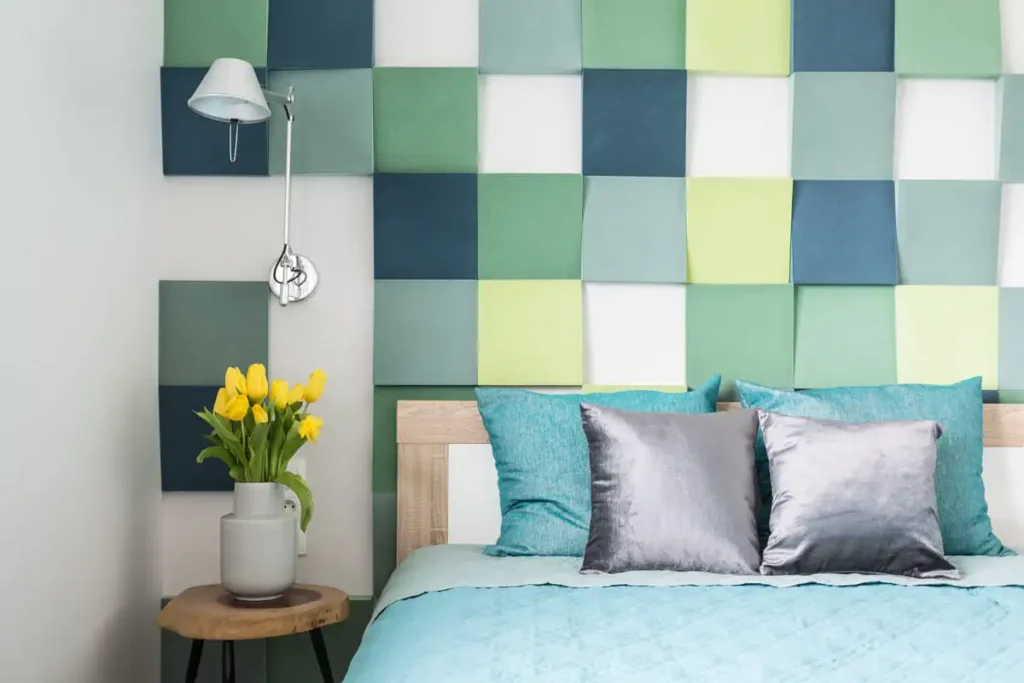
A dopamine decor bedroom is one where the walls, color schemes, art and objects that make you happy fill up your bedroom, while the wall visible from the pillow stays soothing enough to allow for restful sleep. The bold elements should be positioned behind the headboard, on the floor and in the daytime bedding. The opposite wall and the ceiling should stay soothing, and the lighting should switch to warmer tones at night.
That last part is what most takes on the dopamine decor trend skip. A living room can be loud all day. A bedroom has to switch off.
Below are 10 ideas with costs and renter swaps, a color palette backed by sleep data, and what the science behind dopamine decor really says.
What Is Dopamine Decor?
Dopamine decor is decorating with whatever lifts your mood, instead of whatever looks “correct.” It generally means bright colors, pattern mixes, fun shapes, and items with a backstory, such as a souvenir from your vacation or your grandmother’s table lamp.
The term originated from the expression “dopamine dressing,” coined by a fashion psychologist to describe wearing clothes that make you happy. It entered households around 2022 via TikTok.
No particular palette exists. If your minimalist room in soft green makes you sigh with contentment upon entering, it fits the bill.
Does Dopamine Decorating Actually Work?
Sort of. There is no scientific evidence that yellow paint will increase your dopamine levels. However, the reward center of the brain is affected by novel stimuli. One fMRI study found that a dopamine-rich area of the midbrain reacted to new images and calmed down once they became familiar.
Color is important as well. A 1994 study on colors found that saturation, more than hue, affected arousal levels.
So dopamine decorating can lift your mood, but the lift fades as a room gets familiar. That’s why idea 10 is about swapping things out.
Why a Dopamine Decor Bedroom Needs Different Rules
A living room only has to make you feel good. A dopamine decor bedroom also has to get you to sleep, and bright, busy rooms keep your brain alert. Great at 10 a.m., annoying at midnight.
The solution is to divide the room into two areas.
The fun area is everything you see from the door or when you sit up: the wall behind the headboard, the entrance wall, the rug, and the made bed. Be as wild as you like.
The soothing area is everything you can see when you lie down: the wall opposite the bed, the nightstand, your pillowcases, and the ceiling. Make everything soothing and muted.
People tend to ignore the ceiling, even though they see it every time they lie down. If you wish to use colors there, choose something dark, such as navy or plum.
Dopamine Decor Colors That Won’t Keep You Up
The best dopamine decor colors for sleeping are saturated but slightly muted: deep blue, sage or jade green, terracotta, butter yellow and plum. They feel rich, so they work in a dopamine decor bedroom without making the room buzz.
A Travelodge survey of 2,000 UK homes found people in blue bedrooms slept 7 hours 52 minutes a night on average, with yellow and green close behind. Purple came last at 5 hours 56 minutes. People reported their own sleep, so treat it as a pattern, not proof.
| Color | How it feels | Sleep note | Where to use it |
|---|---|---|---|
| Deep blue | Calm, confident | Top of the Travelodge survey | Wall behind the bed, headboard, duvet |
| Butter yellow | Cheerful | Second in the survey | Lamps, art, a throw |
| Sage or jade green | Fresh, grounded | Third in the survey | Walls, curtains, plants |
| Terracotta | Warm, cozy | Warm without being loud | Rug, cushions, an accent wall |
| Plum | Rich, moody | Purple scored lowest, so keep it small | A velvet cushion, a vase, a dark ceiling |
Keep neon, hot pink and electric purple to small accents, away from the wall you face. Prefer dark all over? Our dark cottagecore bedroom guide has a full moody palette.
10 Dopamine Decor Bedroom Ideas
These dopamine decor bedroom ideas run roughly from the biggest change to the smallest. Prices are rough US ranges, and every idea has a cheaper or renter-friendly version.
1. Paint the Wall Behind Your Headboard
This is the largest single change, and the wall is in the perfect spot. It’s there as you enter the room, but when you get into bed, it’s right behind you. Paint the trim the same color so it looks complete.
Try out two or three different sample pots for one week before doing anything else. Saturated paint will look completely different early in the morning than it does late at night.
Cost: $40 to $120 for paint and samples. Renter swap: peel-and-stick wallpaper or painted panels placed behind the bed.
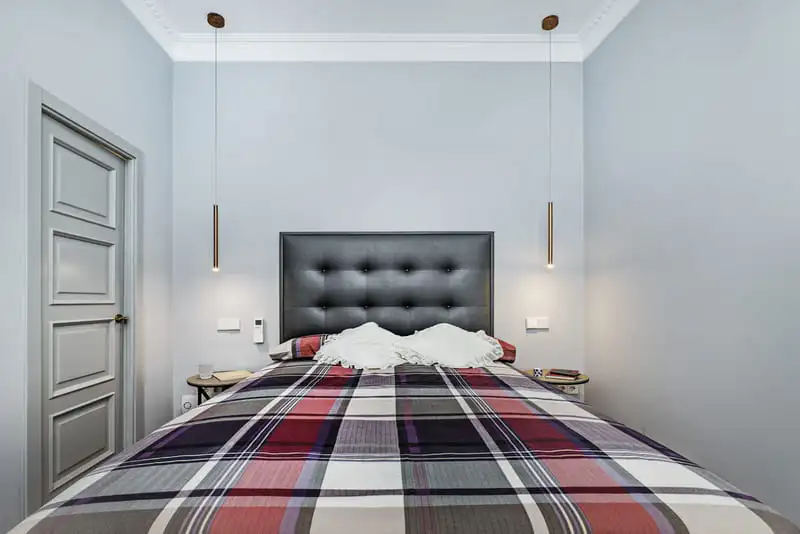
2. Choose a Headboard With Color or Curves
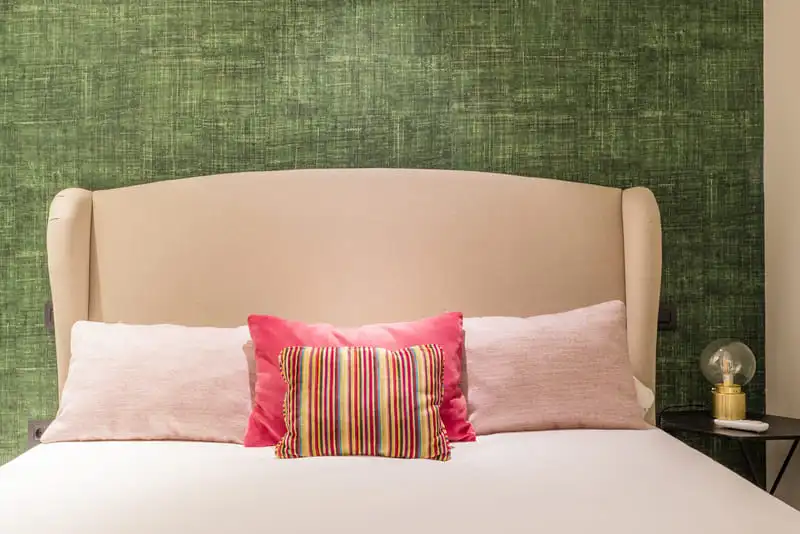
A scalloped, arched, or velvet headboard provides a focal point for the room without painting the walls. Teal, mustard, or rust velvet looks mature.
Cost: $150 to $600. Budget swap: paint an arch on the wall where the headboard would be, or cover a plywood board with fabric and attach it to the bed frame.
3. Layer Bedding for Day, Simplify for Night
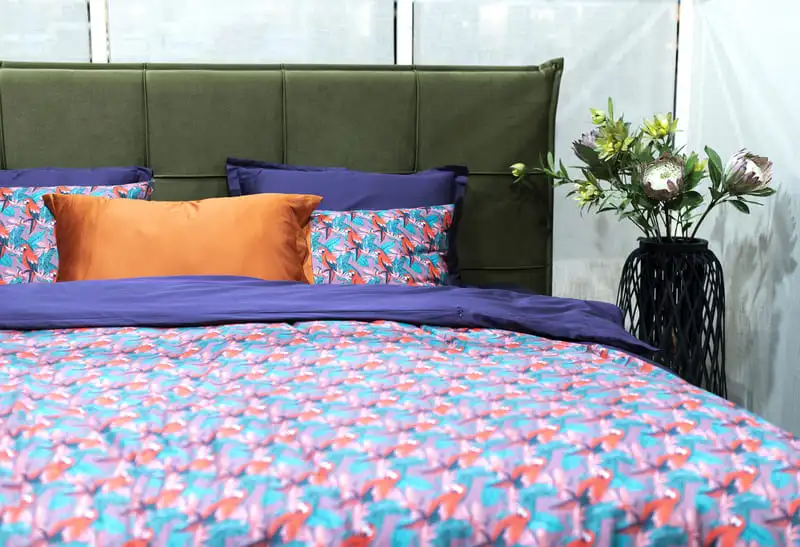
Bedding is the cheapest way to try a dopamine decor bedroom, and of all the colorful bedroom ideas here it’s the easiest to undo. Think patterned shams, a bright quilt and a throw that clashes a little.
At night the decorative layers come off and you sleep on plain, light pillowcases, since they’re closest to your face.
Cost: $40 to $200. Budget swap: change only the pillow covers, usually $15 to $40.
4. Hang a Gallery Wall Above the Bed
This is where you make it about yourself: postcards, a child’s drawing, a market print, a framed concert ticket. Stick to one color through most of the pieces and it all works.
Don’t hang heavy frames over your head. No one wants glass on their face at 3 in the morning.
Cost: $30 to $250. Renter swap: a picture ledge with a lip, or removable strips rated for the weight of each frame.
5. Let the Rug Do the Shouting
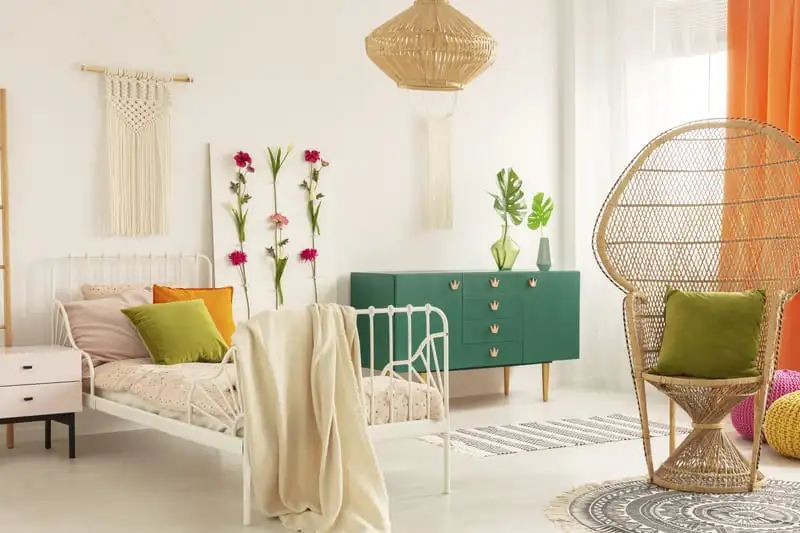
You can’t see the floor lying down, so go loud here with a round rug, a vintage pattern or a clashing abstract design. Bonus: your feet land on something fun every morning.
Cost: $80 to $350. Budget swap: a washable patterned runner along one side of the bed.
6. Use Colored Light by Day, Warm Light at Night
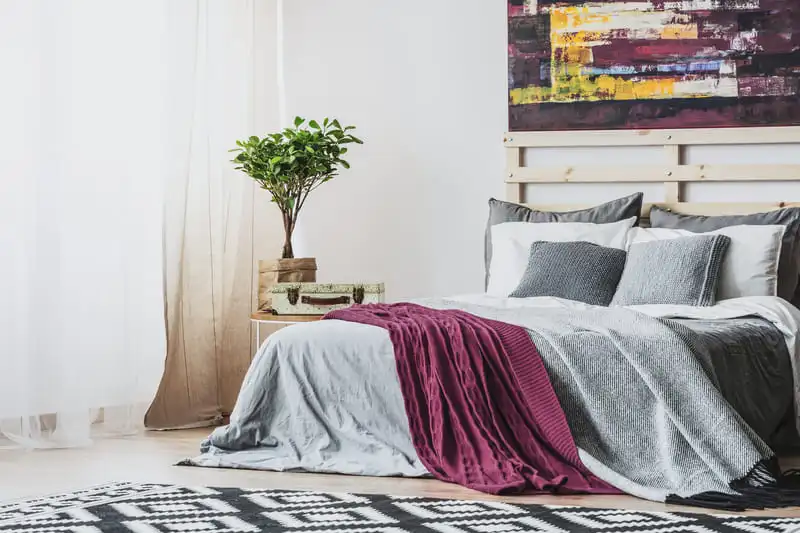
Choose an attractive lamp, be it stained glass or one with a pleated shade in a vibrant color. The bulb is a separate decision, and it matters more for sleep.
Harvard research found that blue light suppressed melatonin production about twice as long as green light. Even 8 lux, which is dimmer than your average desk lamp, is enough to have an effect.
This issue can easily be solved by using smart lights. Create a colorful mood in the daytime and a cozy warm white light (2700K or lower) that switches on in the evening. Our smart lighting guides walk you through the setup.
Cost: $25 to $120. Budget swap: a smart bulb for your current lamp.
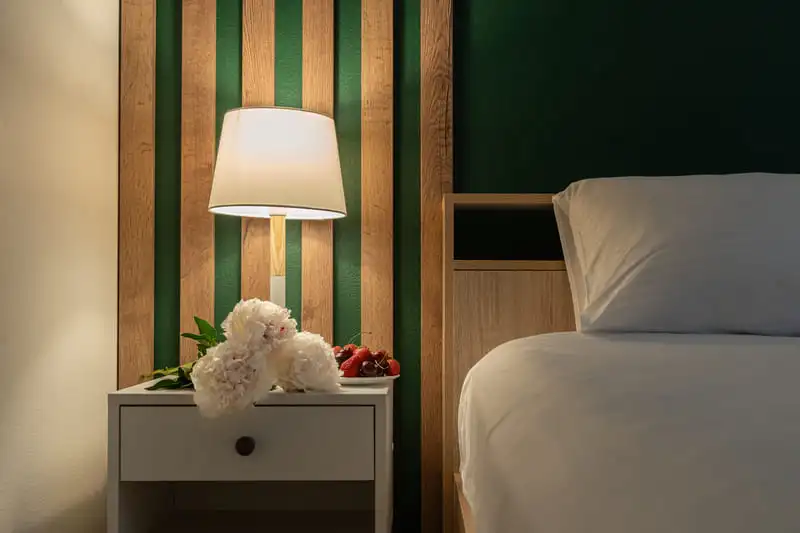
7. Bring in Real Plants
Plants add living color, and they’re calming. In a 2015 study, young adults had lower blood pressure after repotting a houseplant than after a computer task.
A trailing pothos on a high shelf or a snake plant on the dresser is an easy start. Got pets? Check our pet-safe plant finder first, since several popular bedroom plants are toxic to them. There’s more in our low-light indoor plants section.
Cost: $15 to $60. Budget swap: a cutting from a friend’s plant in a colored glass jar.
8. Try Stripes, the 2026 Way
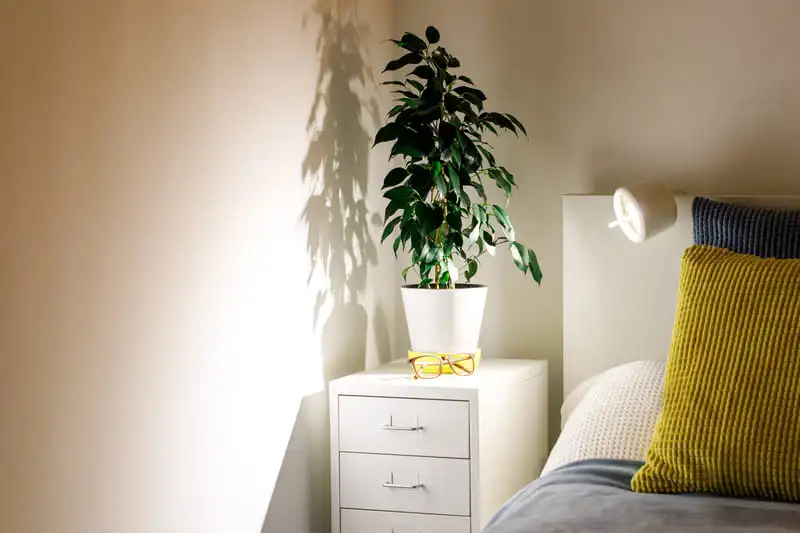
Pinterest picked circus-inspired decor as one of its 2026 trends, and searches for “striped ceiling” are up 40%. Bold stripes look great on the headboard wall or as a painted canopy shape above the bed.
Want them on the ceiling? Use two close shades of one deep color so they read as texture, not a target.
Cost: $30 to $100 for paint and tape. Budget swap: striped bedding or a striped lampshade.
9. Add One “Gummy” Object
Pinterest also flagged a “gummy” look for 2026, with searches for “gummy bears aesthetic” up 50%. Think rounded, glossy, squishy-looking things in candy colors. One designer told Fortune it’s really a type of dopamine decor.
One piece is plenty in a bedroom, like a wavy mirror or a bubble vase on the dresser.
Cost: $25 to $150. Budget swap: a glossy vintage vase from a thrift store.
10. Keep a Rotation Box
The lift fades once things are familiar, remember? Keep a box of five or six swappable pieces, like pillow covers, a couple of prints and a throw, and rotate them each season.
The room feels new and you haven’t bought a thing. It’s the cheapest way to keep a dopamine bedroom working.
Cost: $0 to $60.
Dopamine Decor for Small or Rented Bedrooms
A dopamine decor small bedroom works if you stick to one color family. Pick a main color, say coral, and use its lighter and darker shades so the room reads as planned, not crowded.
Renting? Let the bed carry most of the color, add peel-and-stick wallpaper behind it, and hang art on removable hooks. The 2026 book Dopamine Design has plenty more renter tricks.
The two areas still apply in a tiny room. In a dopamine decor bedroom of any size, the bold wall goes behind the bed, not opposite it.
How to Keep It Grown-Up, Not Childish
In a survey by the retailer MADE, 58% of Brits said they feared bright colors would make a room look clashing and busy.
To make dopamine decor for adults look intentional, repeat two or three colors instead of using ten once. Pick one sculptural piece rather than a shelf of novelty items. And use grown-up materials. Velvet, linen, wood and ceramic make even hot pink look considered.
Dopamine Decor Living Room vs Bedroom: What Changes
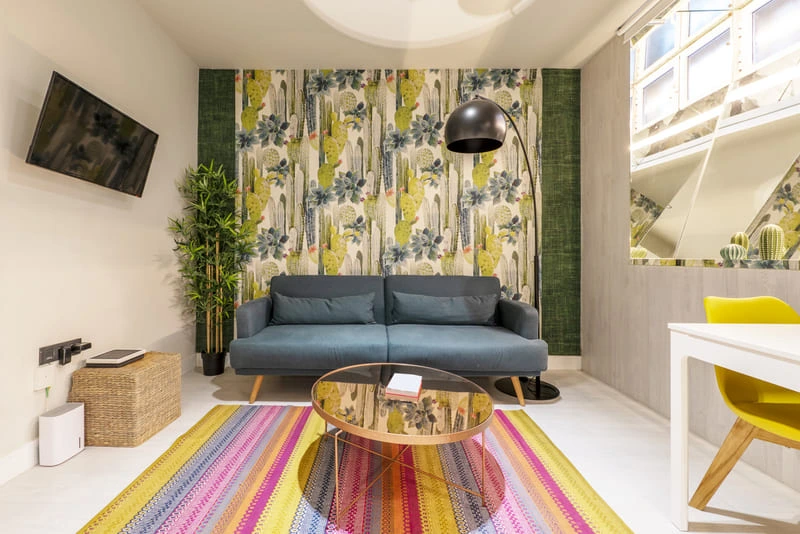
A dopamine decor living room can run at full volume, with bright walls, clashing patterns and colorful lights. It’s a social, daytime room. The bedroom runs at calm joy.
| Living room | Bedroom | |
|---|---|---|
| Energy level | High, for company and daytime | Calm, for winding down |
| Where to go bold | Any wall, the sofa, the ceiling, the rug | Wall behind the headboard, rug, daytime bedding |
| Palette | Brights and clashing pairs, like pink with red | Deeper, slightly muted tones, with brights as small accents |
| Pattern | Mix freely at different sizes | Keep busy pattern off pillows and the wall you face |
| Lighting | Bright, colorful, layered | Dimmable, warm white after dark |
| Best first buy | A colored throw or a statement chair | A headboard or a new bedding set |
So go really loud in the dopamine decor living room and let the bedroom be the quieter sibling. Your dopamine decor bedroom still gets color, just where you see it when you’re awake.
Is the Dopamine Decor Trend Still Going in 2026?
Yes, though it is a bit different now. Pantone named a white, Cloud Dancer, as its 2026 Color of the Year, the first white since the company launched the program in 1999. The Pinterest 2026 prediction was the opposite, with gummy textures, circus stripes and opalescent accents.
Fortune covered that split in October 2026, describing Gen Z and millennials trading beige for color that makes them feel better. The dopamine decor trend has calmed since its neon phase, though. This year it leans on earthier tones, vintage finds and some plain space.
If the opalescent, celestial side appeals to you, our whimsigoth bedroom guide picks up that thread.
4 Mistakes That Ruin a Joyful Bedroom
- Bright colors on the wall opposite your bed, or on the ceiling itself. It’s the last thing you see before you fall asleep.
- RGB strip lights in your room right until bedtime. The lighting is full of blue hues. Keep RGB lights on your desk, or make sure that the bedroom ones turn off an hour before sleep time.
- Mistaking clutter for a maximalist bedroom. Women in a UCLA study who described their homes as cluttered showed elevated stress hormones throughout the day. Limit items on the nightstand to three.
- Painting the entire room without testing first. Give yourself a week with a paint sample in place.
Dopamine Decor Bedroom FAQ
Yes, if you keep it out of your line of sight at night. A dopamine decor bedroom puts bold color behind the headboard, on the rug and in the daytime bedding, and keeps the wall you face soft.
What colors are best for a dopamine decor bedroom?
Deep blue, sage or jade green, terracotta, butter yellow and plum. They have richness without being too stimulating, and people in blue, yellow and green bedrooms slept the longest in Travelodge’s survey of 2,000 homes.
Is dopamine decor backed by science?
Not entirely. No study shows that paint increases dopamine levels, but the brain’s reward system responds to novelty, and saturated colors increase arousal. The mood enhancement is real; it just wears off when the stimulus gets old.
Is the dopamine decor trend still in style in 2026?
Yes, though it’s calmer. The dopamine decor trend now leans toward earthier tones, vintage finds and color balanced with plain space, while Pinterest’s 2026 forecast pushes gummy textures and circus stripes.
How is a dopamine decor living room different from a bedroom?
A dopamine decor living room can run at full volume because it’s a social, daytime room. A bedroom needs deeper shades, warm light after dark and a quiet view from the pillow.
Can dopamine decor work in a small or rented bedroom?
Yes. Stick to one color scheme and then add color through removable elements such as peel-and-stick wallpaper, colorful bedspreads, and patterned rugs.
Start With One Change
You don’t have to overhaul your room this weekend. Select something under $50, such as pillow covers, and try it out for two weeks. If it brings a smile to your face without keeping you awake at night, then move on to the next element.
This is how you create an effective dopamine decor bedroom: gradually and around things that you genuinely love. For a completely different vibe with some personality to it, check out our ideas for a fairycore bedroom.