
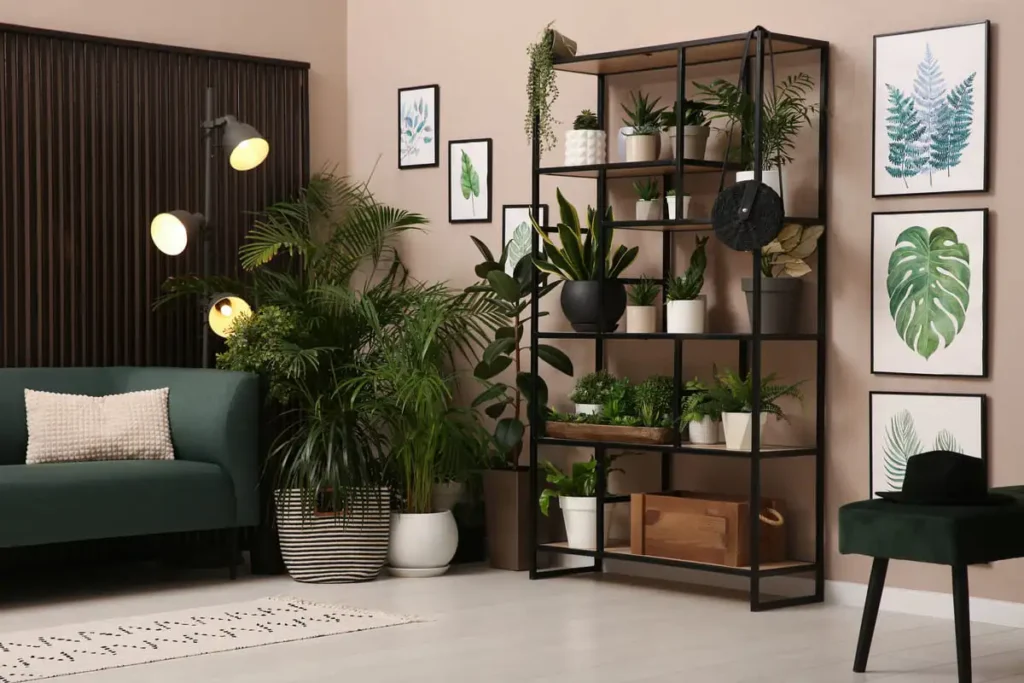
Learning how to arrange plants in living room isn’t all about crowding everything by a couple of windows, just as it doesn’t mean filling up every corner or blocking furniture or walkways. Like anything else in your living room, plants also require planning and a good eye for interior flow.
From finding the best areas based on natural light and creating plant zones to making an arrangement and complementing the available décor, here’s everything you need to know about houseplant display ideas in an effective manner, without cluttering the space or overwhelming your daily routine.
Start With the Living Room’s Natural Light
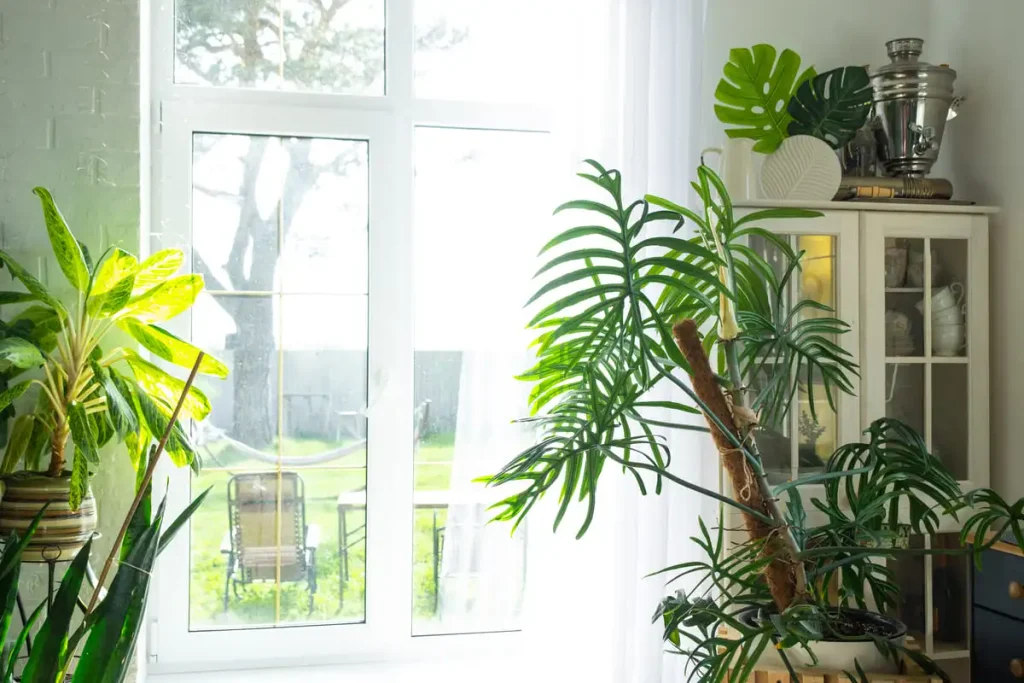
Most people arrange living room plants based on the style and décor. An expert, on the other hand, will do it based on natural light. Observe the room throughout the day and identify both light and dark areas. Window directions, curtains, buildings and trees will also affect light levels and intensity.
Common sense asks for bright-light plants like Fiddle Leaf Figs or Bird of Paradise to go near windows, while plants that can tolerate less light such as ZZ plants and Snake plants can go further into the room. If you do need to go into a corner, make sure you use grow lights, as no plant can survive without enough light.
This being said, learning how to arrange indoor plants obviously starts with the necessities of your plants. Otherwise, chances are your arrangement won’t thrive, but will struggle and die.
How to Create Two or Three Intentional Plant Zones
Rather than creating a plant corner, try to come up with a couple of smaller areas. Sure, it depends on your available space, so a statement plant corner won’t always be a bad idea. Other options include window displays, side-table arrangements or even bookshelf displays.
When it comes to indoor plant arrangement ideas, try to avoid placing a plant on every available surface. It’s not how it works. Instead, define areas for a more solid and cohesive appearance.
Keep in mind that a living room plant arrangement is all about making everything look organized. Grouping plants together makes your room look better than if you scatter them around on every flat surface. Scattering plants everywhere will still make the area look cluttered and chaotic.
Place the Largest Plant First
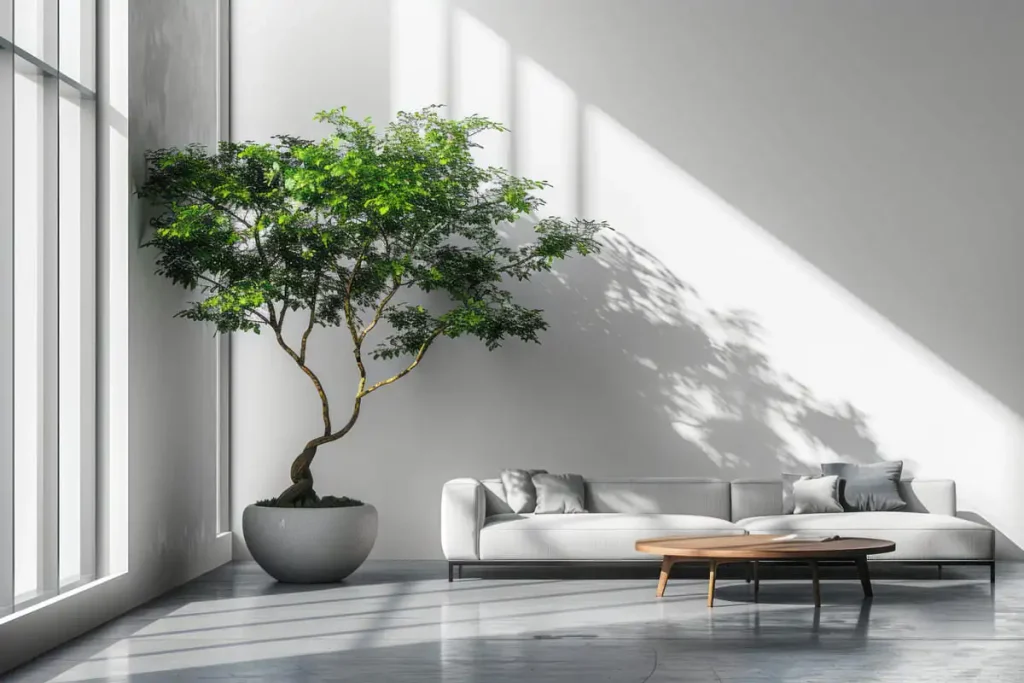
Learning how to arrange plants in living room starts with the tallest plants. They anchor the vision and draw attention straight away. This is only the starting point though.
Suitable locations include the side of your sofa, close to a reading chair or nook, in a corner, by an entertainment area or at the end of an open space living area to create a natural room divider.
The size of the room and available space can help you decide on the perfect plant. A large living room can do with a massive plant, while tight spaces look better with tall, narrow plants.
Common sense, don’t block any walkways, so keep the plants out of the way. Also, plants may grow, wider and taller, so plan ahead in terms of available space for future foliage spread.
Group Smaller Plants at Different Heights
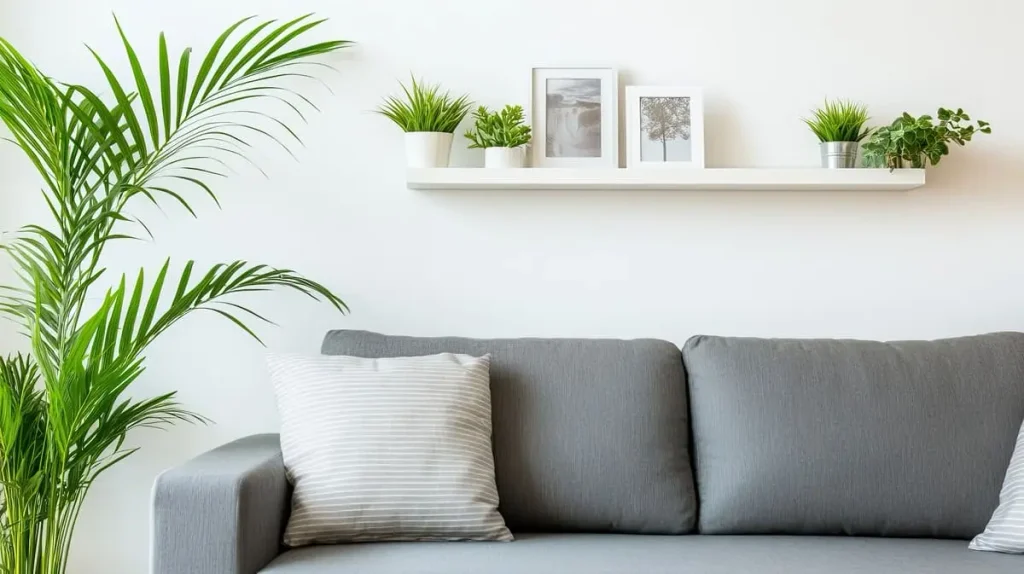
Your plant decor for the living room will look like an expert arrangement if you organize plants by different heights. The classic three-plant model covers a tall plant, a medium plant and a trailing plant.
If you have a bunch of small plants, group three of them if they look good together, but the number isn’t a general rule.
As for the grouping area, it can be anything, from stands and side tables to shelves or stacked surfaces. While a bit unusual, hanging plants are also suitable for indoor use.
Symmetry may look nice when learning how to decorate a living room with plants, but variation makes the décor look natural. Implement variation in plant height, leaf shape and size, foliage appearance, growth and even pot size.
Needless to say, plants grouped together should have similar lighting and temperature requirements as well as watering schedules.
Arrange Plants Around the Furniture
Figuring out how to decorate a living room with plants involves considering functionality too. Go for visual balance, but also consider the window direction, traffic flow, pet-safe plants and so on.
Apart from doors and walkways, keep plants away from electrical outlets, TVs (they’ll grow and interfere), vital surfaces and areas that are difficult to water. Maybe walk around once they’re in, just to make sure that they’re not in the way.
As for protecting furniture, use waterproof saucers to keep surfaces safe from moisture rings. And in the end, remember, plants are meant to complement your living room, rather than clutter it.
Leave Negative Space to Prevent Clutter
Covering everything with plants isn’t the best idea for a living room plant arrangement. This means you need to leave some empty or negative areas to avoid clutter. A plant corner is nice, but don’t fill every corner or shelf.
Leave empty space around parts, such as art and statement furniture. Different displays must be well separated. So, if a plant doesn’t match the conditions in your room, it’s time to move it elsewhere.
All this empty or negative space will make your current plants stand out. They look intentional and draw attention without making the room feel crowded.
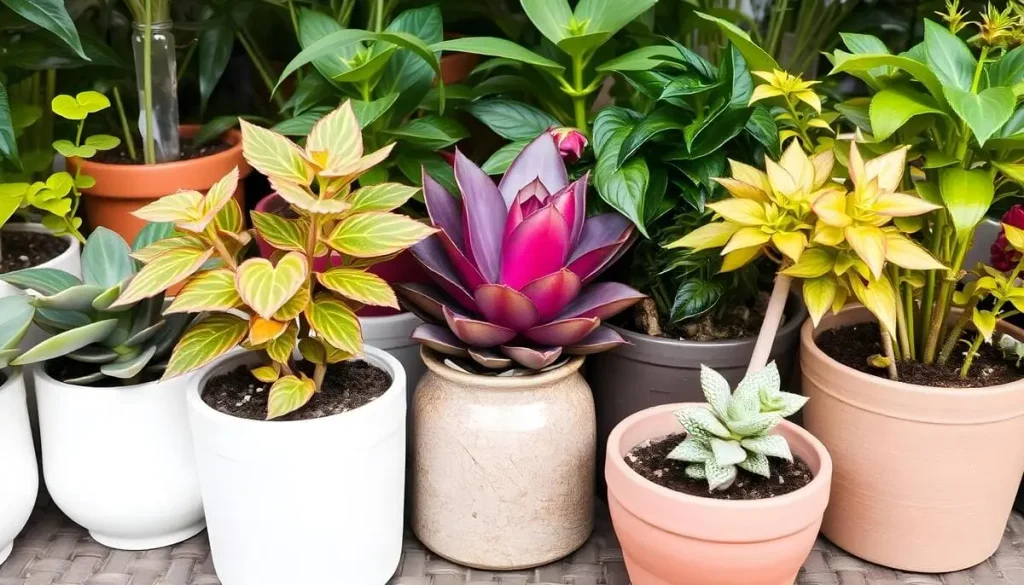
Coordinate Pots, Stands and Materials
Learning how to decorate a living room with plants involves using pots as décor too. Modern pots won’t look good in traditional décor, for example. Here are some nice ideas:
- Terracotta with natural wood.
- Dark metal with neutral stoneware.
- White ceramic with light oak.
- Woven baskets with classic ceramic pots.
Match finishes and colors, but don’t go for identical pots. The pot size must be directly proportional to the plant size to keep root systems healthy. Implement drainage trays and stands for variety, but make sure to protect furniture and fixtures from runoff water.
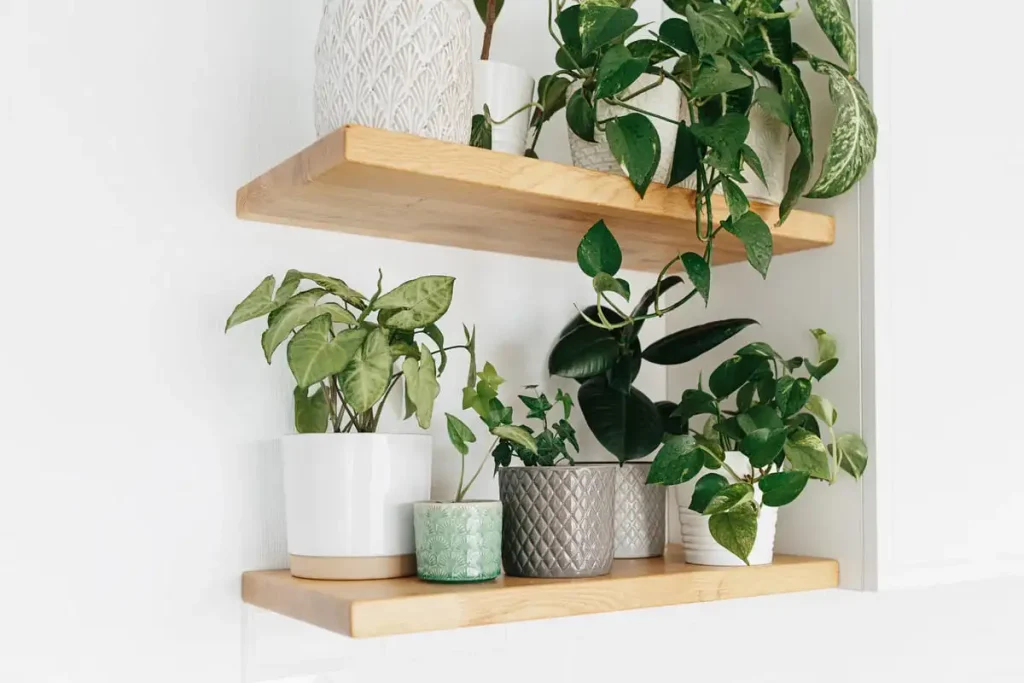
Use Vertical Space in a Small Living Room
Once again, tall, narrow plants work well in small places. Just because you don’t have a massive living room, you can still learn how to arrange indoor plants effectively.
From tall floor plants and wall-mounted shelves to hanging plants, ladder shelves and tiered stands, anything will do. Freestanding hanging racks are just as good.
If you don’t want to drill or damage anything, or you rent the property, you can use tension-mounted systems, cloth racks, curtain-rod arrangements or plant stands. Check the ratings for such things, especially in terms of supported weight. Plants get heavier when the soil is wet after a deep watering.
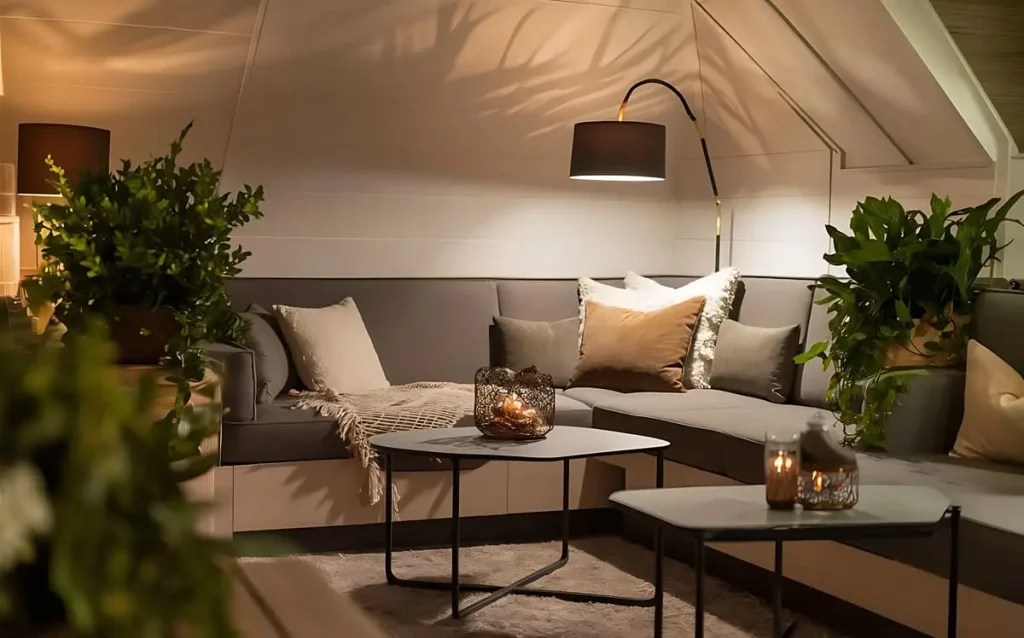
Arrange Plants in a Low-Light Living Room
Natural light isn’t always available, but don’t panic, you do have options, from grow lights to low-light plants. Plants can be brought closer to windows, for example. Grow lights can be discreetly located by your plant corner too. You can even have an illuminated plant area. How about some artificial plants too?
Now, low light doesn’t mean no light, so you shouldn’t abandon the idea of natural plants.
Grow lights can be discreet if you hide wires and cables, force them towards the foliage and stick to timers for consistent eight-hour cycles. Also, opt for decorative grow lights that match the décor too.
Consider Pets, Children and Long-Term Maintenance
Plants should be safe for pets and children, so double-check before spending your money. Also, unstable planters (such as tall and narrow planters) must be kept away from pets and children. If you get trailing plants, make sure no one can grab them.
Leave room for access and watering, think about long-term growth and expansion, but also rearrange the design based on light conditions and changing weather between summer and winter months.
Once again, don’t keep plants by walkways. This also prevents the risk of spillages around walkways, which could cause accidents or damage hardwood floors.
A Simple Step-by-Step Plant Arrangement Plan
While each step requires thorough planning, here’s a brief guide on how to arrange plants in living room.
1. Take note of the natural light in the room.
2. Organize and group plants according to light needs.
3. Choose a couple of display zones.
4. Start with the largest plant.
5. Add a mix of medium and small plants.
6. Add a variety of sizes, foliage shapes, leaf sizes, and so on.
7. Implement a hanging or trailing element.
8. Match pots, stands and the overall décor.
9. Double-check walkways and keep them clear.
10. Don’t hesitate to remove items if you’ve overcrowded too many of them.
11. Protect surfaces and furniture against water and spillages.
12. Reassess everything after a week to check for plant health
Bottom line, figuring out how to arrange plants in living room is a matter of planning and a bit of research. From natural light assessments and intentional zones to layers and negative space, take one step at a time, reassess and double-check after each stage, only to ensure that you’re on the right path.
FAQs
Plants must be grouped to look like an intentional arrangement, mainly by light requirements and size. Having a few zones will give you more options in terms of variety.
Where is the best place to put plants in a living room?
The ideal location must be in a lit area, but without blocking anything, like walkways or furniture. Bright corners, sofa sides or selected shelves will do wonderfully.
How do I arrange plants without making the room look cluttered?
Group plants together, rather than spread them all over. Group them at different heights, but also leave some negative or empty areas to give each piece breathing room.
Should houseplants be grouped together?
Grouping plants prevents clutter. It also adds to the overall maintenance and care, assuming they have similar needs and requirements and naturally increases local humidity around them.
Can plants survive in a living room without windows?
Both natural and artificial light are good, yet natural light is preferred. Sometimes, you may have to choose between artificial light for real plants and artificial plants in low-light conditions to get the green look.