
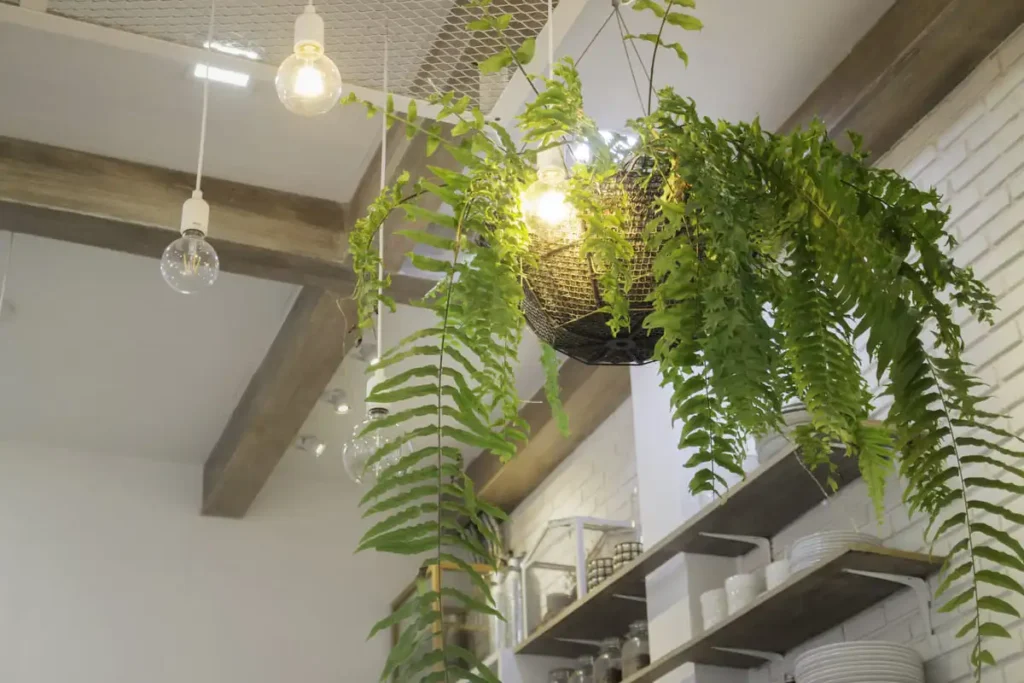
Wondering how to hang hanging plants indoors without drilling or damaging your ceiling? Options include a freestanding plant hanger, a properly rated tension rod, or a floor-to-ceiling plant stand. S-hooks can also work on an existing support whose load capacity you can verify.
The right method depends on your room, the mounting surface, and the complete planter’s weight after watering and draining. Some options create the look of ceiling-hung plants without attaching anything to the ceiling.
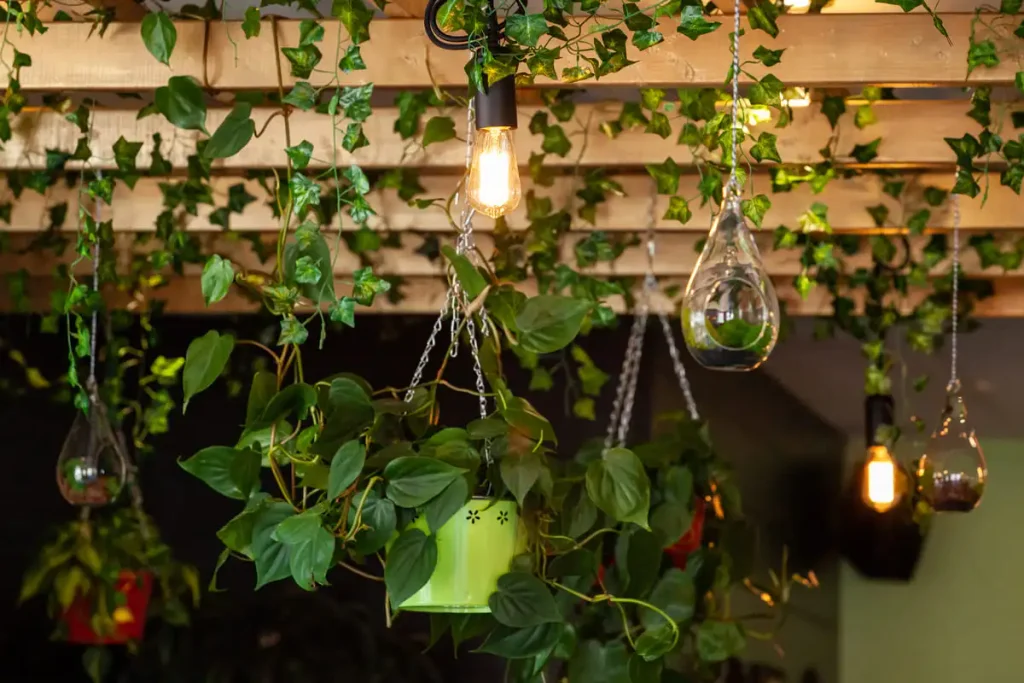
How to Hang Hanging Plants Without Drilling
If you rent, no-drill options include freestanding plant hangers, floor-to-ceiling plant stands, tension rods and S-hooks on suitable existing supports. Check the complete planter’s weight after watering and draining against the support’s limits. Only use adhesive hooks on a ceiling when the manufacturer explicitly approves the surface, ceiling application and suspended load.
| Method | Best for | Needs drilling? |
|---|---|---|
| Tension rod | Suitable window recesses or alcoves, within the rod’s rated capacity | No |
| S-hooks on an existing rod | An existing support with verified remaining load capacity | No |
| Freestanding plant hanger | Avoiding wall and ceiling attachments, within the stand’s load limits | No |
| Floor-to-ceiling plant stand | Compatible floor and ceiling surfaces, within the system’s load limits | No |
| Adhesive ceiling hook | Only overhead applications, surfaces and loads explicitly approved by the manufacturer | No |
Tension Rods
This is an excellent option for those who rent. After all, there aren’t too many options in terms of what you can do in a rental place, especially when it comes to drilling and using nails. Tension rods give you the opportunity to hang natural or artificial hanging plants without drilling holes.
The strength of the tension rod depends on the weight of your plants. To keep it simple, artificial plants are way lighter than natural plants, since they don’t require any soil, moist potting mixes, or heavy glazed ceramic containers. They’re easy to look after too, so there’s no need to trim them or deal with dirt or water.
All in all, get a solid curtain or shower tension rod. Fit it horizontally inside the window frame and use it as support for your hanging plants. You can also use a tension plant pole. Make sure it goes from floor to ceiling and it’s solid enough for your plants.
S-Hooks
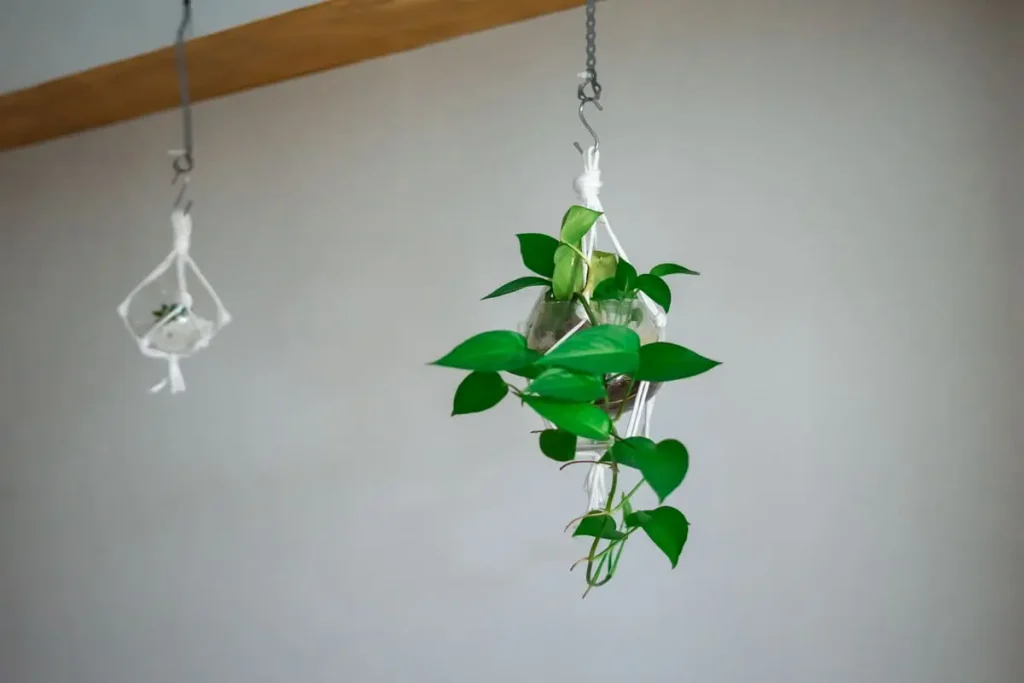
S-hooks follow the exact same principles. Besides, just like tension rods, S-hooks won’t require any drilling or nails. In other words, this option is also suitable for those who rent their homes and need quick, repositionable setups. S-hooks are available in all sizes, shapes, materials and colors.
You can get metallic hooks, as well as plastic hooks.
As for the fitting solution, simply hang or clip them directly onto your curtain rods. They work well on curtain rods and sturdy hooks. Never hang plants from light fixtures or smoke detectors. S-hooks are also the easiest option if you’re working with hanging baskets instead of single pots. Just make sure that they’re sturdy enough for plants before letting go of the pot.
Adhesive Hooks
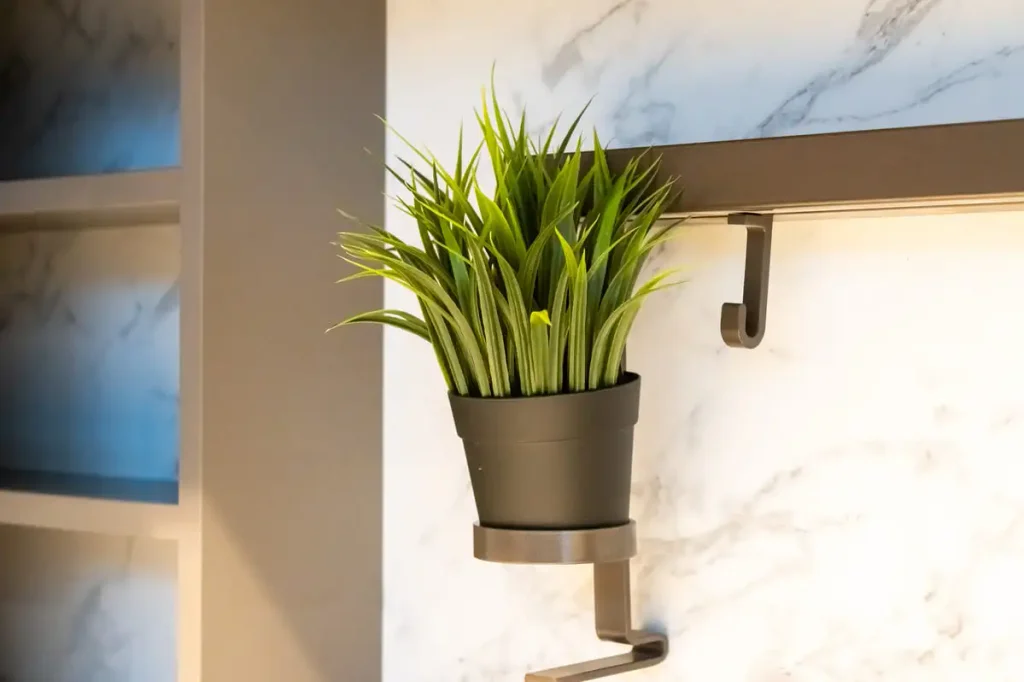
Adhesive hooks represent a last resort if you’re learning how to hang hanging plants without drilling or nailing anything.
Choose adhesive hooks specifically approved by the manufacturer for ceiling use. Check that your ceiling surface is suitable and that the stated ceiling-use weight limit covers the complete planter after watering and draining, including its hanger. If ceiling use is not explicitly approved, choose another hanging method.
How to Hang Plants Without Using Walls or Ceilings
A freestanding plant hanger supports hanging pots from its own frame, so you do not need a wall bracket, ceiling hook or pressure-mounted pole. Look for an indoor hanging plant stand with arms or an overhead rail designed for suspended planters.
Check the space needed for the base and the limit for each hanging position. Assemble and load the stand as instructed, keeping pots clear of walkways. If a product requires wall anchoring for stability, choose a different model for a setup that avoids wall fixings.
Position the stand where your plants receive suitable light and where you can reach them for watering.
How to Hang Heavy Plants Without Drilling
If you are wondering how to hang heavy plants without drilling, start with the planter’s complete weight. A suitably rated freestanding hanger or tension system may work, but there is no universal weight limit for no-drill setups.
Before choosing a support:
- Weigh the plant after watering and draining.
- Include the pot, outer container, saucer, hanger and chain.
- Check the limit for each hook or arm and the support’s total capacity.
- Follow the manufacturer’s requirements for installation and load distribution.
Do not treat a stand’s total capacity as the capacity of one hanging arm. If you cannot verify a suitable hanging setup, display the plant on a floor stand instead.
How to Hang Plants Without Damaging Paint or Surfaces
To hang plants without damaging paint, check the surface as carefully as the hanger. Adhesive products need an approved surface in good condition, and newly painted areas must meet the product’s waiting requirements.
Remove the planter before taking down its support. For removable adhesive hooks, follow the exact removal instructions rather than pulling the hook away from the surface.
Tension rods and poles can also leave pressure marks. Use their supplied protective pads and follow the fitting instructions. Avoid assuming that “no drilling” guarantees a mark-free finish.
Toggle Bolts and Hollow Ceilings
When deciding how to hang hanging plants from a hollow ceiling, first check for a suitable joist with a stud finder. If one is available, use a hook designed for fixing into it and follow the manufacturer’s installation instructions.
If there is no suitable joist at your chosen location, the steps below apply to a spring-wing toggle hook installed through suitable hollow ceiling board. Check that the fixing is approved for your ceiling material and overhead application, and that its load limit covers the complete planter after watering and draining.
- Mark the location. Leave enough clearance for the plant’s growth and movement. Check for hidden wiring and pipes before drilling.
- Drill the specified hole. Use the hole diameter stated in the toggle manufacturer’s instructions. Check that there is sufficient space behind the ceiling board for the wings to open.
- Insert the toggle assembly. Assemble the hook, threaded bolt and toggle as instructed. Fold the wings and carefully push them through the hole until they open fully behind the board.
- Seat and tighten the fixing. Apply gentle downward tension to seat the wings against the back of the ceiling board, then tighten according to the manufacturer’s instructions. Avoid overtightening or crushing the board.
How to Hang Plants on Different Ceiling Types
- Drywall: Use a hook fixed into a suitable joist, or a toggle fixing approved for overhead use in the board’s thickness and for the complete watered planter’s weight.
- Plaster: Identify the ceiling construction before choosing a fixing. Plaster can crack, so follow the selected hardware’s drilling and installation instructions rather than using a generic hole size.
- Drop ceilings: Do not hang plants from ceiling tiles. Use a grid attachment only when the ceiling-system manufacturer permits it and the installed system can support the complete planter within its stated limits. If you cannot verify this, use a freestanding plant hanger instead.
Learning how to hang hanging plants without damaging walls and ceilings can go in more directions. You can use renter-suitable solutions, but you can also come up with a proper installation. Either way, the weight of the plant is one of the most important considerations in the process. Once they’re up, it’s worth thinking about how they fit in with the rest of your room. Birds nesting in your hanging plants? See our guide on how to keep birds out of hanging plants.