
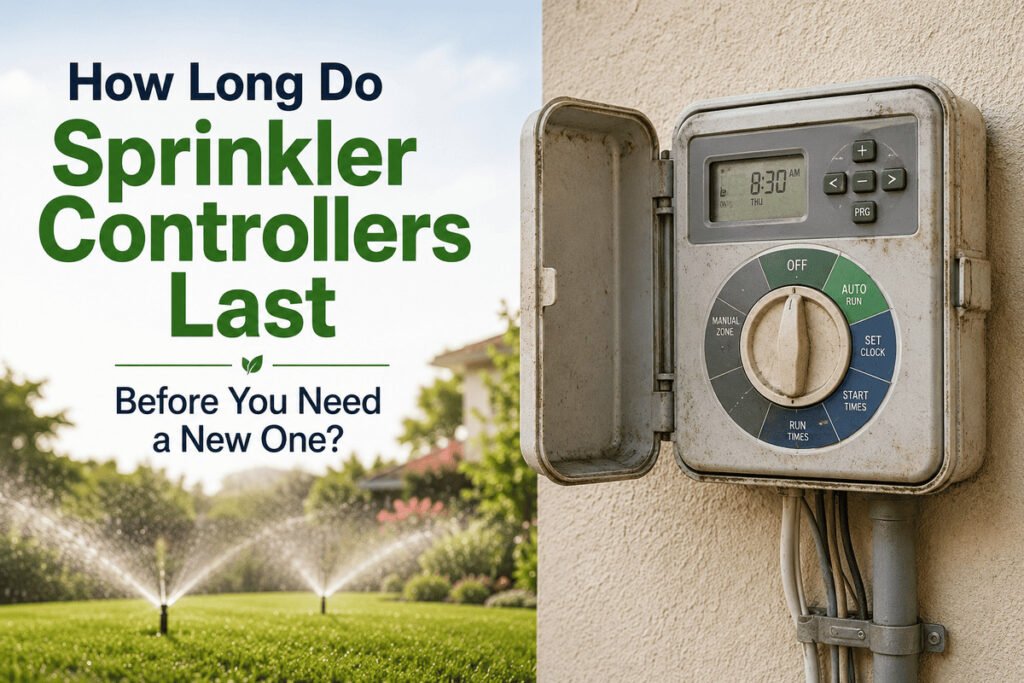
Sprinkler controllers come in all shapes and sizes these days, featuring unique elements and extras, including smart technologies based on the weather forecast and soil sensors. They represent an actual necessity in areas that don’t get enough rainfall, especially during the summer.
But then, are they really worth it? Given their impressive popularity, they’re obviously convenient and handy to have for your garden to maintain lush landscaping without wasting water. Now, how long do sprinkler controllers last? Being aware of their average lifespan will help you make better decisions if you’re hunting for value for money.
With this thought in mind, let’s take a look at sprinkler controllers, their average lifespan, potential issues that may arise and a few maintenance tips and tricks to keep your system running smoothly year after year.
How Long Do Sprinkler Controllers Last?
Long story short, it’s difficult to give an exact estimate. Different brands have different quality standards. Besides, the more features a controller has, the more potential problems you may have. Sure, you want more extras for convenience, but they also come with some risks.
So, how long do sprinkler controllers last then? Normally, their lifespan ranges between five and 15 years, so it’s a pretty wide range. Most of them last just under 10 years before showing noticeable signs of wear. Again, it doesn’t mean that your entire irrigation system will stop operating completely once it happens.
For example, if installed correctly, the underground plumbing system could last for decades. On the other hand, electrical components are more likely to break, such as display screens or internal clocks.
Different Types of Sprinklers, Different Levels of Durability
How you use the sprinkler, where you install it or what features it has could affect the lifespan. How often you use it will also have an impact on the lifespan.
From this point of view, look at indoor controllers, which can easily last over 10 years without too much maintenance. Indoor controllers benefit from extra protection against all kinds of weather conditions since they are safely mounted in a garage or basement. Apart from this, they’re protected from temperature fluctuations too, not to mention direct sunlight which can degrade sensitive components over time.
On the other hand, based on all these, outdoor sprinkler controllers tend to last longer. Sure, most of them come with protection against weather extremes. They may also feature weatherproof enclosures, so they’re safe against freezing temperatures, heat, or UV rays.
But then, such elements can cause plastic elements to break. Circuit boards are more likely to fail as well.
Smart controllers are somewhere in the middle because they can go both indoors and outdoors. They feature different technologies. Normally, they’re more advanced. They can estimate the weather, look at the forecast, check the soil humidity and so on. Therefore, scheduling is usually very accurate.
But then, they connect to software and hardware that could become outdated. In some cases, these things become outdated due to a lack of app support before you can see any physical damage or issues. To avoid such problems, it’s better to invest in a reputable brand that offers regular updates too.
Battery-Powered vs. Wired Sprinkler Controllers: Which Lasts Longer?
Battery-powered controllers are their own category, separate from indoor, outdoor, or smart units. No wiring means no wire corrosion or shorts, which is a real plus if you’re in a wet climate. The tradeoff is the battery itself. Most battery-operated sprinkler controllers run on standard alkaline batteries and need a change every 6 to 12 months depending on how many zones you’re running.
Skip that swap and the controller can lose its programming entirely, so you’re starting from scratch when you finally change it. Some newer battery sprinkler controller models pair with an app over Bluetooth, which is convenient, but the app tends to lose support before the hardware wears out.”
If longevity is what you care about, a wired controller with a good surge protector will generally outlast a battery unit. The battery-controlled versions are more applicable to small systems or locations where wiring is impractical.
Is Your Sprinkler Controller Broken, or Just Malfunctioning? Troubleshooting Before You Replace
Before you assume your sprinkler controller isn’t working, rule out the easy stuff first. A lot of “broken” controllers need a reset or a fresh battery. This is the first step in any real sprinkler controller troubleshooting process.
Start with a full reset. If you’re wondering how to reset a sprinkler controller, most units have a reset button or pinhole on the back, or you can pull the batteries for a few minutes on battery models. This clears whatever glitch is causing a frozen display or a program that won’t run.
Next, inspect the power source. In plug-in units, see to it that the transformer is installed correctly and the power outlet is working. If the display is flickering in battery-operated units, weak batteries could be the reason why, and this is the least expensive solution here.
If the particular zone does not work, while the controller is in order, then the problem will be in the valve, in the wires, or with the solenoid. It is necessary to change the wires from the malfunctioning zone with those from the working zone in the controller.
Smart controllers that won’t connect to Wi-Fi usually just need to be re-paired with your router. If you’ve tried all of this and your sprinkler controller is not working, still unresponsive, losing time, or refusing to hold a schedule, that’s when it’s worth looking at replacement.
Signs That Your Sprinkler Controller Needs Replacement
Normally, your controller may need to be repaired or replaced when it no longer works. In many situations, a technician can change a few parts and get it up and running again. However, here are a few signs that you’ll need to consider buying a brand new unit.
- Poor display. The display is usually available through a screen. If it gives you errors all the time, or it seems unresponsive, it might need to be repaired. Unreadable screens or faded displays indicate the same issue.
- Electrical failure. This issue is usually observed if your system is set to multiple zones. When you have an electrical failure, you’ll notice that some zones fail to turn on, even when all the valves and wiring seem to be alright.
- Timing issues. If the controller loses time, it might need replacement. If it forgets the programmed schedule, it’s even worse. When you have a smart controller, it might be more difficult to observe such signs unless you constantly monitor your smartphone alerts.
- Outdated technologies. With time, new technologies may pop up. Regular updates are good, but there will be a time when your controller will need replacement because the old hardware can no longer run modern software. For example, a lack of rain sensors could be an issue with today’s smart sensors, which feature such extras by default.
How to Replace a Sprinkler Controller
Once you’ve confirmed it’s time for a new unit, sprinkler controller replacement is a manageable weekend project for most homeowners, as long as you’re comfortable with low-voltage wiring.
Match your zones first before purchasing. Determine the number of zones supported by your existing controller and ensure the replacement controller can support those and more.
Label all your wires before detaching any of them. You can take a picture of the current wiring and use a pen to label each wire according to its corresponding zones. This is the part most often forgotten and becomes a problem later on.
Install your new controller in the same place if possible and connect your wires accordingly to each zone terminal. Most new controllers can guide you through setup on the display or through an app. If you’re searching for how to replace a sprinkler controller step by step, this covers the core of it.
If you are not comfortable with working on wiring or have a wiring setup that does not conform to current standards used by new controllers, then spending an hour with an irrigation technician would be worth it.
How to Look After Your Sprinkler Controller
So, how long do sprinkler controllers last? Apart from brands, technologies and weather, how you look after your system can also affect its lifespan.
From this point of view, use surge protection. Sprinkler controllers tend to face power surges. Having your own surge protector will ensure that lightning strikes won’t damage the electrical system associated with your controller. It’s just an extra layer of protection for your system that saves you from costly replacements.
Protection against weather conditions is also important. Sure, it doesn’t apply if the controller is indoors. But when outdoors, it might need more than just a weatherproof case. Stick it into a locking cabinet, but also make sure that the cabinet is well sealed against pests and moisture.
Winterizing Your Sprinkler Controller
Freezing temperatures are some of the quickest ways to reduce the life expectancy of the controller, but it is also one of the easiest problems to avoid.
In cases where you experience sporadic frost, then a rain delay or season adjustment will be sufficient to stop watering.
If you’re in a region with hard freezes, shut the controller down completely for the season instead of just pausing it as part of winterizing your sprinkler system. Running your dry valves when freezing happens will render all the effort put in by the controller worthless and might end up breaking your backflow preventer, which will force water to flow where it’s not supposed to be flowing; this is much more costly to fix than the controller.
Before plugging the unit back in after the winter season, have a quick look at the device itself for signs of moisture and corrosion in the terminals or even a loose cabinet seal. This is way cheaper to fix in April than in June.
In the end, how long do sprinkler controllers last? With proper maintenance and care, a quality sprinkler controller could last for more than 10 years. This is the average, but thorough maintenance is very likely to increase its lifespan.