
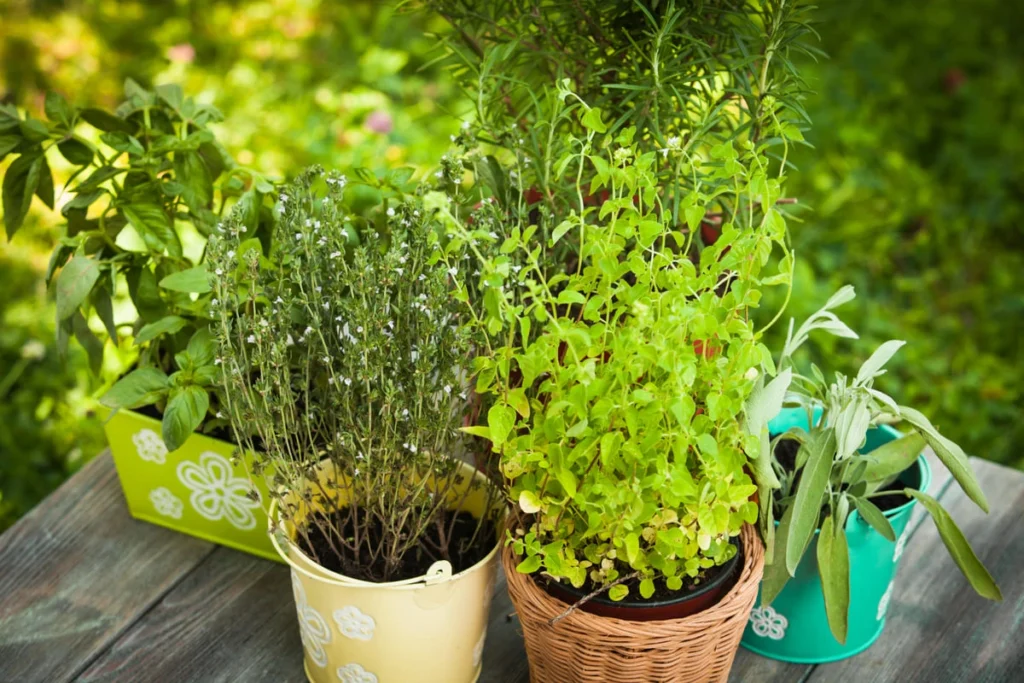
Learning how to start an indoor herb garden may seem challenging, yet it’s a simple task that only requires a few basic things, such as thorough planning and a realistic understanding of how natural sunlight behaves indoors. You don’t need any sophisticated equipment or gardening experience whatsoever.
Instead, your herb garden only requires the right combination of herbs, the perfect location by the right window and the perfect pairing. Once you cover these aspects, your indoor garden will thrive. This guide will cover everything you need to know.
Which Herbs Actually Grow Well Without a Grow Light?
There are both forgiving and demanding herbs, so a little research will help you start with the right ones. Some of the most forgiving plants include mint, parsley, oregano, chives, thyme, rosemary and lemon balm. They tolerate indoor conditions by the windowsill fairly well.
Then, there are also herbs that may require more than that, such as consistent lighting conditions throughout the year. Such demanding herbs include dill, basil, chamomile and cilantro, to give you a few examples, as they quickly turn pale and weak when deprived of high-intensity solar energy.
Which Window Direction Actually Works?
Placing your indoor herb garden on a windowsill facing south is by far the best idea. Such windows will normally get at least six hours of direct light, regardless of the season. In the summer, they’ll obviously get more.
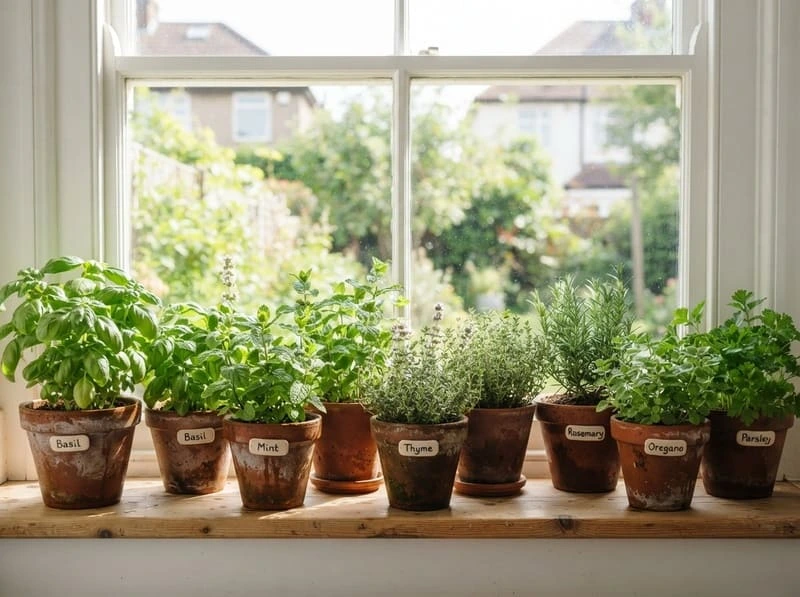
West isn’t a bad idea either, especially for forgiving plants like parsley and mint. While east may look like a great idea, the truth is that your plants only get light in the morning. Overall, the total intensity is drastically reduced.
As for the north, such a window won’t help your plants thrive, regardless of how forgiving they are.
Can You Grow Different Herbs in the Same Pot?
Different plants in your indoor herb garden can go in the same pot only if they share the same necessities in terms of lighting conditions and water. If they have different needs, one of them will clearly thrive, while the other will struggle.
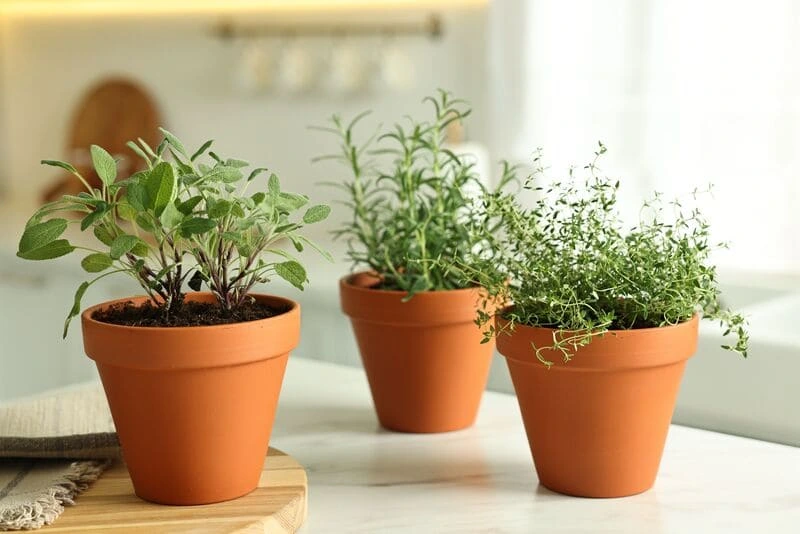
Parsley and basil make a good combo because they require moist soil, so they’ll grow fine together. On the other hand, oregano, rosemary, thyme and sage need drying out before watering sessions, so they can go together, but shouldn’t be mixed with other herbs that prefer a damp, humid root ball.
When figuring out how to start an indoor herb garden, your best bet is to analyze each herb and group them based on their needs. It’s pointless to group them based on how they look together, as at least one of them will suffer.
If you’re not sure whether your favorite herbs have different needs, simply place them in different, small pots fitted with dedicated drainage holes and saucers. This solution solves all the potential problems.
How Long Do Indoor Herbs Actually Last?
Some herbs are annual, while others are perennial, meaning they’ll have different life cycles. If some plants last for a while, while others don’t, there’s nothing to worry about. That’s perfectly normal.
For example, cilantro and basil are annual plants, so they’ll be gone in a few months, regardless of how professionally you care for them. Replacing them is normal, so it shouldn’t be seen as a failed experiment.
On the other hand, sage, thyme, oregano and rosemary are perennials. They can live for years. They’ll grow and thrive, so they may require re-potting at times. Look after them properly and you’ll have years of fresh herbs from your DIY indoor herb garden.
The Easiest No-Equipment Way to Start: Propagate Mint from a Cutting
Learning how to start an indoor herb garden takes a bit of practice, but the easiest way to do it is to start with mint.
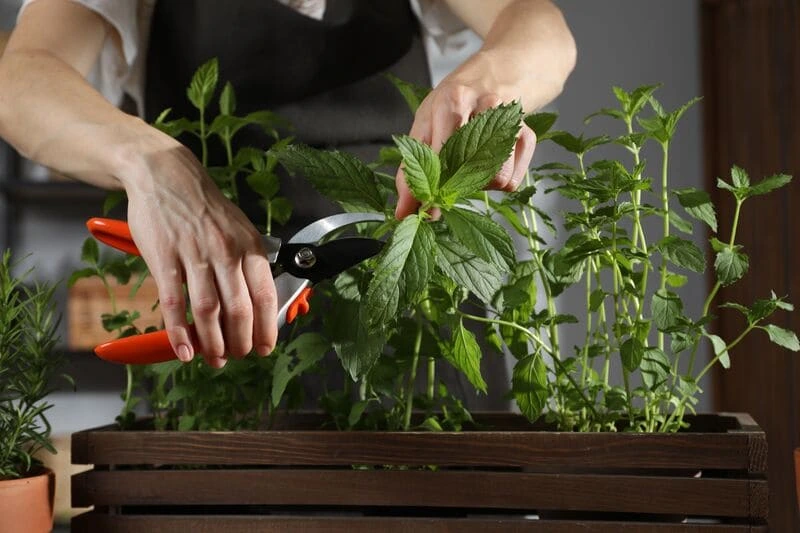
While you can buy herbs yourself and place them by the windowsill, you can also take a four-inch cutting just under the leaf node. Strip the leaves at the bottom and put it in a glass of water by the window. Give it a week or two to develop roots. Make sure you change the water every few days to prevent stagnation and stop bacterial slime.
There’s no need to use any seeds and start from scratch. You don’t need any soil in the beginning either, let alone sophisticated lights or equipment. Just water and a small cutting.
Windowsill Herb Care Routine
Caring for your DIY indoor herb garden is a piece of cake. Only water your plants when the top inch of soil goes dry. Keep in mind that failing to water regularly or overwatering can kill most indoor herbs.
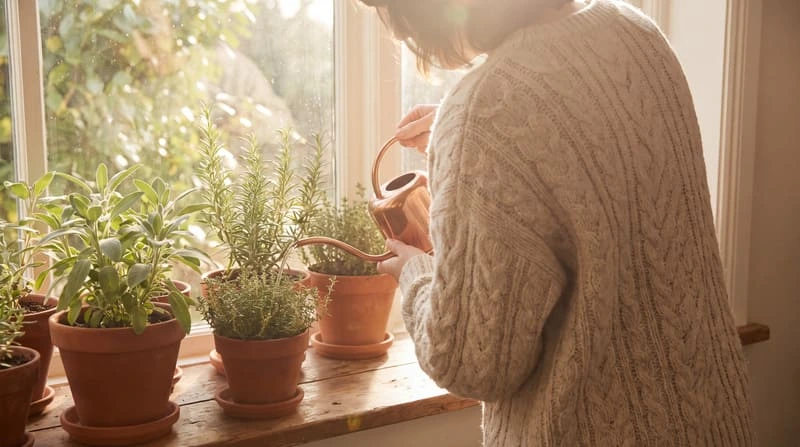
As herbs tend to lean towards light, you’ll also have to rotate the pots every couple of days. This way, they’ll maintain straight growth rather than bending into thin, awkward angles.
The temperature should be constant too. Also, it’s perfectly normal to go lower at night. During the day, keep your herbs at 65 to 70 degrees F. At night, the temperature can go as low as 55 degrees F.
When clipping herbs, never do more than a third of it in one go. Once you clip, give herbs a bit of time to recover. Normally, a few leaves every few days are alright, but taking more in one go will require a few weeks to regenerate.
Meanwhile, pay attention to potential pests too. Some of the most popular ones include spider mites and aphids. They’re easy to get rid of. Most people just water-rinse them. You can also use a dish soap spray if you’ve overlooked the problem for too long, but make sure to rinse after.
Don’t worry about chemicals and sophisticated pesticides, as your herbs don’t need them. Besides, they’re usually harmful, especially if you’re planning to consume herbs every now and then in your cooking sessions.
When Should You Just Add a Grow Light Instead?
Learning how to start an indoor herb garden is fairly simple by the windowsill. In most cases, natural light will get the job done with no issues at all. However, there are situations when you may need a grow light instead.
Pay attention to the growing phase. During the winter, it’s perfectly normal for the growth to be a bit slower. If it stalls completely, chances are your herbs aren’t getting enough light.
In this case, you may have to consider a grow light. It’s an inexpensive piece of equipment, yet you should choose one carefully to ensure it provides a balanced full-spectrum output suitable for vegetative growth.
Pay attention to the stems as they grow too. Even if you can observe growth over a few weeks, leggy stems indicate the necessity of a grow light. Even if your herbs are placed by a south-facing window, such issues may still arise during the winter.
A grow light will solve the problem overnight.
FAQs
Some of the most common recommendations for beginners include mint, parsley, chives, oregano, thyme and rosemary. Keep in mind that they have different needs, so they must be grouped accordingly. Overall, they all tolerate windowsill conditions, let alone inconsistent watering.
What is the easiest herb to grow indoors?
Mint is by far the most popular option because it’s extremely forgiving, but it’s also super easy to grow. You only need a four-inch cutting in water for a few weeks to see the roots growing. It also tolerates low lighting conditions.
What herbs should not be potted together?
As long as their watering needs are different, herbs shouldn’t be potted together, as some will thrive and others will suffer. Basil and parsley require consistent moisture. Oregano, rosemary and thyme, on the other hand, require the soil to dry out before watering.
Can an herb garden survive indoors long-term?
Yes, but some herbs are annuals, while others are perennials. Rosemary, oregano and thyme are perennials, so they can thrive for years. Cilantro and basil are annuals and will die after a few months, which is perfectly normal.
What temperature is too cold for herbs?
Herbs face stress and issues when the temperature goes below 55 degrees F during nighttime. If your windows get cold and drafty by the cold glass, it might be a good idea to move herbs or at least warm the room up.
What herbs can live in just water?
Mint is the perfect example. It develops roots within one or two weeks. It can be left in water forever, yet you should change the water every few days. However, transferring it to soil is better for its growth because tap water alone lacks the macro- and micronutrients needed for sustained, robust leaf production.