

Interior design mistakes often begin with decisions that seem harmless: choosing a matching furniture set, buying a rug without measuring, or picking paint from a tiny swatch. Each choice might look fine on its own, yet the finished room still feels awkward.
The good news is that you can often improve a room by changing what you already have. These are ten interior design mistakes to avoid, with practical fixes for getting the proportions, lighting, and everyday function right. Start with the problem that bothers you most, then work through the room one decision at a time.
1. Buying the Whole Matching Furniture Set
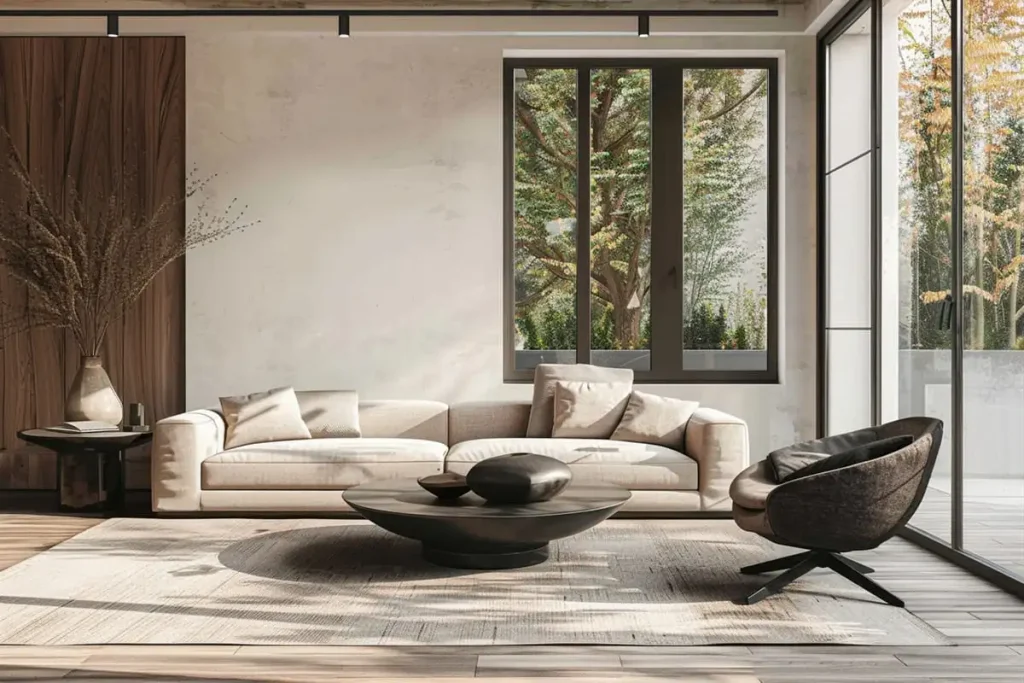
You go to a furniture store, and there are matching couches, love seats, coffee tables, and other pieces. Is that so hard? It may be easier to purchase a matching set, but by doing so, you might make your room less personal than intended.
Matching furniture is not automatically a mistake. Designer Lindsey Putzier notes that a matching sofa and loveseat can work; the issue is letting the entire room become one uniform set. It’s one of the more common interior design mistakes, and one of the easiest to soften once you spot it.
How to fix this issue: Keep the things that you love about each item and change something around them. For example, put your round coffee table with a square sofa, your woven chair with an upholstered one, or a vintage floor lamp with a modern console table. Find a way to repeat a shade or finish somewhere else.
If you already have all the items in the set and cannot afford to replace them, try changing some accessories or even swapping a side table with another from somewhere else in your home. For more ways to make familiar pieces feel personal, explore our apartment decor ideas.
2. Hanging Your Art Too High
Even though art might be perfectly positioned in the center of the wall, it can still lack visual connection to the rest of the interior design scheme. The reason for that would usually be excessive distance between the artwork and the furniture underneath it.
How to fix it: Think about the wall and the furniture as two separate references points. For a bare wall, a good starting point could be the center of the frame at the distance of 57 to 60 inches above the floor. Measuring to the center of the picture, rather than to the nail or hanger.
When hanging above the sofa, begin with the distance of 6 to 8 inches between the sofa backrest and the lower edge of the frame, but then take a step back and make necessary corrections. Published advice differs: The DIY Playbook recommends 4 to 8 inches and Framebridge recommends 7 to 10 inches.
When hanging a gallery wall, use templates of paper and work with it as one composition. If a doorway, sloped ceiling, or molding complicates the placement, see our guide to decorating an awkward wall.
3. Chasing Every Trend at Once
Each individually could be beautiful, but the trouble occurs when each subsequent buy happens based on its own trend and nothing ties it to anything you have owned before.
Before making a purchase, consider how it fits in your space, what it replaces, and what it relates to in your existing decor. If the only reason you want it is because you see it everywhere online, think about it for a bit first.
Fix: Pick some design elements you love over and over, like rich wood, rounded forms, or deep colors. Use those likes to guide you in purchasing. First test out a trend via accessories like a cushion or a painting.
An eclectic or colorful room can still work together beautifully. Repeating a color across different patterns gives the eye something familiar to follow, as in these colorful bohemian living room ideas. Keep the pieces you love even when a trend list says their moment has passed.
4. Buying a Rug That Is Too Small
A small rug that hangs in between the sofa and chairs may make your seating arrangement appear disjointed. Buying a rug based on cost or available space may be easy, but you should take the furniture placement into consideration as well. Rug sizing tops nearly every interior design mistakes list, since fixing it just takes a tape measure and five minutes.
How to fix it: Measure the seating area and use painter’s tape to mark possible rug edges. In many living room layouts, the front legs of the sofa and main chairs should rest on the rug; a larger rug can hold all the legs. Home Depot’s guidelines provide an explanation of how the proper sizing depends on the furniture layout.
Compare standard measurements like 8 x 10 feet and 9 x 12 feet to your actual setup. Both of these are not mandatory sizes. Take into account the doorways and pathways close to you prior to ordering.
If your rug is too small for the living room, try it beside a bed or under a compact reading area. You could also layer it over a larger, flatter rug if both sit securely without raised edges. Reusing the smaller rug may be more practical than forcing it to anchor the whole room.
5. Relying on One Overhead Light
A ceiling fixture can provide useful general light, but it may leave your reading chair in shadow or make the room feel brighter than you want in the evening.
How to fix it: Think about the jobs your lighting needs to do. Ambient lighting helps you move around the room. Task lighting puts light where you read or work. Accent lighting draws attention to a picture, shelf, or other feature. Two options include the table lamp and the adjustable reading lamp. They can provide you with the additional lighting layers that you lack.
In case of a comfortable living room, 2700K to 3000K are a good option to start. Kelvin represents the way the light looks like. Lumens represent the brightness. The change of the color temperature of the bulb does not mean that its brightness changes too.
Try out the current lamp in a new location before buying something new. Find out if there is glare in your common sitting position and select compatible bulbs when using a dimmer. Also, think about the place where the cable should go.
6. Buying Furniture Without Planning the Layout
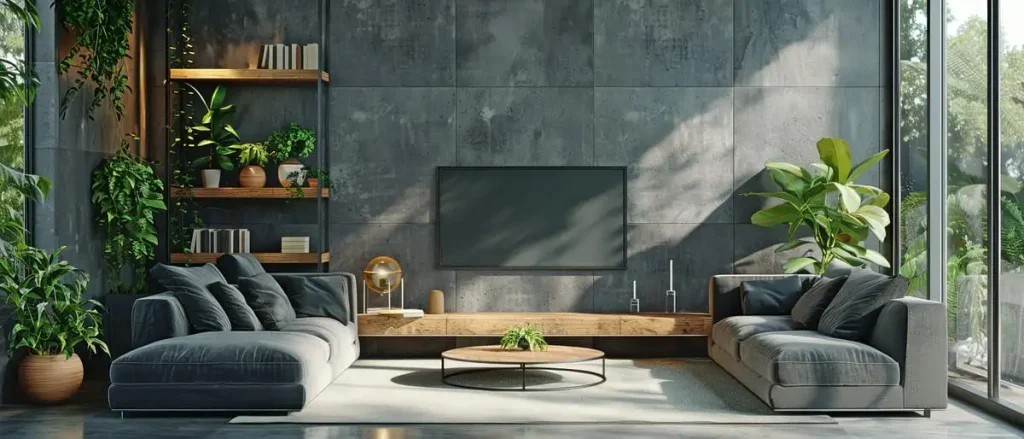
A normal-looking sofa in a showroom can be completely overwhelming in a small room. Scale and proportion play an important part in the recommendations offered by Jessica Lagrange Interiors – the pieces should fit into the room and fit with each other.
How to solve the problem: First of all, you should measure the room itself, the doors, and even the delivery route when placing the order. The furniture’s footprint should be marked on the floor with tape and then you need to walk through this footprint.
As the basic recommendation, the designers, interviewed by Camille Styles, give 14 to 18 inches between the sofa and the coffee table, and 30 to 36 inches in the paths for circulation. It is just a decorating recommendation and not an accessibility guideline – if necessary, leave more space.
One of the common regrets after making a mistake is having bought oversized furniture for the small room and now being stuck with it due to its price.
You don’t have to pull back every sofa from the wall. For instance, in the narrow room, keeping the sofa at the wall might help you keep the safest path. Don’t consider the rules about the layout obligatory until you test it.
7. Choosing Paint Before Checking Undertones and Light
The warm color that appears on your phone can look cool relative to your flooring. The finishing, fabric, and lighting all influence how the colors in the room interact.
Solution: Begin with those parts of the design that are costly or difficult to change, like the expensive finishes and fabrics. Get paint according to them and other fabric swatches. Shortlist your choice with large samples; Sherwin-Williams offers paint samples as well as peel-and-stick samples.
Place the samples next to your sofa, molding, and flooring. Check how the shades look in the morning light as well as the lamp light used in the evening. The shade should match your actual room setting and not just an inspirational photo.
Placing large movable samples in different locations and lights has a tendency to yield a more favorable result than a small sample.
In case the walls of the room have been painted, verify that it is not a single bulb that makes the color seem odd and then proceed with repainting. If you find the shade distasteful, check the replacement first.
8. Hanging Curtains Too Low or Too Short
Curtains that end in an unnatural way just above the floor can leave an unfinished appearance on otherwise full-length curtains. House & Garden features curtain length as one of the decorating don’ts, but the valuable takeaway is the choice of an intentional length.
How to fix it: Measure from the planned rod or track location, accounting for the rings and hooks. If you want floor-length curtains, choose panels that either touch the floor or extend just above it for convenience with cleaning.
If possible, mounting the rod higher and extending it past the window will allow the curtains to frame the glass when opened. Make sure the panels have enough width for closure.
Floor-length panels are not suitable for all windows. An obstacle such as a desk or radiator can make blinds or short curtain panels a better choice. Consider heater clearance requirements, and account for your lease agreement when renting.
9. Decorating Every Surface Without Planning Storage
A coffee table can look beautifully styled in a photograph and still be frustrating when there is nowhere to put a mug. Interior decorating mistakes often show up during ordinary use, not while you are standing in the doorway admiring the room.
Solution: Clean one surface and place on it only those objects which you need or love. Provide space for the action that takes place on this surface. The reading table should have space for the book; the entry console should have space for the keys.
Give your daily clutter a place of their own. Place a basket near the sofa, a drawer for charging devices, or a tray for smaller objects. Try out the storage option using what you have rather than buying a cabinet that can just be another clutter.
If you love collections and the maximalist style, by all means go ahead. Grouping like objects together and keeping some space between them makes it more appealing.
10. Choosing Materials That Do Not Suit Your Daily Routine
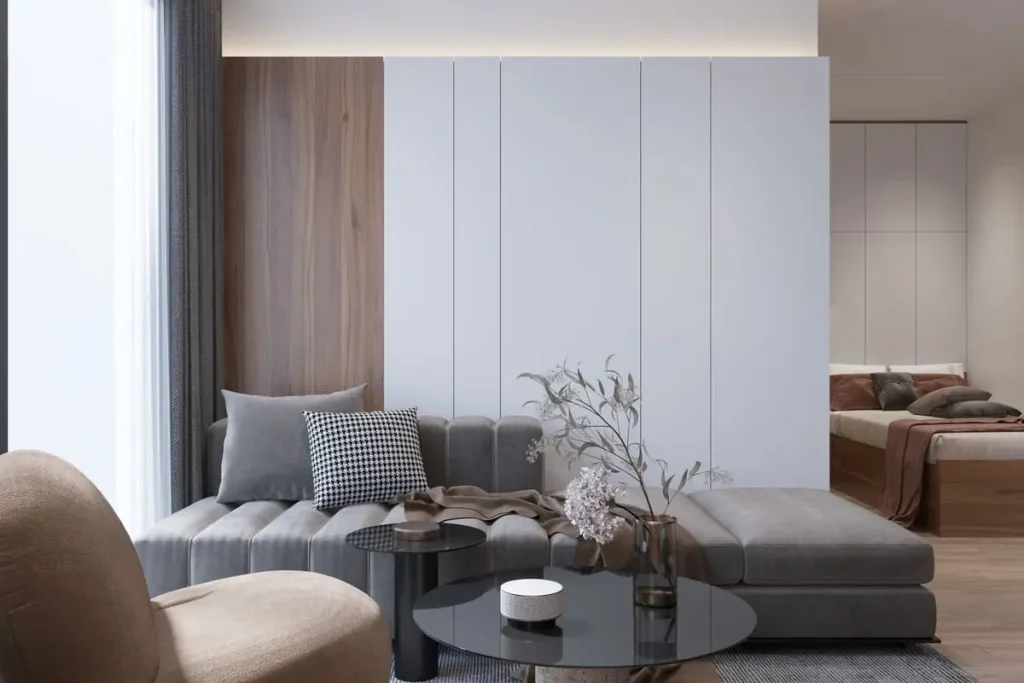
Just because a finish looks good in a showroom doesn’t mean it won’t become a nightmare at home. Consider whether it’s going to stand up to the way you live and use the space.
The biggest buyer’s regrets? Floors that collect dirt and never look clean and kicking themselves for not living there long enough before deciding on certain design elements.
How to fix it: Take swatches home and see how they look under your own lighting conditions. Get information about how to keep them clean, maintenance needs, cover options, and replacement parts if applicable. Test any cover or rug you’re thinking of adding to see if it matches your washer capacity.
Notice how you drop things, where your pet rests, where you sit. These observations will help you pick out things like enclosed storage, stain-resistant fabric, and easy-to-clean finishes. A beautiful room should be able to support your life rather than give you an extra task every day.
Tips for Avoiding Interior Design Mistakes on a Budget
Before you buy anything else, make a short list of what feels wrong. Is the room difficult to walk through, uncomfortable to read in, or simply too busy?
- Rearrange first. Clear a surface, move a lamp, or try a different chair position. Photograph the result from the same spot so you can compare it.
- Measure next. Confirm the artwork height, furniture footprint, and rug dimensions before choosing a replacement.
- Spend on the remaining problem. Buy only when you can explain what the new item will improve and where it will go.
Some fixes cost nothing; a larger rug or different sofa may not. Working in this order helps you separate an arrangement problem from a purchase you actually need.
Frequently Asked Questions
A few examples would be buying furniture without measurement, getting a small rug, hanging up artwork too high, or using lighting that is not right for the room. Begin with whatever problem has the biggest effect on comfort and mobility, and then move on to the décor.
Sure. Two matched chairs or a matched set of sofa and love seat will bring an element of unity to the room. Create contrast in the form of shape, texture, art, or lighting. Just because your chairs match doesn’t mean you have to throw out what is useful to you.
That is going to depend on where the rug is placed. If the rug is floating between gaps without touching any of the furniture, then the rug is likely too small. The rug could still be used in a cozy seating corner though. Tape out the measurements and see where the legs touch down.
Generally, select paint colors based on those that match your permanent finishes and furniture pieces that will stay. When selecting from scratch, narrow down on fabric or carpet colors first before settling on the paint color. This helps in understanding how the colors will work together.
Size for how furniture will be utilized, such as opening drawers and walkways. Protect important seating, keep surfaces that are useful, and select storage that accommodates your things. A couch up against the wall may be okay if moving it into the room obstructs circulation.
Some regrets involve too large furniture, poor paint selections, hard-to-clean finishes, and decisions that were made without considering their day-to-day activities. It is an anecdotal story and not a representative survey. The point here is to get a measurement, a sample test, and a way of using the room.
Conclusion
The space doesn’t have to satisfy all the principles of good design to be comfortable living in it. All it needs is proportionality, light placement, and decisions that match your taste and rhythm. A lot of interior design mistakes trace back to skipping a measurement or a test swatch, not bad taste. Identify one thing that annoys you, implement the solution, and see how it influences further decisions.
Pingback: Apartment Decor Ideas to Stop Your Home Looking Like IKEA | Nest & Aura
Pingback: Minimalist Kitchen Cabinets: What Actually Works in Real Life | Nest & Aura